
Built to spec
Built to your engineered drawings, survey, and the real site conditions, not a one-size-fits-all approach forced to fit.
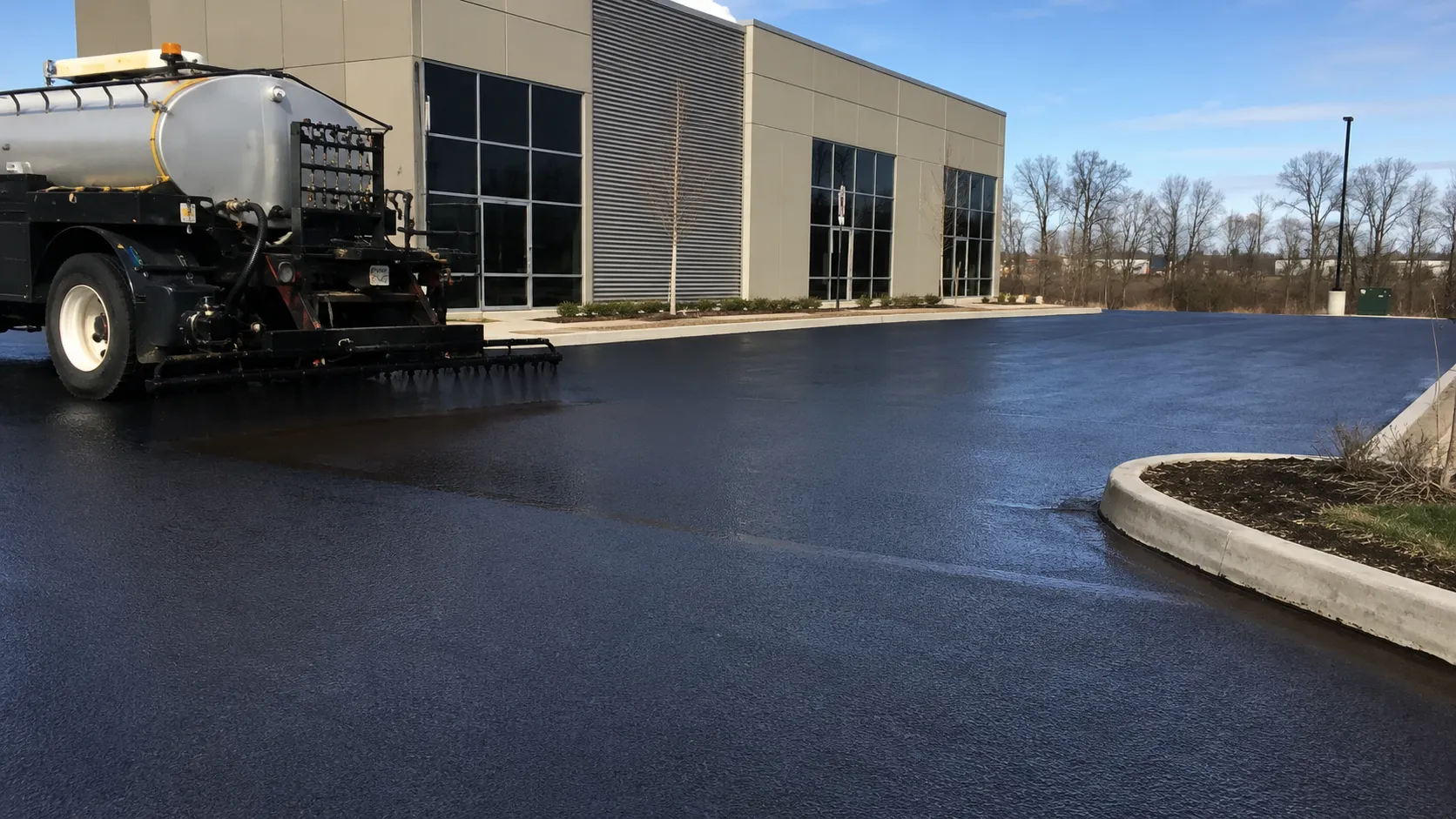
Harrowgate Group treats commercial property across the GTA and Ontario with calibrated de-icing matched to pavement temperature, including brine anti-icing applied ahead of a forecast event.
Tell us what you need and we’ll get you a quote. Licensed, insured & WSIB-covered · Free, no-obligation quote & on-site assessment.
Licensed, insured & WSIB-covered · Free, no-obligation quote & on-site assessment.
Built to your engineered drawings, survey, and the real site conditions, not a one-size-fits-all approach forced to fit.
Durable materials and methods chosen for the load, traffic, and environment on site.
Send specs, drawings, or photos and get a free, no-obligation site visit and estimate with no guesswork.
Installation and site work completed in accordance with Ontario requirements.
Salting and de-icing is the application of salt, treated salt, or brine to a cleared surface to break or prevent the bond between ice and pavement. Harrowgate Group applies it across the GTA and Ontario at rates calibrated to pavement temperature, after clearing rather than instead of it, with each application recorded.
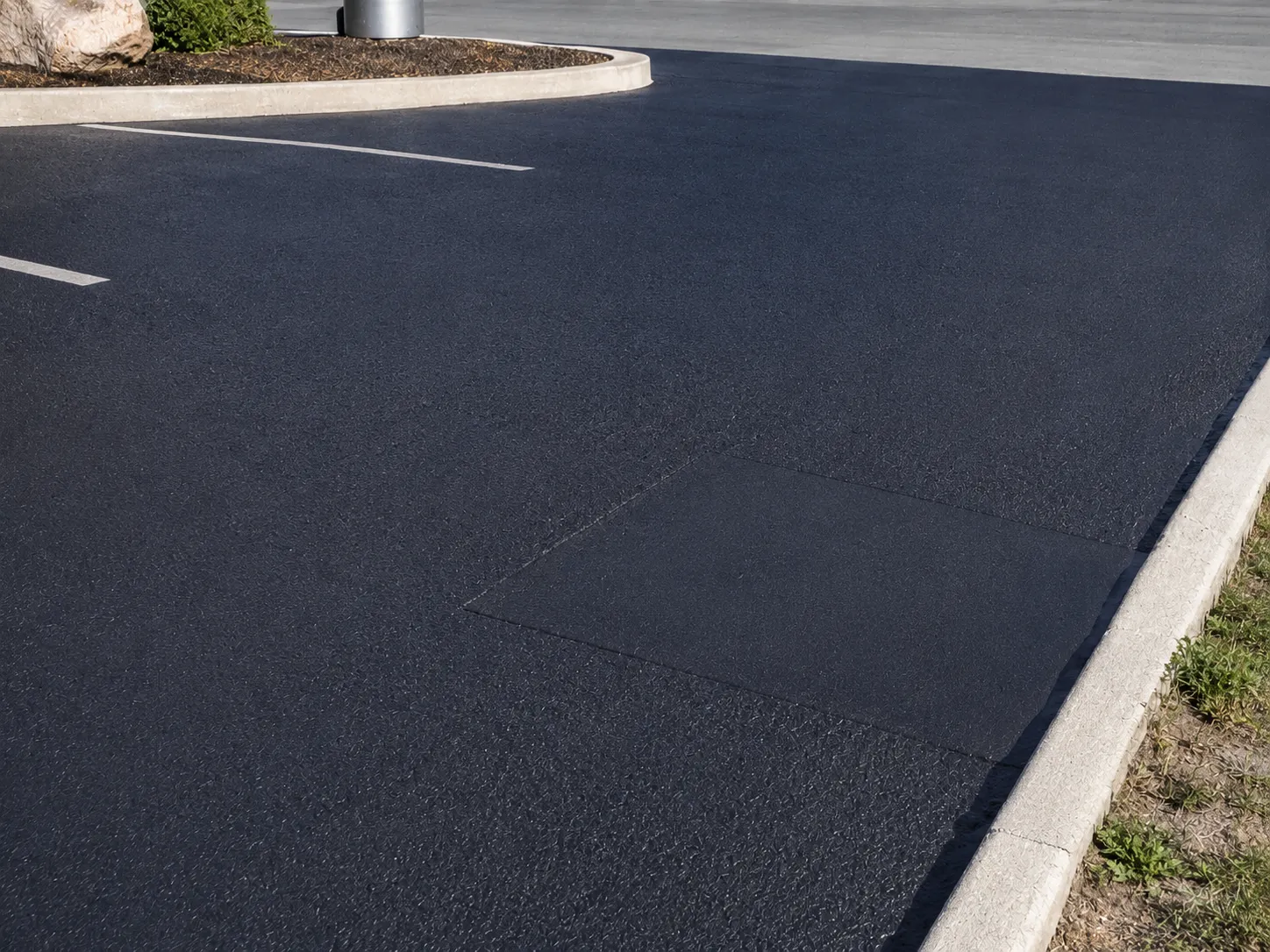
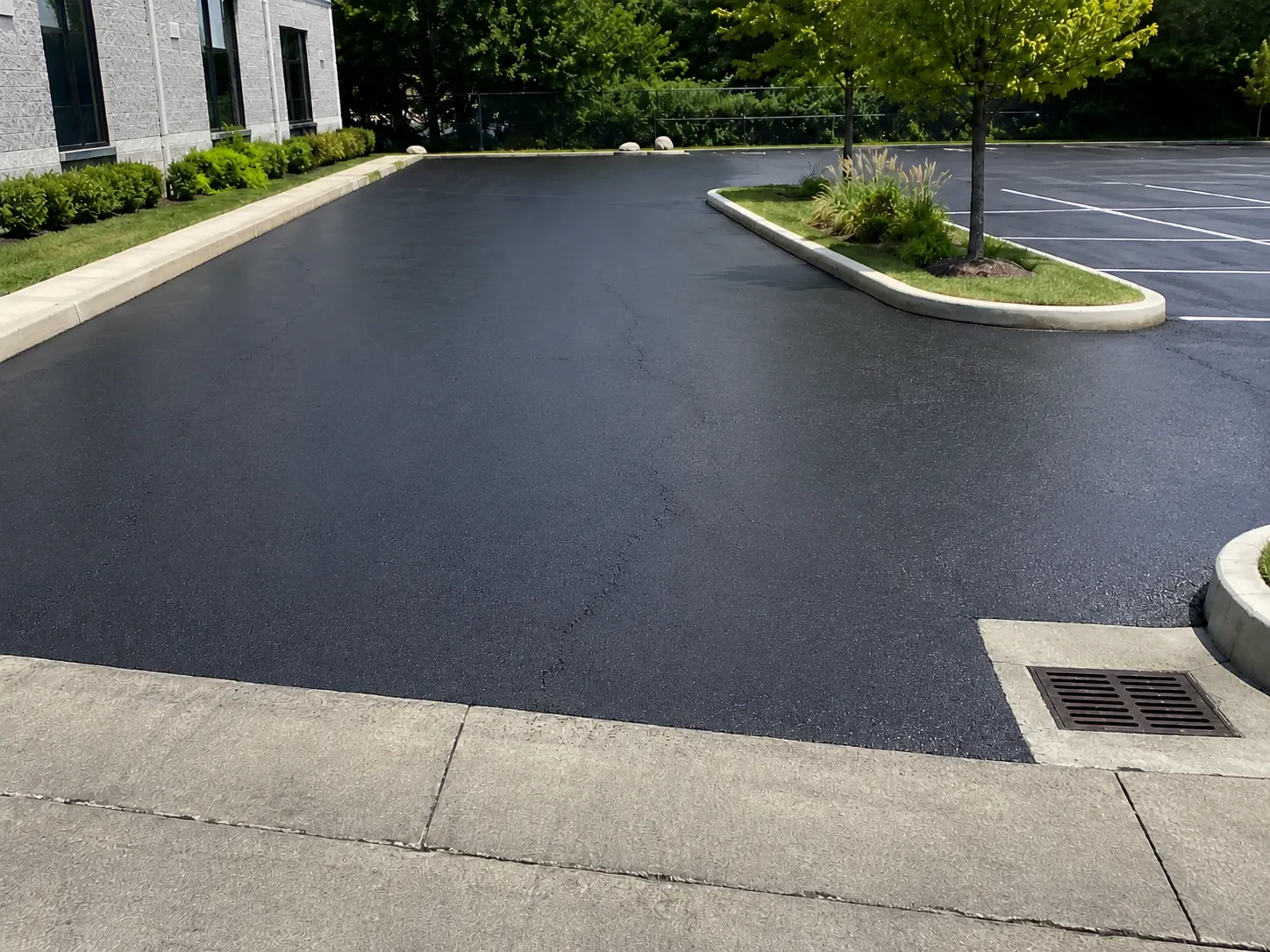
We anti-ice ahead of a forecast event where timing allows, clear the surface during it, then de-ice the cleared pavement at a rate set by surface temperature, and log the application.
Anti-icing is the higher-value half of the work and the half most contractors skip. Brine, a salt solution applied to dry pavement before snow starts, leaves a residue that prevents snow bonding to the surface in the first place.
The result is a lot that plows cleanly to bare pavement instead of one that plows to a bonded layer, using less total chloride than reactive salting after the fact. It also does not bounce or scatter the way dry rock salt does, so the product ends up on the pavement rather than in the landscaping.
Pre-wetting is the same principle applied at the spreader. Dry salt is wetted as it leaves the machine, so it activates faster and stays where it lands instead of migrating off the surface under traffic. Both techniques reduce the material required for the same result.
Application rates are set to pavement temperature and the forecast, not by habit and not by the bag. Rates are checked against calibrated spreaders, because an uncalibrated machine either wastes product or under-treats, and the operator cannot tell which by looking. Every application is logged with the location, the product, and the conditions, which is the record that answers a claim.
Sodium chloride, ordinary rock salt, is effective down to roughly minus 10 degrees Celsius in practical field conditions. Below that, magnesium chloride and calcium chloride blends do the work, with calcium chloride remaining active at substantially lower temperatures.
Product selection is a temperature decision first and a surface decision second. On a cold, dry night below the working range of rock salt, applying more rock salt achieves nothing except cost and chloride load. On a garage deck, a young concrete pour, or a decorative surface, product selection changes again because of what chloride does to the material.
Chloride drives corrosion in reinforcing steel and causes surface scaling on concrete, and concrete under about a year old is particularly vulnerable. That is why new pours, ramps, garage decks, and concrete walks get treated with deliberately chosen products and controlled rates rather than the same blanket application used on old asphalt. Our concrete restoration crews spend the rest of the year repairing exactly this damage.
Chloride use in Canada is governed by the Code of Practice for the Environmental Management of Road Salts, which applies to organizations using more than 500 tonnes a year on a five year rolling average and to any organization operating in a salt vulnerable area. The practices it points to are the ones that also save money: calibrated spreaders, application rates matched to conditions, anti-icing instead of reactive over-salting, pre-wetting, and covered material storage that keeps stockpiles from leaching.
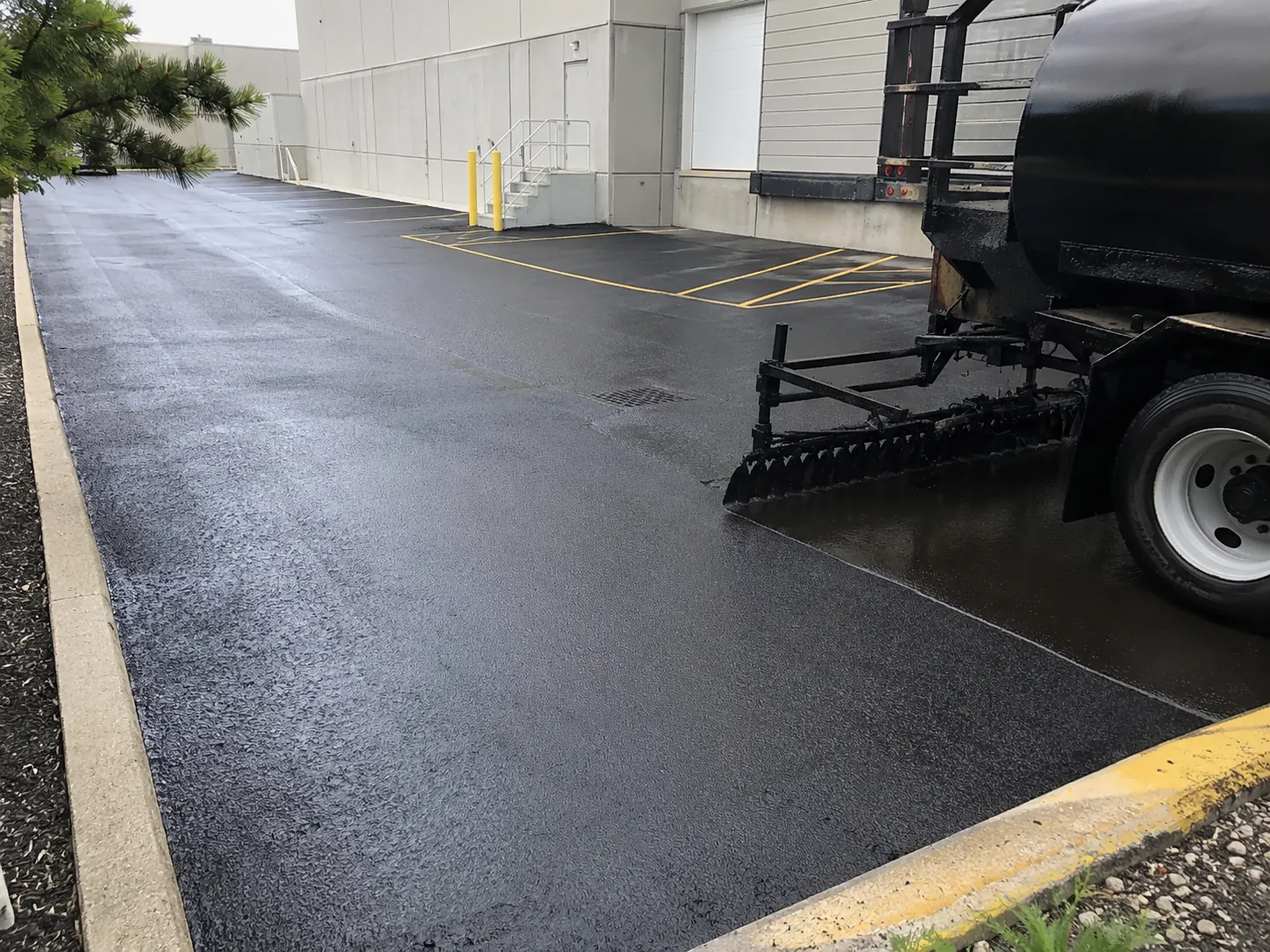
De-icing failures are salt on snow, wrong product for the temperature, uncalibrated rates, and no record of what was applied where.
Salt on packed snow. The most common failure in the trade. It does not reach the pavement, it refreezes into a slicker surface, and it convinces the property that the site was treated when it was not. We clear first, every time.
Wrong product. Rock salt below its practical working temperature is inert. Sites that experience genuinely cold events need a plan that switches product rather than increasing volume.
Uncalibrated spreaders. Over-application is expensive, damages concrete and landscaping, tracks into buildings, and loads the storm system with chloride. Under-application leaves the site untreated while the invoice says otherwise. Calibration is the difference.
Reactive-only treatment. Waiting until ice has formed to respond costs more material and produces a worse result than anti-icing before the event.
No record. Section 6.1 of Ontario's Occupiers' Liability Act requires written notice within 60 days of a snow or ice injury, served on the occupier or on the contractor hired to clear the site. When the question is whether a surface was treated, an application log with time, product, and location is the evidence. Verbal assurance is not.
Have drawings for salting and de-icing? Send them over and we will scope it.
Usually one of two reasons. It was applied over packed snow instead of a cleared surface, so it never reached the pavement. Or the pavement was too cold: sodium chloride loses practical effectiveness around minus 10 degrees Celsius, and below that a magnesium or calcium chloride blend is required rather than more rock salt.
Anti-icing means applying brine to dry pavement before snow starts, leaving a residue that prevents snow bonding to the surface. De-icing is reactive, breaking a bond that has already formed. Anti-icing produces a cleaner plow, uses less total chloride, and does not scatter off the surface the way dry salt does.
Whatever the pavement temperature and forecast call for, measured through a calibrated spreader. More is not better: over-application wastes material, damages concrete and landscaping, tracks into buildings, and loads the storm system. Under-application leaves the site untreated. Calibration is what makes the rate meaningful.
Yes. Chloride drives corrosion in reinforcing steel and causes surface scaling, and concrete under about a year old is particularly vulnerable. Garage decks, ramps, new pours, and concrete walks get controlled rates and deliberately chosen products rather than the blanket application used on older asphalt.
The Code of Practice for the Environmental Management of Road Salts applies to organizations using more than 500 tonnes a year on a five year rolling average and to organizations operating in salt vulnerable areas. It points to calibrated spreaders, temperature-matched rates, anti-icing, pre-wetting, and covered material storage.
Wetting dry salt as it leaves the spreader so it activates faster and stays where it lands instead of bouncing off the surface or migrating into landscaping under traffic. It achieves the same result with less material, which is why it is standard practice rather than an upgrade.
More often than the parking areas. They carry the highest injury risk per square metre on most properties, and they are exposed to freeze-thaw cycling from meltwater, roof runoff, and tracked-in moisture. They are treated on a tighter standard and revisited during thaw and refreeze rather than treated once.
Yes. Every application is logged with the time, the location, the product, and the conditions. When a claim asks whether a surface was treated, that log is the evidence, and Ontario's Occupiers' Liability Act gives an injured party 60 days to serve notice on the occupier or the snow contractor.
Still have a question about salting and de-icing? Ask our team directly.
Commercial and heavy-civil construction delivered for developers, contractors, property managers, and municipalities.
Send drawings, a site plan, or a description of the scope. Harrowgate Group is licensed, insured, and WSIB-covered.
Licensed, Insured & WSIB-Covered, work managed and documented on every job
Tell us what you need and we’ll get you a quote. Licensed, insured & WSIB-covered · Free, no-obligation quote & on-site assessment.
Companies We've Worked With
Harrowgate Group delivers commercial and heavy-civil construction for developers, contractors, institutions, municipalities, and property groups across Ontario.
 Popeyes
  Tim Hortons
  Subway
  University of Toronto
  Madison Group
  RioCan
  Women's College Hospital
  Starbucks
  Mazda
Mazda  TD Bank
  City of Toronto Popeyes Tim Hortons Subway University of Toronto Madison Group RioCan Women's College Hospital Starbucks Mazda TD Bank City of Toronto
 Three fields. We reply with the next step.
Thanks, we will call you shortly.
Press Esc to close
Marcus
Project Coordinator