
How Long Does a Commercial Site-Servicing Project Take?
A realistic Ontario commercial site-servicing timeline covering design, approvals, locates, excavation, utilities, testing, restoration, and closeout.
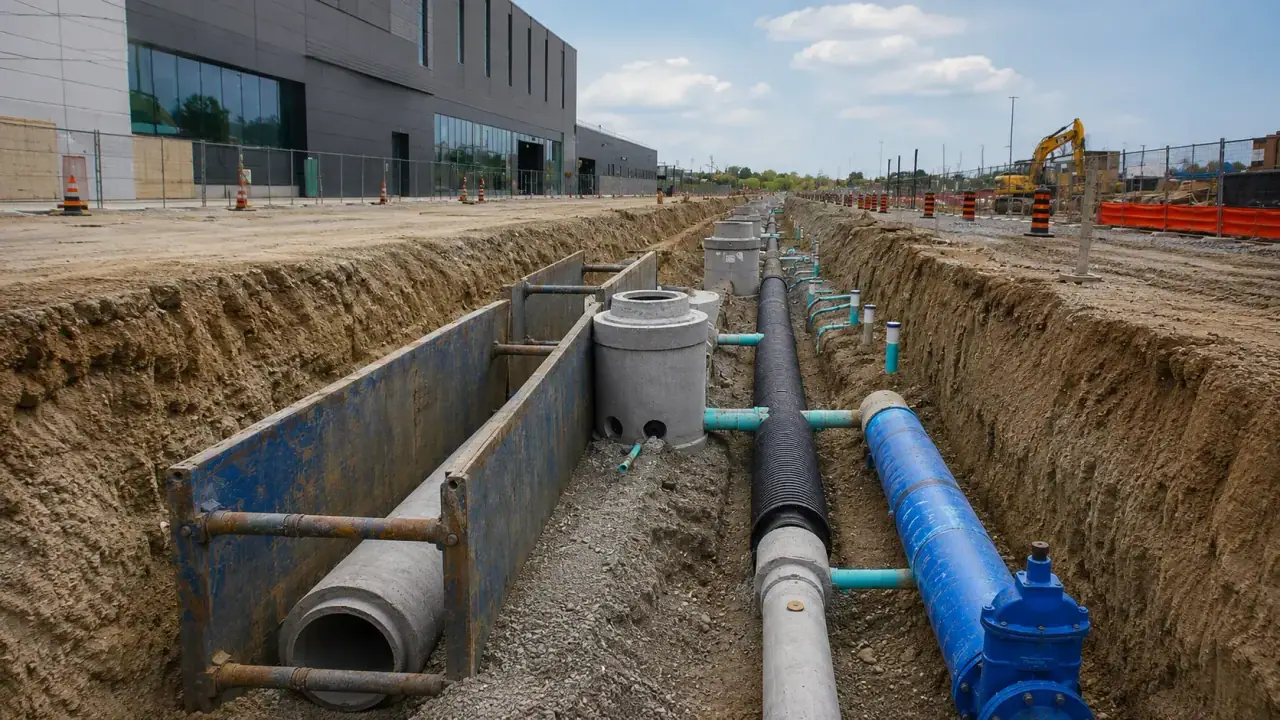
A straightforward commercial site-servicing construction phase often takes 6 to 16 weeks, while design, municipal approvals, utility coordination, procurement, and closeout can extend the total project to 6 to 18 months. Size alone does not set the duration. Weather, soil, groundwater, road occupancy, utility shutdowns, testing, depth, phasing, and authority response times control the schedule.
By Harrowgate Group
Last updated: July 24, 2026
Site servicing can include storm and sanitary sewers, watermains, fire services, service connections, chambers, catch basins, grading, curbs, and pavement restoration. Each system has inspections and tests that must occur before it is buried or put into service.
What is a realistic site-servicing timeline?
| Phase | Typical planning duration | Main dependencies |
|---|---|---|
| Investigation and design | 4 to 12 weeks | Survey, geotechnical, utility records, civil design |
| Approvals and coordination | 2 to 9+ months | Municipality, conservation authority, utilities, road authority |
| Procurement and mobilization | 3 to 10 weeks | Pipe, structures, valves, permits, traffic control |
| Construction | 6 to 16 weeks | Depth, quantity, soil, water, access, phasing |
| Testing and closeout | 2 to 8 weeks | Pressure, leakage, CCTV, compaction, as-builts, restoration |
What affects a commercial site-servicing schedule most?
Approvals and third parties
Municipal engineering, utilities, conservation authorities, railways, and road occupancy permits may operate on different review cycles.
Depth and ground conditions
Deep trenches, poor soil, rock, contamination, groundwater, or shoring reduce daily production and add testing or disposal steps.
Operating-site constraints
Maintaining fire routes, tenant access, loading, parking, water, sanitary service, and business hours forces phasing.
Inspection hold points
Bedding, connections, pressure tests, disinfection, CCTV, compaction, and restoration may require approval before the next activity.
What do Ontario rules and current data say?
Ontario law requires locates before excavation and requires affected infrastructure owners to provide markings and written locate information or an all-clear. Source: Ontario Underground Infrastructure Notification System Act, current July 2026.
Ontario guidance requires planning for utilities, soil classification, shoring, water, spoil, worker access, and emergency procedures before trench work. Source: Ontario excavation hazards guidance, accessed July 2026.
How should you plan a commercial site-servicing schedule?
- Build an approvals matrix. List every permit, review, agreement, utility, submission, owner decision, and required lead time.
- Validate existing conditions. Complete survey, locates, test pits, geotechnical work, and record review before finalizing profiles and connections.
- Create a phase and shutdown plan. Show traffic, access, temporary services, tie-ins, notices, inspections, and contingency for failed tests.
- Manage closeout during construction. Capture survey, photos, test results, tickets, material records, and deficiencies as work proceeds.
What problems should owners watch for?
- Late utility conflicts: A line shown inaccurately or omitted from records can stop the critical trench and force redesign.
- Uncoordinated shutdowns: A brief connection can require lengthy notice, permits, temporary systems, and stakeholder approval.
- Restoration treated as an afterthought: Paving seasons, curb work, landscaping, settlement, and municipal acceptance can keep a nearly finished project open.
For a commercial site-servicing schedule, Harrowgate Group’s trust baseline is 20 years in business, licensed, insured, and WSIB-covered.
Frequently asked questions
Can site servicing be completed in winter?
Yes, but frozen ground, snow, temporary heat, frost protection, shorter daylight, and asphalt plant availability can affect productivity and final restoration.
What usually causes the longest delay?
External approvals, utility coordination, redesign after conflicts, deep or wet excavations, and failed tests are common schedule drivers.
How long do watermain tests take?
The field test may be short, but preparation, filling, flushing, disinfection, sampling, laboratory turnaround, and acceptance can add days.
Can approvals and procurement overlap?
Often yes, if design is stable and the owner accepts procurement risk. Long-lead items should not be ordered from unapproved information without a clear change strategy.
Do locates show private services?
Not necessarily. The project team must identify the limits of public locate coverage and arrange private locating or test pits where required.
What schedule contingency is reasonable?
Set contingency from a risk register rather than one generic percentage. Approvals, weather, groundwater, utility conflicts, and testing each need a response allowance.
What is the next step?
See Harrowgate Group’s commercial site-servicing services, excavation capabilities, and asphalt paving. Request a quote with the civil drawings and required in-service date.
Get a quote for your project
Tell us about the site, the scope, and your timeline. We review it and reply with the next step.