Built to spec
Built to your engineered drawings, survey, and the real site conditions, not a one-size-fits-all approach forced to fit.
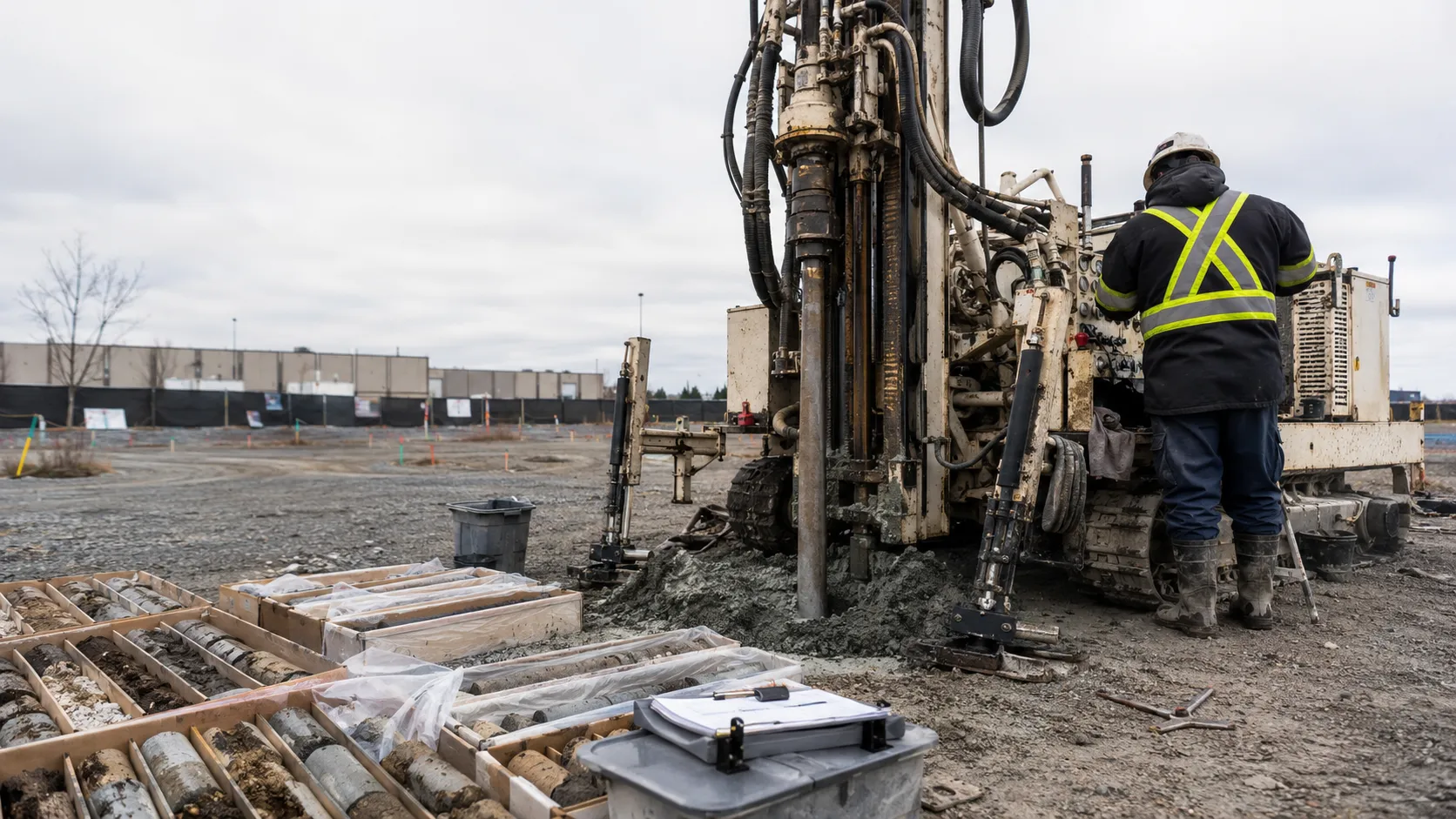
We drill, sample, test, log, and restore geotechnical boreholes for commercial, industrial, municipal, and heavy civil projects across Toronto, the GTA, and Ontario, providing engineers with traceable subsurface data for foundations, shoring, pavements, earthworks, and groundwater planning.
Tell us what you need and we’ll get you a quote. Licensed, insured & WSIB-covered · Free, no-obligation quote & on-site assessment.
Licensed, insured & WSIB-covered · Free, no-obligation quote & on-site assessment.
Built to your engineered drawings, survey, and the real site conditions, not a one-size-fits-all approach forced to fit.
Durable materials and methods chosen for the load, traffic, and environment on site.
Send specs, drawings, or photos and get a free, no-obligation site visit and estimate with no guesswork.
Installation and site work completed in accordance with Ontario requirements.
Geotechnical drilling establishes soil, fill, bedrock, and groundwater conditions needed for design and construction planning. Harrowgate advances boreholes and obtains samples and field test data directly across Toronto and the GTA, working to the geotechnical engineer’s location, depth, recovery, and testing schedule.
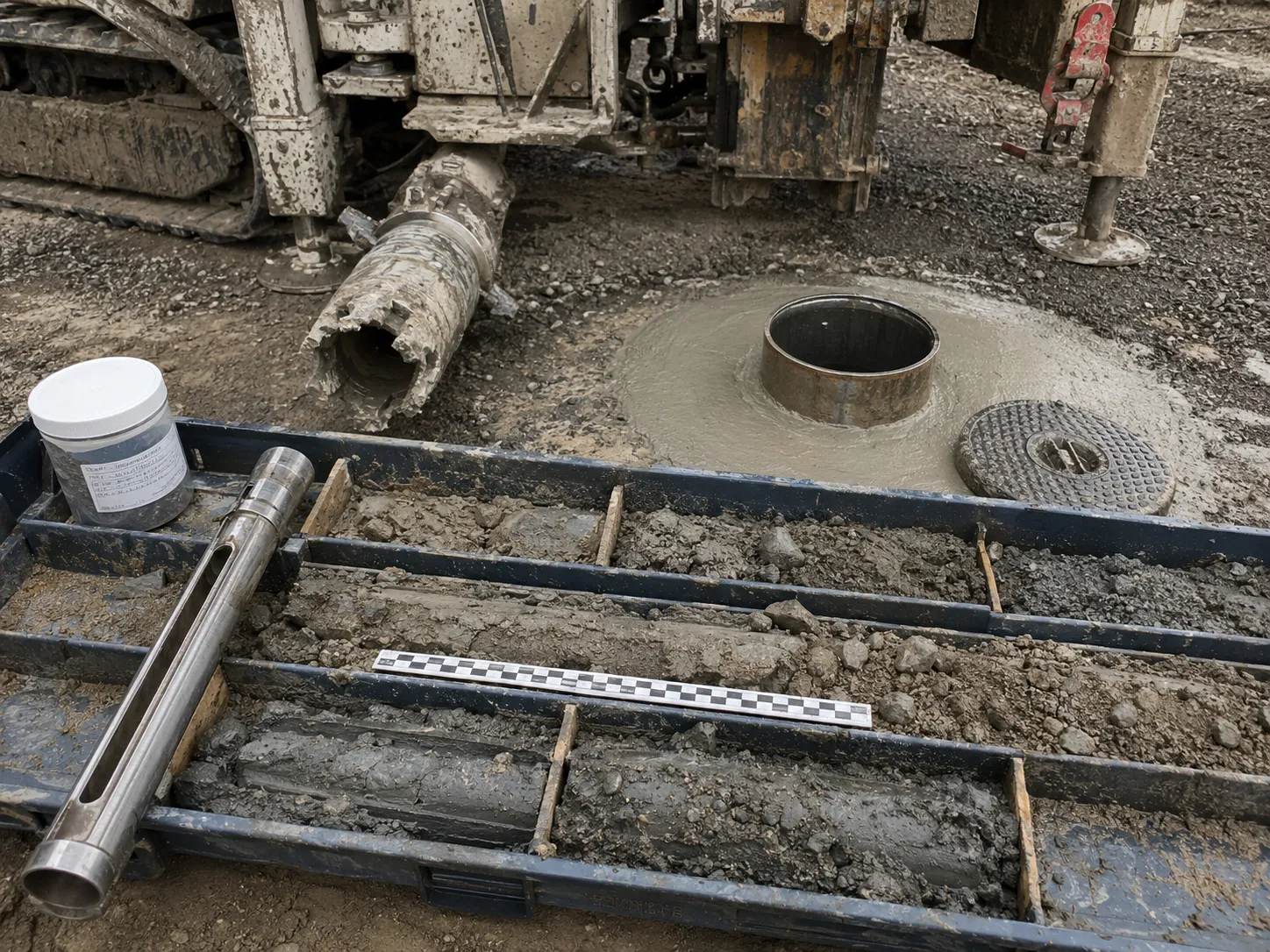
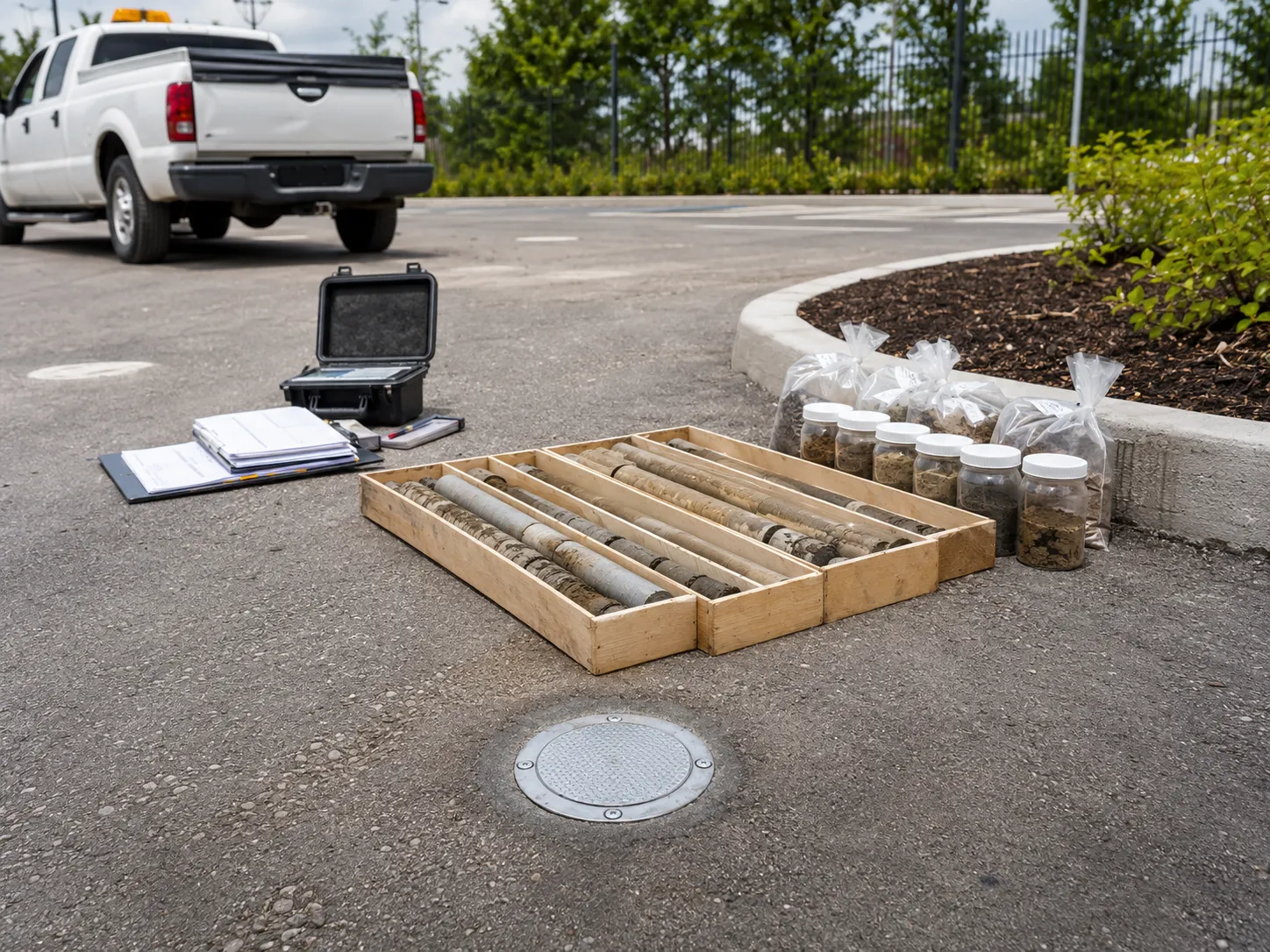
We clear utilities, establish borehole coordinates and elevation references, set the rig level, advance in controlled increments, perform specified in-hole tests, recover representative samples, log drilling response and groundwater observations, core rock where required, and close or complete each hole according to the program.
Split-spoon, thin-wall, bulk, core, and disturbed samples are handled according to the engineer’s testing needs. Run length, penetration blows where testing is specified, recovery, sample condition, casing depth, drilling fluid, refusal, and rock core recovery are recorded as work proceeds. Samples are protected from loss of moisture or disturbance and boxed in sequence. Groundwater readings during drilling are noted as observations, not assumed stabilized levels. Where longer monitoring is needed, we install a standpipe or monitoring well designed for that purpose.
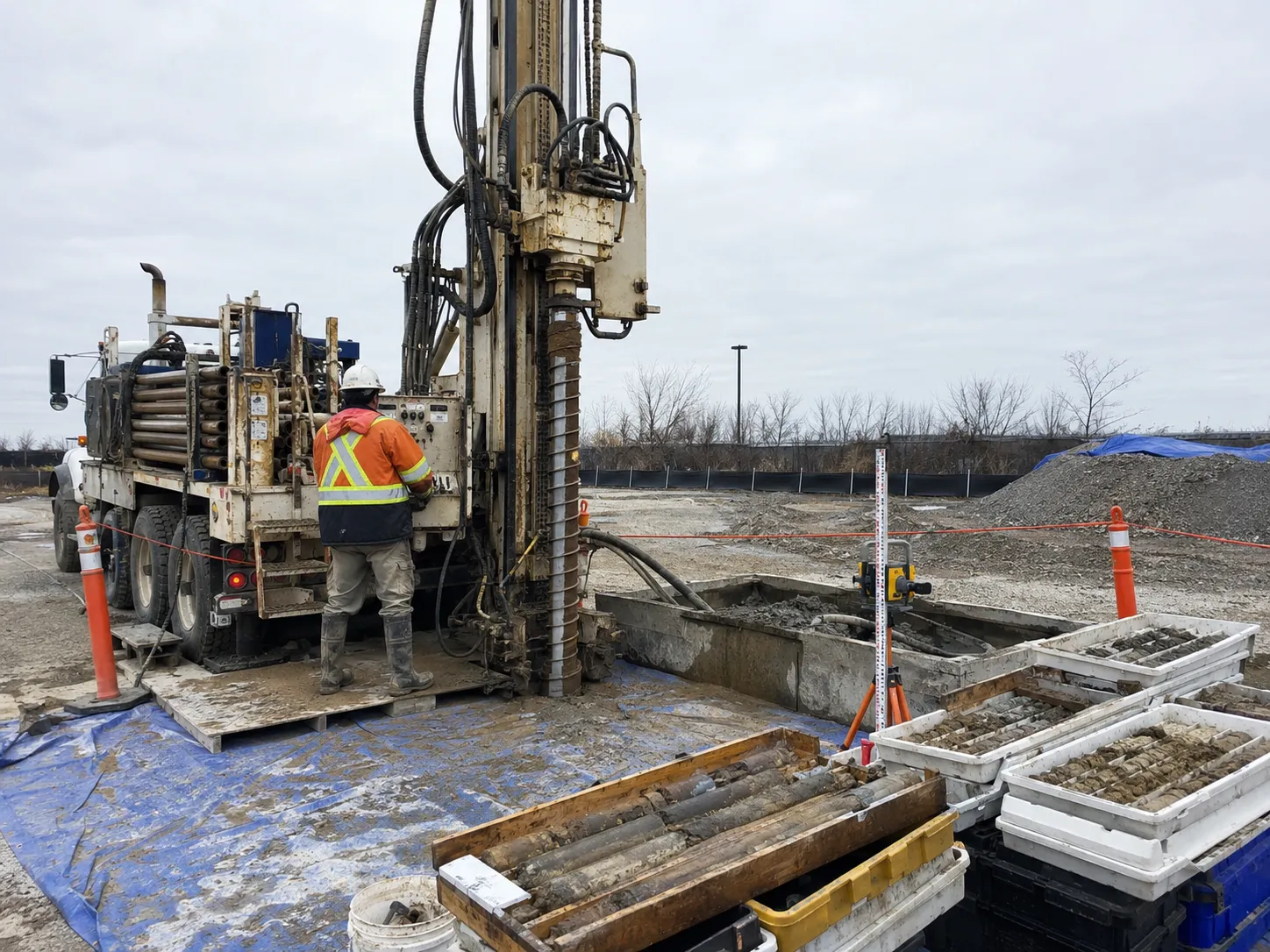
Geotechnical drilling follows the engineer’s investigation program, applicable CSA and OPSS provisions, project specifications, Ontario construction safety requirements, and R. R. O. 1990 Reg. 903 where a test hole or monitoring completion is regulated. Borehole records must be sufficiently complete for the engineer to reconstruct subsurface conditions.
The program defines hole diameter, target depth, sample interval, field tests, core size, termination criteria, groundwater completion, and restoration. We verify whether structures, rail, highway, municipal right of way, or environmental approvals impose additional requirements. Utility clearance can include records, public and private locates, scanning, and non-destructive daylighting before mechanical drilling. Boreholes through asphalt or concrete are patched to the owner’s standard. Open holes are protected, and completed wells receive the specified surface seal and protective casing.
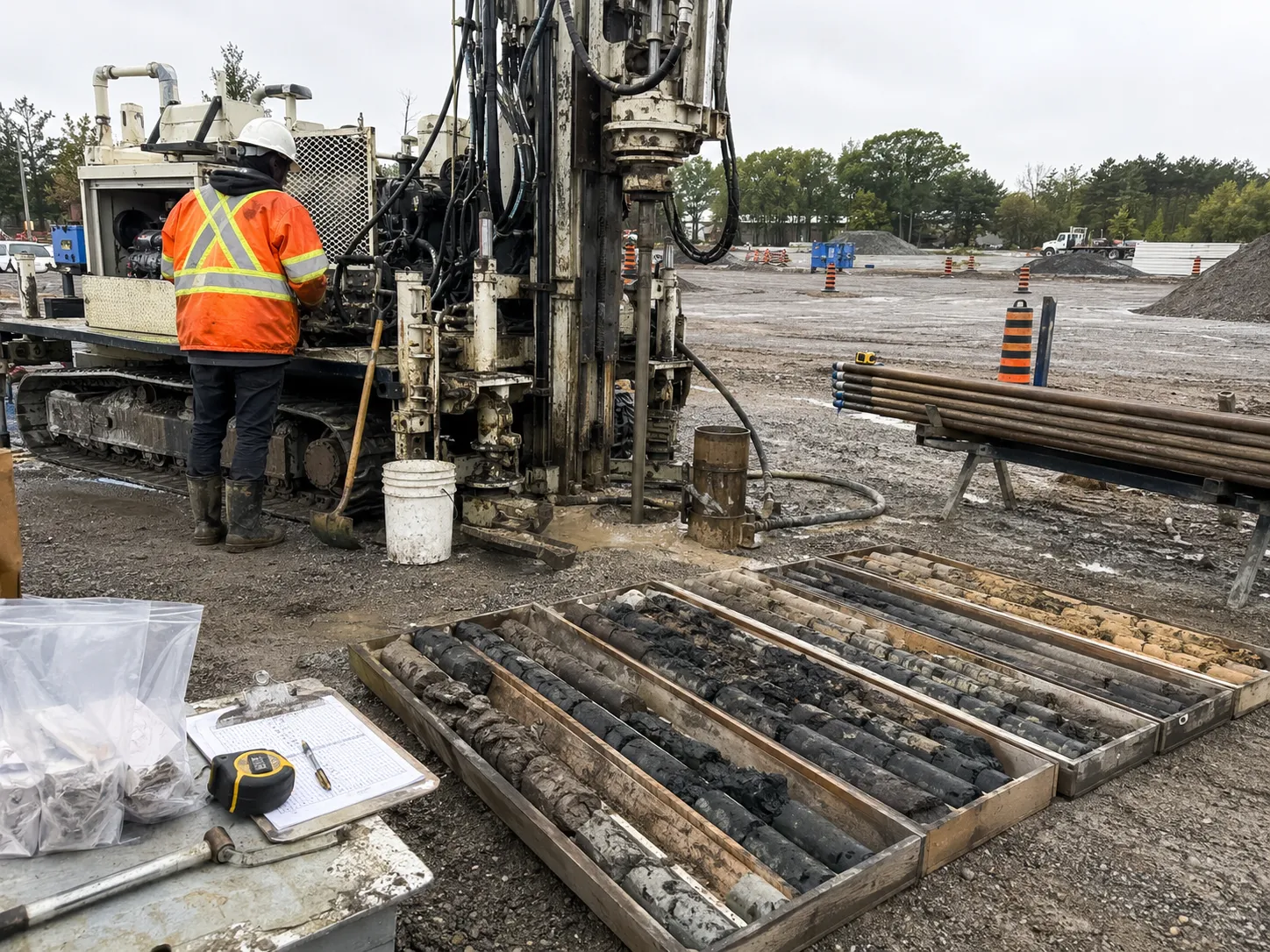
Poor geotechnical drilling data results from disturbed samples, incorrect depth references, unrecorded wash water, false refusal on rubble, lost core, mixed sample boxes, or groundwater readings taken without context. We prevent these errors through calibrated depth control, disciplined logging, suitable tooling, and direct communication with the engineer.
Urban fill can contain concrete, timber, boulders, and old foundations that stop augers without representing bedrock. We identify the drilling response and change method or relocate only with instruction. In loose saturated sand, open-hole methods can collapse and lose the sample interval, so casing or hollow-stem support is selected. Rock core orientation, breaks caused by drilling, recovery, and water loss are recorded. If field conditions make the planned test unreliable, we flag the limitation immediately rather than producing a number without engineering value.
Planning geotechnical drilling? Talk it through with our team.
Geotechnical drilling supports commercial buildings, warehouses, plants, foundations, underpinning, deep excavations, shoring, roads, bridges, retaining walls, utilities, stormwater facilities, rail and transit work, embankments, slope stabilization, and pavement rehabilitation. It also informs groundwater management, excess soil decisions, seismic assessment, tendering, and construction planning.
Early boreholes can compare development concepts and identify deep fill or shallow bedrock before layout is fixed. Detailed design programs tighten spacing around columns, walls, shafts, abutments, or excavation corners. Construction-phase drilling confirms anomalies or changed limits. Industrial sites may need compact rigs between active equipment, while linear infrastructure requires efficient moves and traffic control. We coordinate access and restoration so investigation does not damage surfaces or obstruct facility operations.
Have drawings for geotechnical drilling? Send them over and we will scope it.
A borehole can establish fill and soil stratigraphy, sample condition, penetration resistance from specified tests, bedrock depth and core quality, groundwater observations, and drilling response. Engineers combine these records with laboratory results and site context to develop foundation, shoring, pavement, earthwork, slope, and dewatering recommendations.
Depth is selected by the geotechnical engineer based on structure loads, excavation, foundation alternatives, compressible layers, bedrock, groundwater, and the zone of influence. There is no reliable universal depth. Drilling terminates at the specified criterion, confirmed competent stratum, planned rock core length, or engineer-approved refusal condition.
Augers rotate flights through soil and can provide economical boreholes and samples in many overburden conditions. Sonic drilling vibrates casing and core barrels, often improving continuous recovery through heterogeneous fill, gravel, or soft formations. Sample objective, access, depth, waste volume, vibration sensitivity, and geology drive selection.
It provides water observations during drilling and can install standpipes or wells for later readings. A wet sample or water in an open borehole may not represent stabilized groundwater because drilling water, perched zones, low-permeability soil, and time affect response. Design programs often require repeat monitoring over a defined period.
We combine current public and private locates, site records, owner information, surface inspection, scanning where applicable, and non-destructive daylighting to the project clearance depth. The exact protocol follows the site and consultant requirements. Mechanical drilling begins only after the location is released under that procedure.
The driller records depth, tooling, penetration response, and recovered material. Refusal may represent bedrock, a boulder, concrete, timber, or dense fill. The geotechnical representative decides whether to core, change tooling, offset the hole, or terminate. Refusal is not labelled bedrock without supporting evidence.
Drivers include hole count and depth, sampling and test frequency, rock coring, well installations, rig type, access, overhead clearance, locates and daylighting, traffic control, drilling fluid, investigation-derived material, restoration, hours, and reporting. Difficult fill, flowing sand, artesian conditions, and occupied facilities add controls.
Still have a question about geotechnical drilling? Ask our team directly.
Commercial and heavy-civil construction delivered for developers, contractors, property managers, and municipalities.
Send drawings, a site plan, or a description of the scope. Harrowgate Group is licensed, insured, and WSIB-covered.
Licensed, Insured & WSIB-Covered, work managed and documented on every job
Tell us what you need and we’ll get you a quote. Licensed, insured & WSIB-covered · Free, no-obligation quote & on-site assessment.
Companies We've Worked With
Harrowgate Group delivers commercial and heavy-civil construction for developers, contractors, institutions, municipalities, and property groups across Ontario.
 Popeyes
  Tim Hortons
  Subway
  University of Toronto
  Madison Group
  RioCan
  Women's College Hospital
  Starbucks
  Mazda
Mazda  TD Bank
  City of Toronto Popeyes Tim Hortons Subway University of Toronto Madison Group RioCan Women's College Hospital Starbucks Mazda TD Bank City of Toronto
 Three fields. We reply with the next step.
Thanks, we will call you shortly.
Press Esc to close
Marcus
Project Coordinator