
Built to spec
Built to your engineered drawings, survey, and the real site conditions, not a one-size-fits-all approach forced to fit.
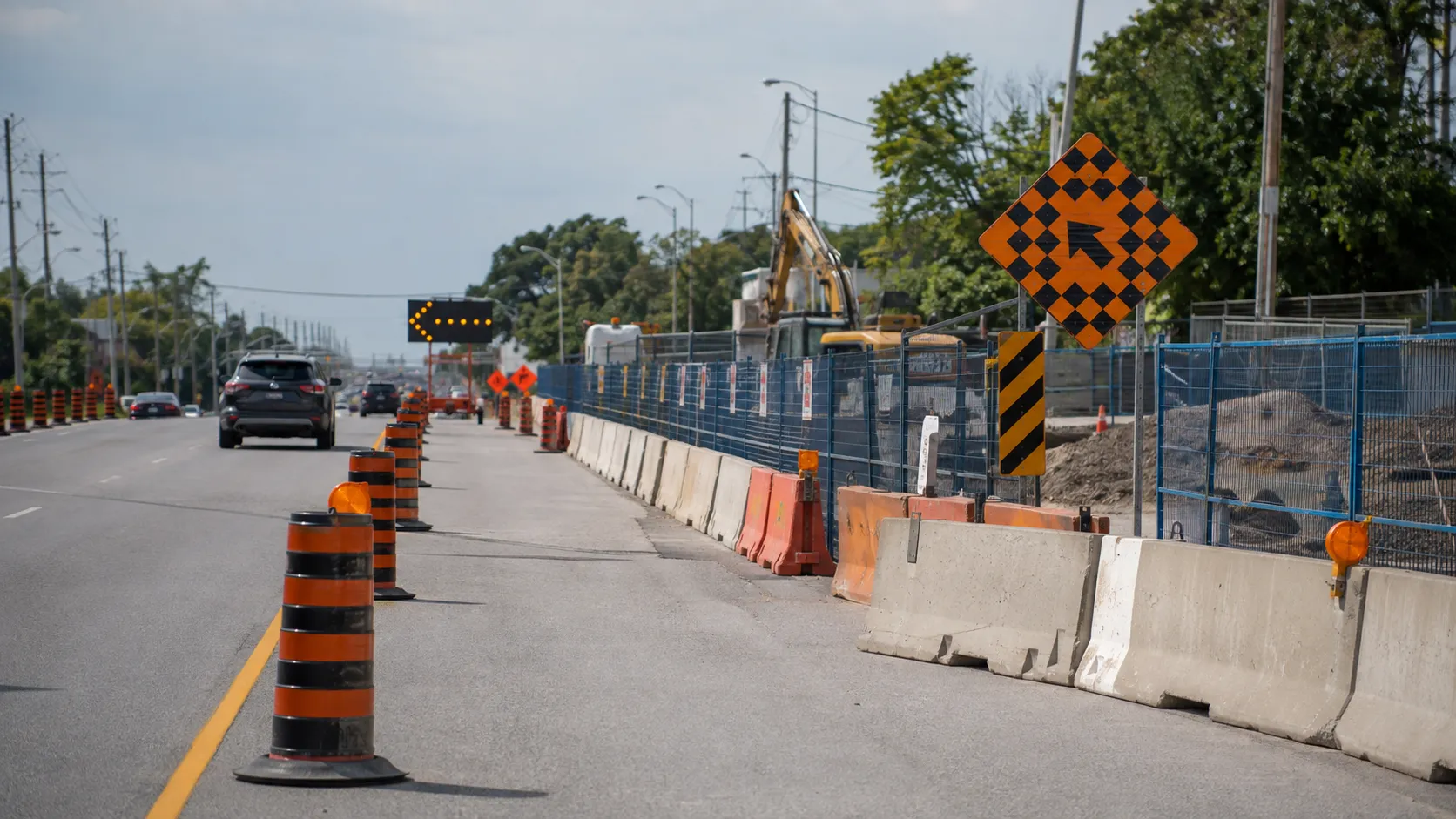
We prepare and implement site-specific Book 7 traffic protection plans for commercial, municipal, industrial, and heavy civil work across Toronto, the GTA, and Ontario, translating temporary-condition requirements into measured, buildable field layouts.
Tell us what you need and we’ll get you a quote. Licensed, insured & WSIB-covered · Free, no-obligation quote & on-site assessment.
Licensed, insured & WSIB-covered · Free, no-obligation quote & on-site assessment.
Built to your engineered drawings, survey, and the real site conditions, not a one-size-fits-all approach forced to fit.
Durable materials and methods chosen for the load, traffic, and environment on site.
Send specs, drawings, or photos and get a free, no-obligation site visit and estimate with no guesswork.
Installation and site work completed in accordance with Ontario requirements.
A Book 7 traffic protection plan applies Ontario temporary-condition guidance to a specific roadway, work operation, duration, and stage. Harrowgate develops measured layouts that identify signs, tapers, buffers, devices, personnel, pedestrian controls, and occupied limits for Toronto and GTA projects.
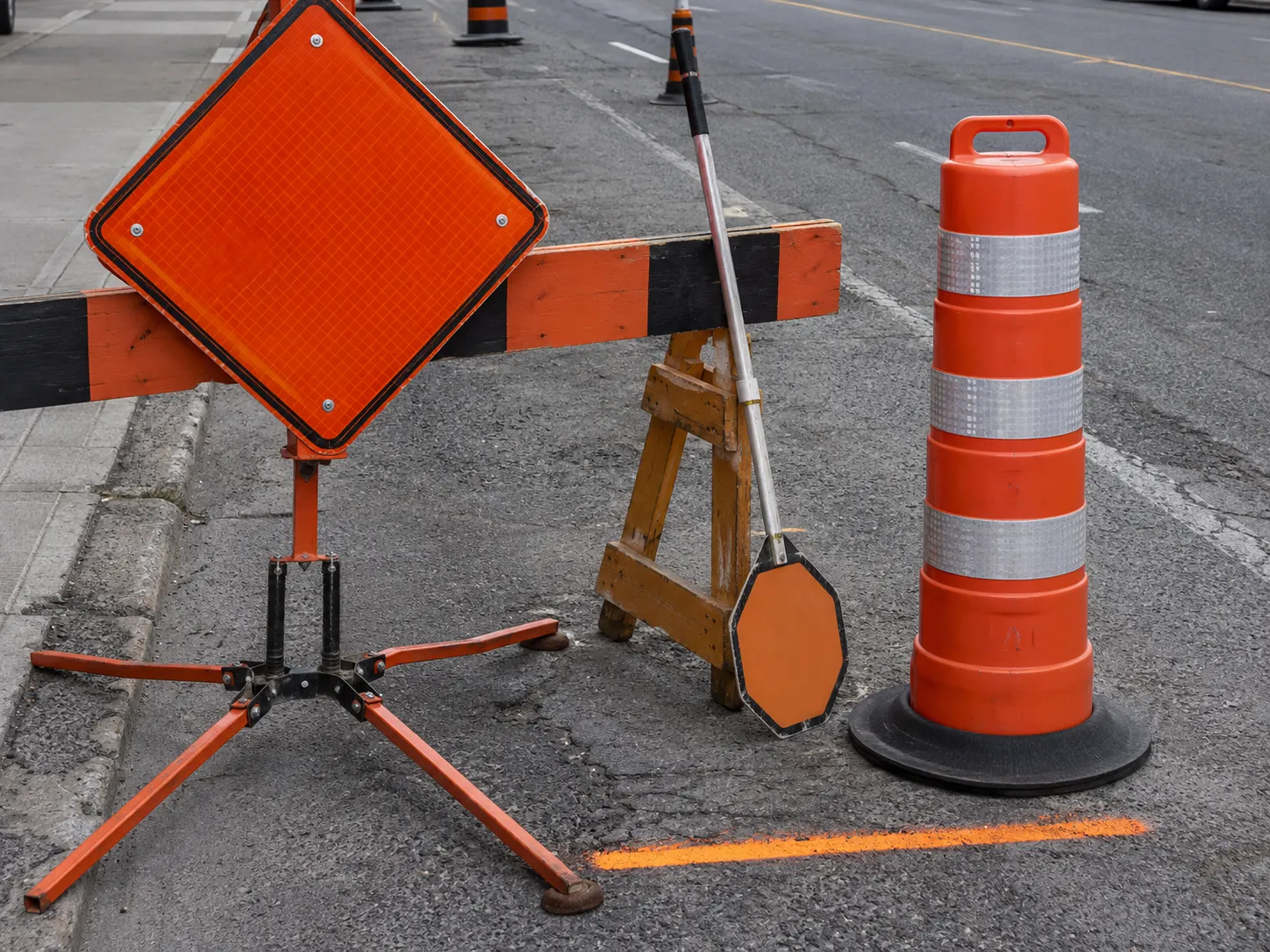
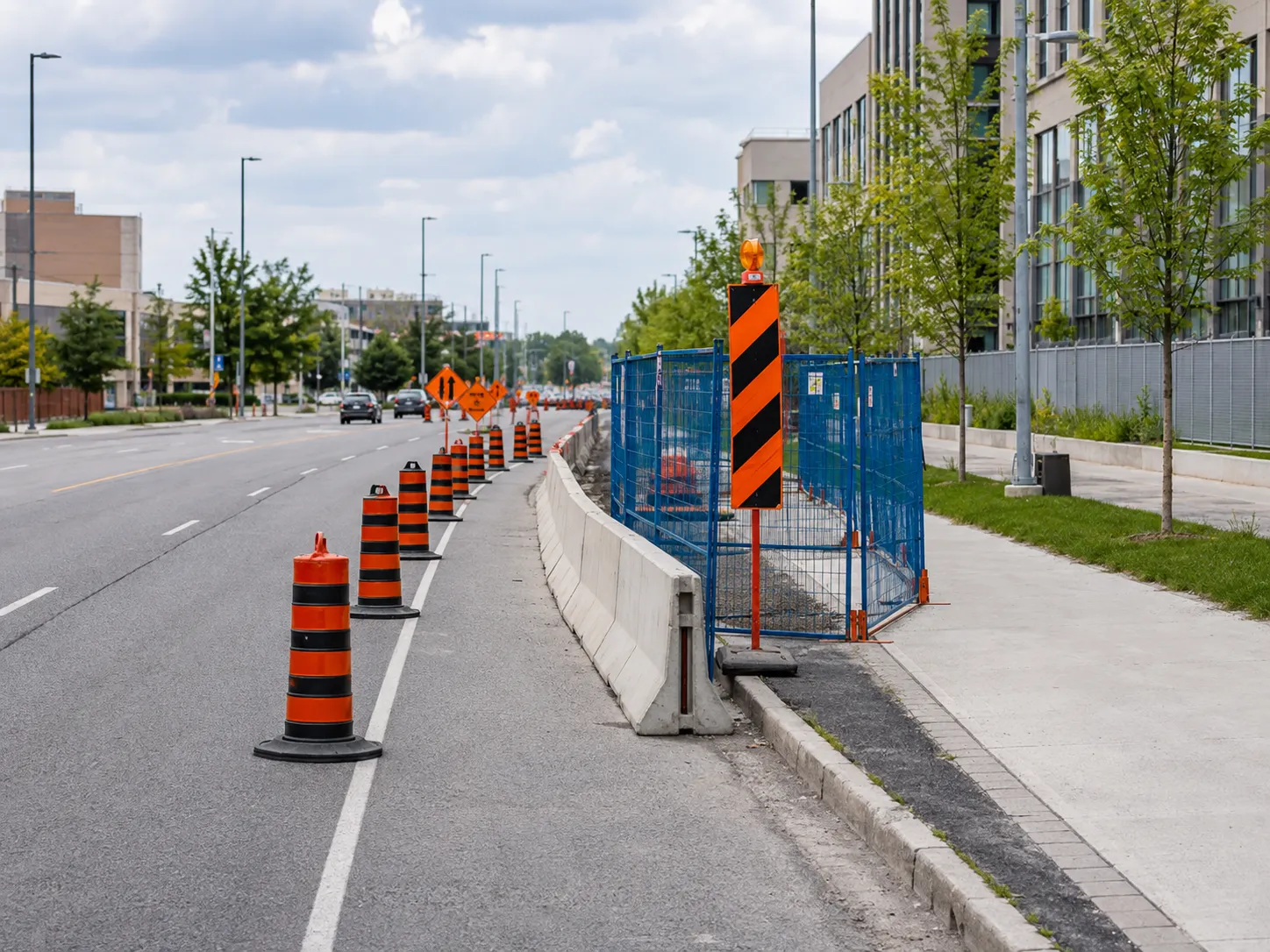
We confirm the work method and duration, survey or verify roadway features, choose the applicable temporary-condition layout, calculate and dimension the control areas, add road-user accommodations, and coordinate the result with permits and construction staging. We support review comments and verify installation onsite.
The drawing distinguishes advance warning, transition, buffer, work, traffic, and termination areas. Sign codes and mounting method, cone or drum spacing, barricade type, arrow display, barrier, temporary markings, and traffic control person positions are scheduled. We trace every road-user path through the sheet, including a person approaching from either sidewalk direction or a cyclist entering before the taper. Stage notes explain when controls change, how obsolete signs are covered, and the order for setup and removal.
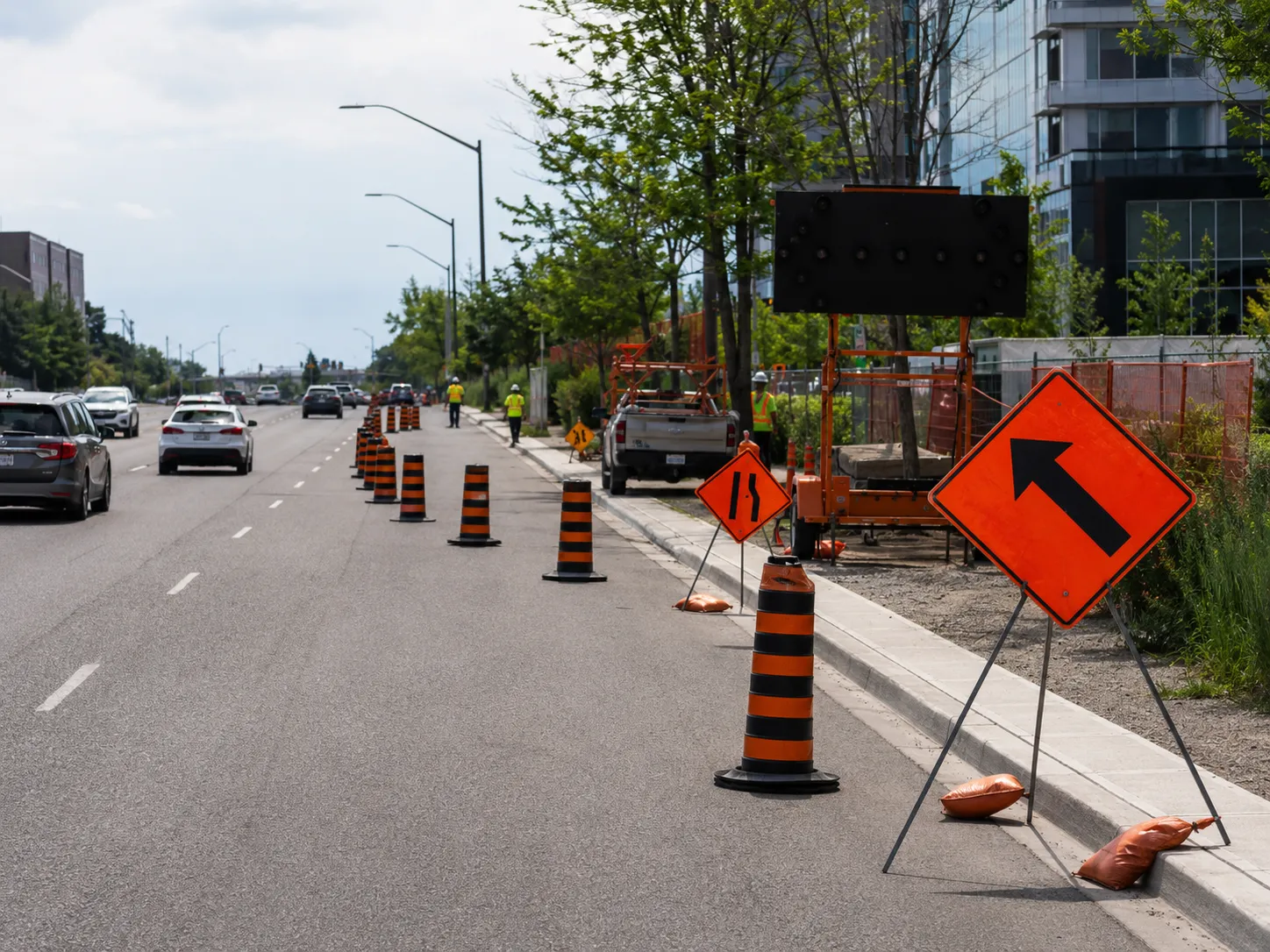
The current Ontario Traffic Manual Book 7, Temporary Conditions, is used with Ontario Regulation 213/91, applicable OPSS requirements, contract specifications, and municipal or provincial permit conditions. No single typical layout overrides a stricter project-specific requirement or an accepted road-authority direction.
Work duration and road environment affect whether a layout is mobile, very short, short, or long duration and what devices are suitable. Posted speed is checked against actual conditions and reviewer requirements. For Toronto projects, plans can form part of a Street Occupation Permit, construction staging submission, or road disruption process.
We show enough dimensions for inspectors to verify the field condition. Where barrier is specified, end treatment, deflection space, connections, and transitions must be coordinated with the design rather than shown as a generic line.
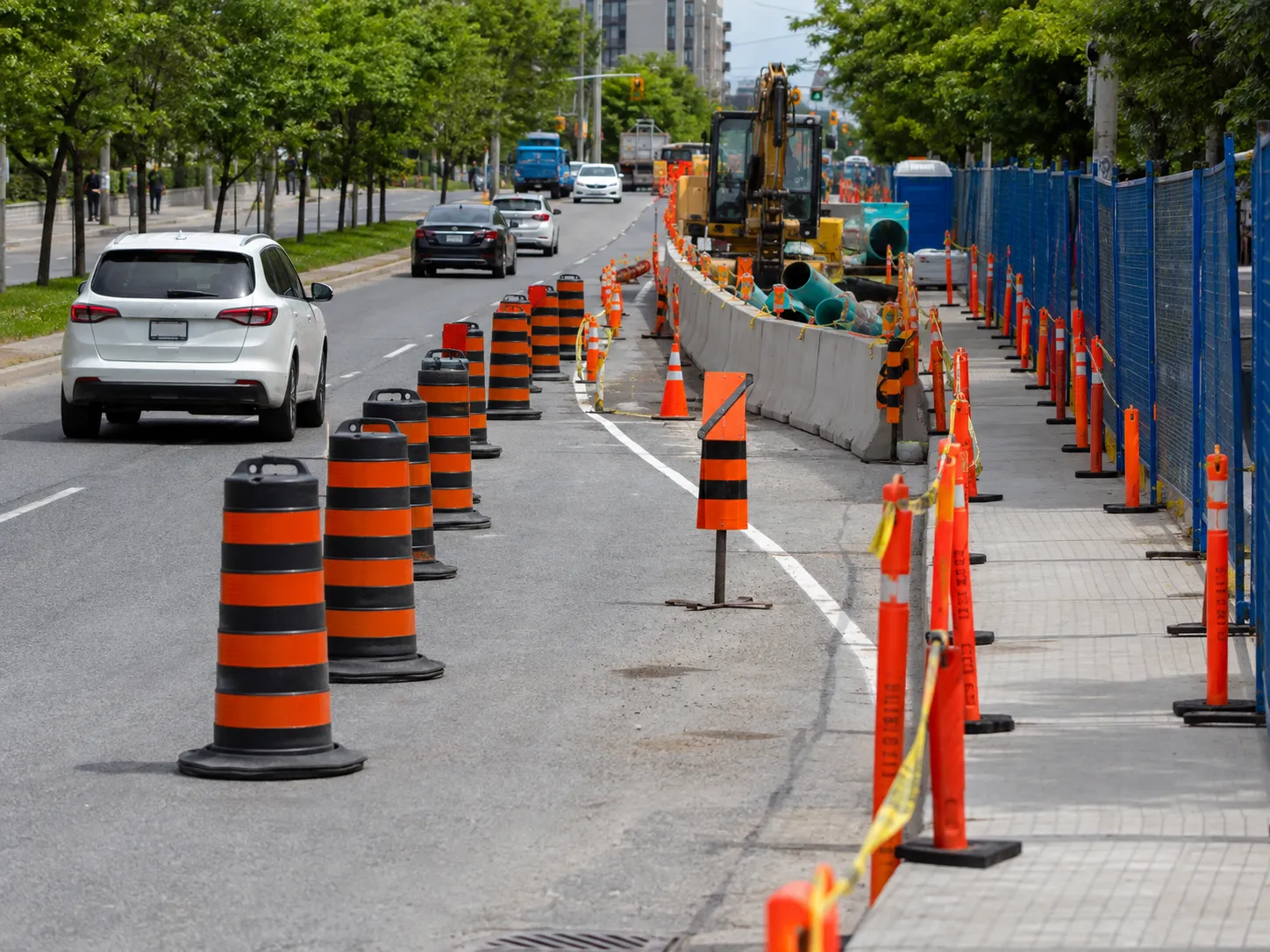
A plan fails when it copies a typical layout without resolving an intersection, driveway, bus stop, cycle track, limited sight distance, or pedestrian route. It also fails when field crews cannot fit the specified taper or buffer within the permitted limits. We test these constraints before issue.
Conflicting permanent and temporary signs are another common problem. The drawing identifies which existing messages remain, which are covered, and when they are restored. We check whether a queue could extend beyond the first warning sign or block an upstream intersection. Construction equipment is drawn at operating size, including outriggers and turning paths, not as a token rectangle. During mobilization, a drive-through and walk-through confirm visibility. Differences are documented and referred for revision before the work area expands.
Planning book 7 traffic protection plans? Talk it through with our team.
Book 7 plans are used for lane closures, shoulder work, sidewalk occupations, utility cuts, paving, bridge work, drilling, test pits, crane and concrete operations, mobile maintenance, and construction access. They apply wherever temporary work changes the normal expectations of Ontario road users.
A short operation may use a standard condition with verified site adjustments. Complex urban work usually needs a custom drawing because signals, transit, loading, cycling, and pedestrian movements overlap. Multi-stage development requires a separate readable condition for each shift in hoarding, gates, excavation, or structure. On private industrial roads, Book 7 principles can also support a consistent control system, supplemented by the facility’s own traffic and mobile-equipment rules.
Have drawings for book 7 traffic protection plans? Send them over and we will scope it.
Book 7 is Ontario’s traffic manual for temporary conditions created by construction, maintenance, utility, and similar work. It provides principles, devices, and typical layouts for protecting workers and guiding road users. A project-specific plan applies those requirements to the actual road, task, duration, and permit conditions.
Only when it accurately represents the site and the road authority accepts that approach. Intersections, curves, driveways, transit, cycling, pedestrians, lane widths, and work equipment often require a site-specific drawing. The field setup must fit the approved occupation and provide the visibility, taper, buffer, and channelization intended.
The project assigns a competent planner or designer with knowledge of Book 7, construction operations, and road-authority requirements. Engineering involvement depends on the scope and controls. Harrowgate prepares buildable layouts, coordinates review comments, and installs the accepted arrangement within our traffic-control scope.
Yes, temporary-condition planning must account for pedestrians affected by the work, but a safe route requires project-specific detail. We show closure points, crossings, barricades, temporary walkways, accessibility features, and conflicts with gates or equipment. Municipal accessibility and permit requirements are coordinated with the Book 7 control layout.
The sheet should show road geometry, work limits, lane widths, sign codes and locations, tapers, buffers, devices, barrier, markings, traffic control persons, pedestrian and cycling routes, access points, stages, and setup notes. Existing conditions that are covered, removed, or retained must be clearly distinguished.
Distances are selected from the applicable Book 7 condition and adjusted through the approved design for speed, road geometry, visibility, duration, lane configuration, and operation. They are dimensioned on the plan and checked onsite. Crews should not compress a taper simply because equipment or stored material occupies the intended space.
No. Book 7 provides the traffic-protection basis, while the road authority grants permission to occupy its right of way and may impose location-specific conditions. Toronto and GTA municipalities have distinct application processes. Work begins only after the required permit, accepted drawings, dates, and operating restrictions are confirmed.
Still have a question about book 7 traffic protection plans? Ask our team directly.
Commercial and heavy-civil construction delivered for developers, contractors, property managers, and municipalities.
Send drawings, a site plan, or a description of the scope. Harrowgate Group is licensed, insured, and WSIB-covered.
Licensed, Insured & WSIB-Covered, work managed and documented on every job
Tell us what you need and we’ll get you a quote. Licensed, insured & WSIB-covered · Free, no-obligation quote & on-site assessment.
Companies We've Worked With
Harrowgate Group delivers commercial and heavy-civil construction for developers, contractors, institutions, municipalities, and property groups across Ontario.
 Popeyes
  Tim Hortons
  Subway
  University of Toronto
  Madison Group
  RioCan
  Women's College Hospital
  Starbucks
  Mazda
Mazda  TD Bank
  City of Toronto Popeyes Tim Hortons Subway University of Toronto Madison Group RioCan Women's College Hospital Starbucks Mazda TD Bank City of Toronto
 Three fields. We reply with the next step.
Thanks, we will call you shortly.
Press Esc to close
Marcus
Project Coordinator