
Built to spec
Built to your engineered drawings, survey, and the real site conditions, not a one-size-fits-all approach forced to fit.
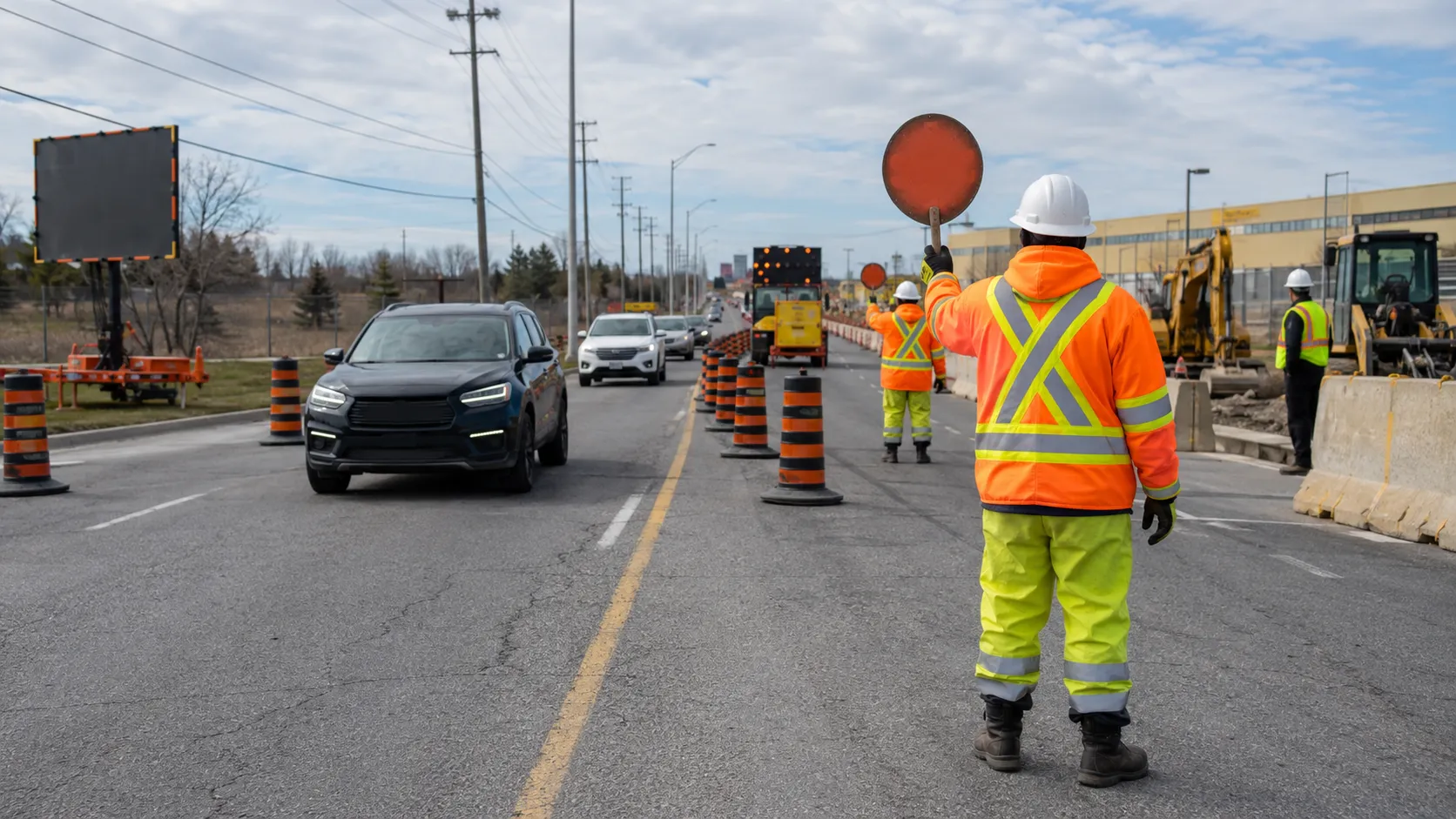
We deploy, supervise, and coordinate traffic control persons for commercial, industrial, municipal, and heavy civil operations across Toronto, the GTA, and Ontario, using clear sight lines, positive communication, and plan-based positions to control vehicle conflicts.
Tell us what you need and we’ll get you a quote. Licensed, insured & WSIB-covered · Free, no-obligation quote & on-site assessment.
Licensed, insured & WSIB-covered · Free, no-obligation quote & on-site assessment.
Built to your engineered drawings, survey, and the real site conditions, not a one-size-fits-all approach forced to fit.
Durable materials and methods chosen for the load, traffic, and environment on site.
Send specs, drawings, or photos and get a free, no-obligation site visit and estimate with no guesswork.
Installation and site work completed in accordance with Ontario requirements.
Traffic control persons direct road users through temporary construction conflicts that signs and channelizing devices cannot resolve alone. Harrowgate positions and manages trained personnel at single-lane sections, site gates, equipment crossings, and intermittent work areas throughout Toronto and the GTA.
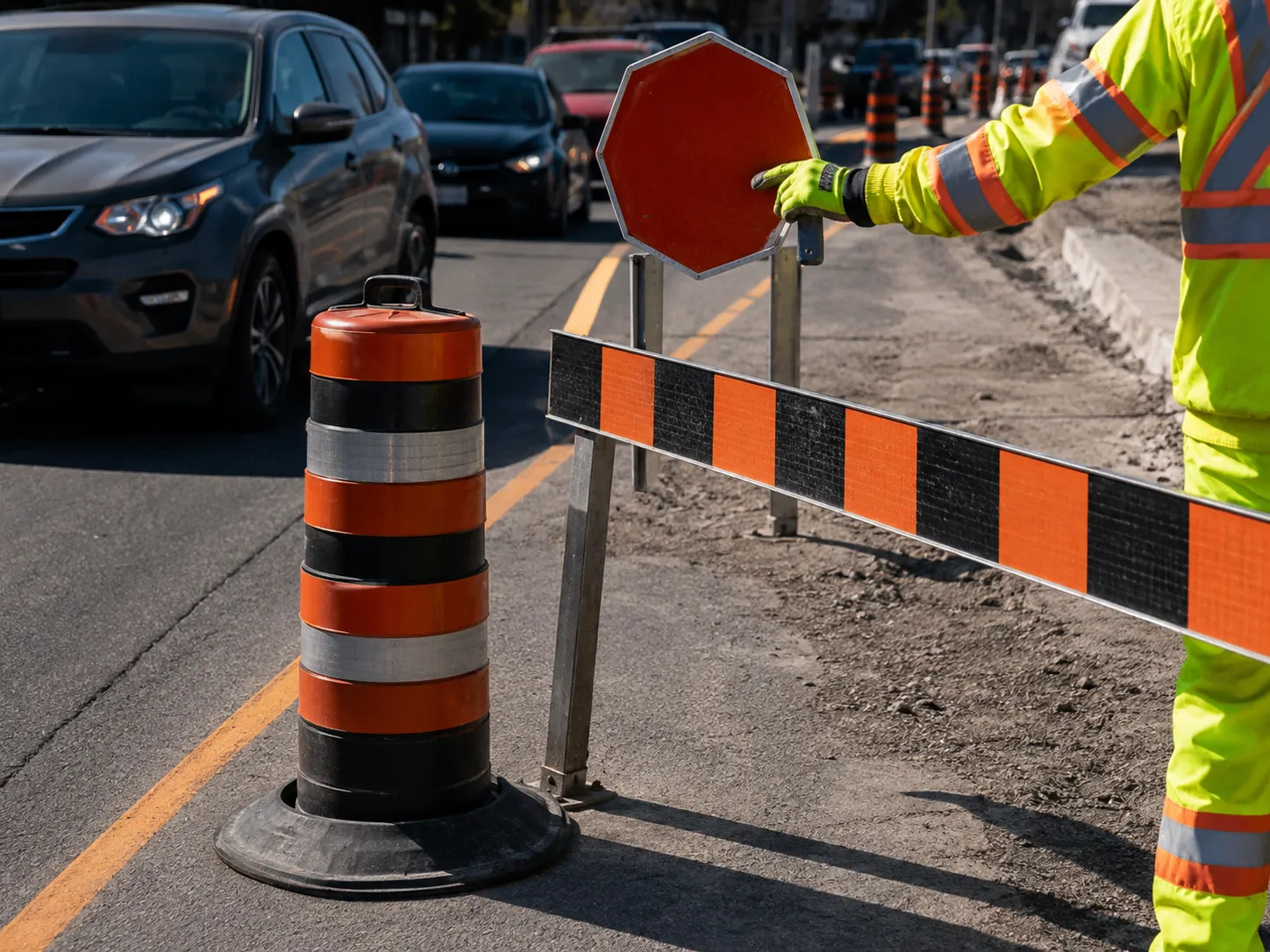
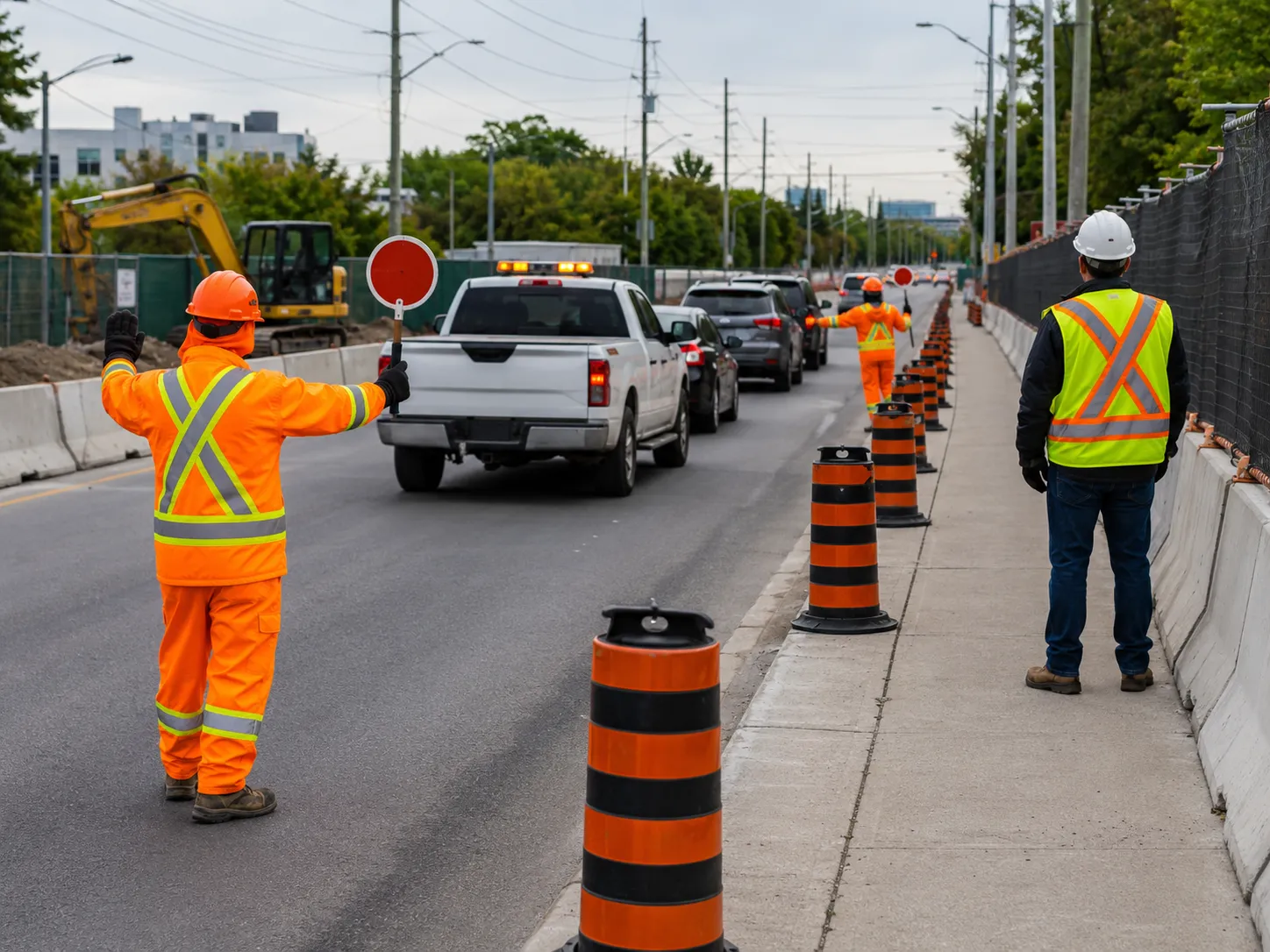
We review the approved traffic layout, confirm each control point, establish signs and channelization, test sight distance and communication, and brief the traffic control persons on sequence, authority, emergency response, and work limits. A supervisor monitors traffic behaviour and adjusts operations within the plan.
For alternating one-way traffic, paired personnel agree which direction holds the right of way and confirm the controlled section is clear before releasing the opposing queue. Radio protocol uses concise, repeatable messages with a fallback if communication fails. At a construction gate, the traffic control person watches both the truck movement and all affected road users, including pedestrians and cyclists. If queues, weather, darkness, or an unexpected obstruction defeat visibility, the operation stops until the control arrangement is restored.
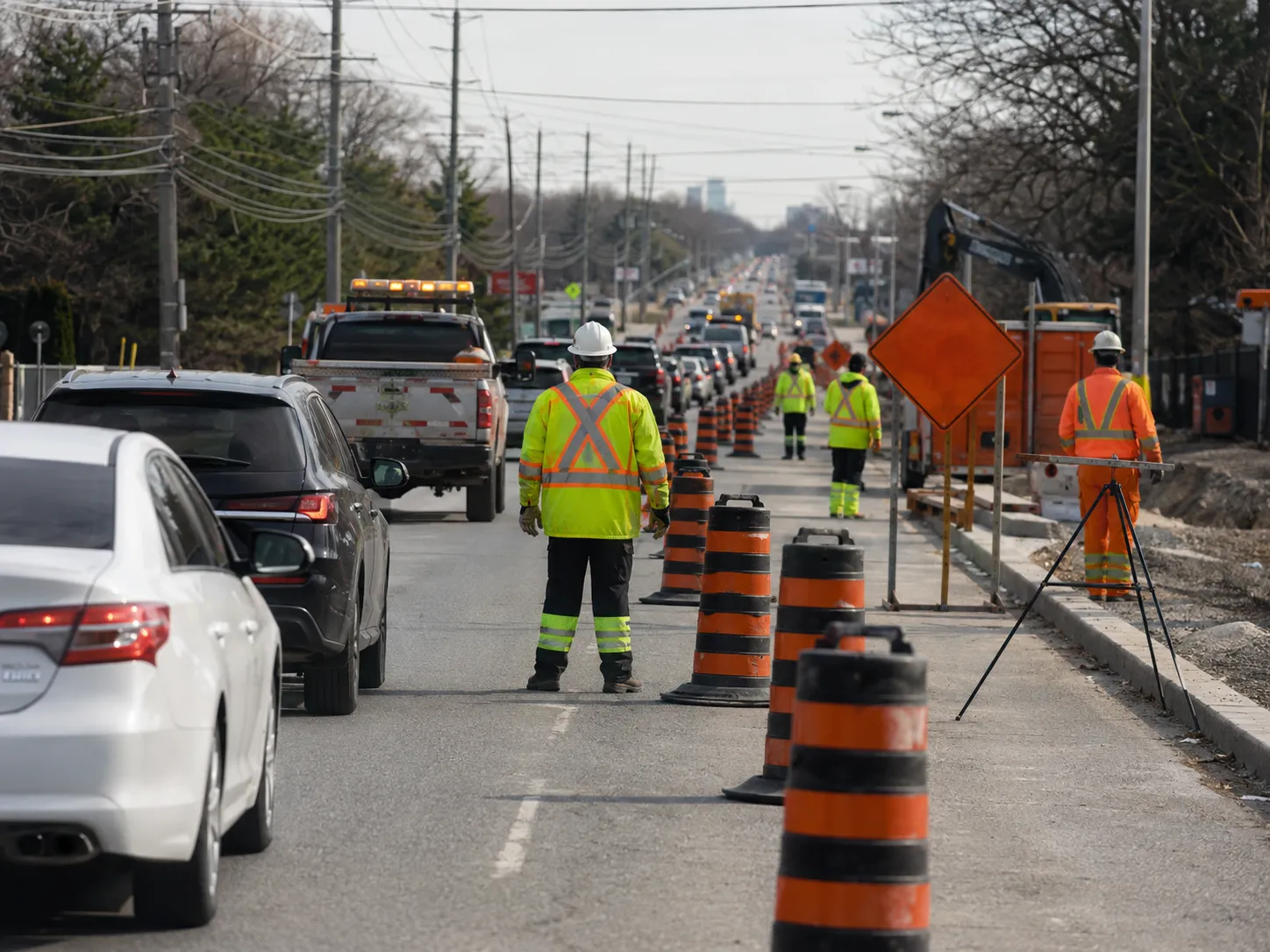
Traffic control persons are deployed in accordance with Ontario Regulation 213/91 for Construction Projects, the applicable Ontario Traffic Manual Book 7 layout, project procedures, and road-authority conditions. Their protective clothing, sign, position, instructions, and ability to communicate must suit the actual traffic exposure.
The field arrangement includes advance warning so drivers encounter the person as the final active control, not the first indication of work. Personnel are placed where approaching traffic has enough distance to see, understand, and stop. The stop and slow paddle is kept legible and used consistently.
On multi-lane or high-speed roads, flagging may not be an acceptable substitute for barrier, signals, police control directed by the authority, or a different closure design. We confirm the approved control method rather than assigning people to an unsuitable exposure.
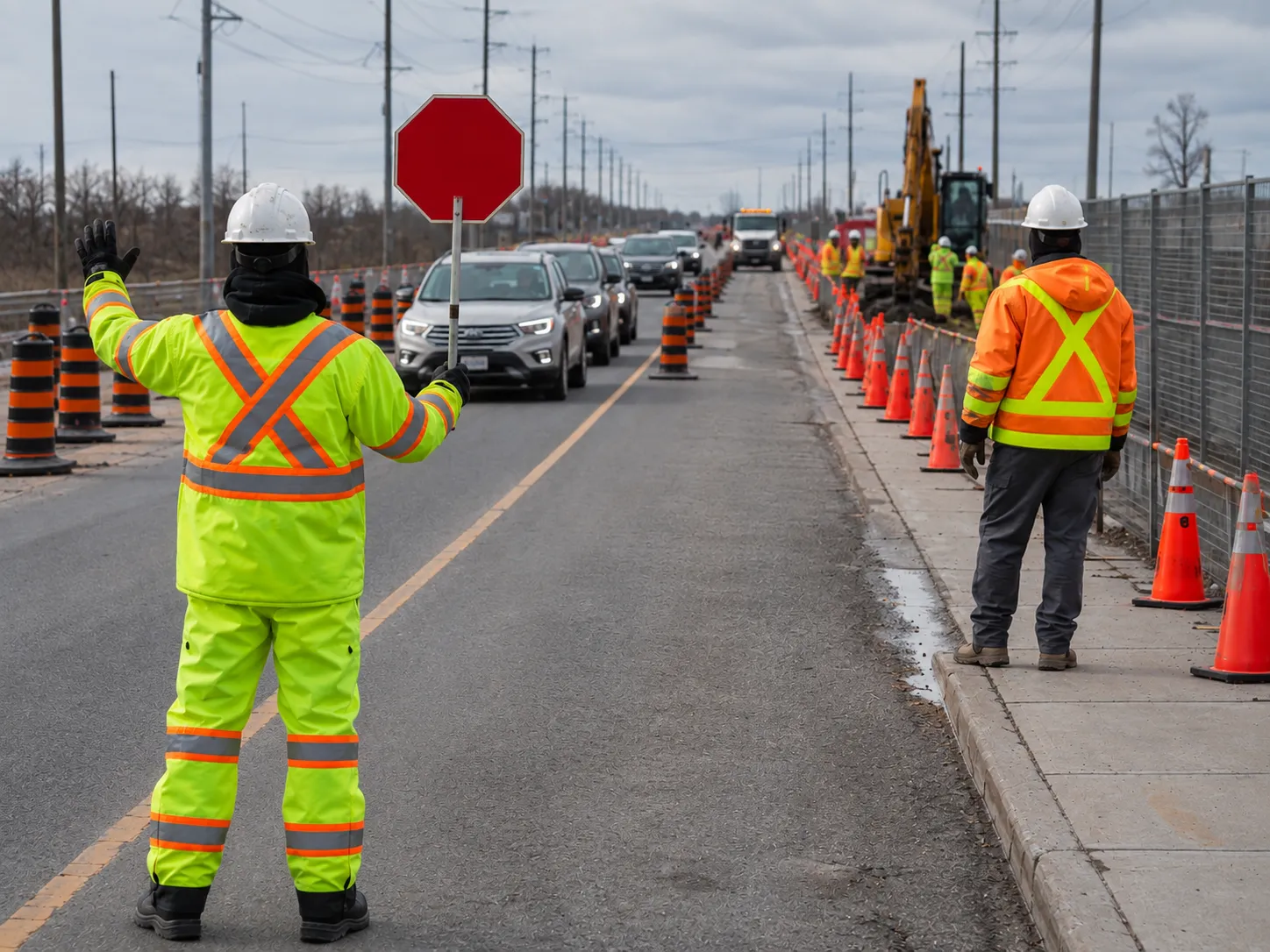
Serious failures include conflicting signals from paired personnel, releasing traffic before equipment clears, standing beside or behind an obstruction, turning away from approaching vehicles, allowing queues to block an intersection, or using informal hand gestures. We prevent these failures with dedicated roles, rehearsed communication, and active supervision.
Fatigue and distraction are operational hazards. We plan relief, hydration, weather protection, and breaks without abandoning a control point. Radios are checked before the shift and protected from equipment noise or dead zones. When controlling a backing truck, the traffic control person does not replace the vehicle’s signaller and must not stand in the reversing path. Separate responsibilities are coordinated so the driver receives one clear movement command while public traffic remains stopped. Near misses trigger an immediate reset and briefing.
Planning traffic control persons and flagging? Talk it through with our team.
Traffic control persons are used at lane reductions, alternating single-lane operations, busy construction gates, haul-road crossings, concrete deliveries, utility work, paving, drilling, crane setup, and short-duration occupations. The need depends on a live conflict that requires active judgment and direct road-user instruction.
Industrial facilities may use controlled crossings where haul trucks intersect employee vehicles or mobile equipment enters a shared route. Municipal work can require personnel at each end of an excavation, around a moving operation, or at a pedestrian conflict. Dense Toronto sites often need gate control because trucks must cross a sidewalk before entering traffic. We coordinate that movement so the sidewalk is stopped only when the vehicle is ready, reducing unnecessary delay and risky impatience.
Have drawings for traffic control persons and flagging? Send them over and we will scope it.
A traffic control person is used when construction creates a temporary vehicle conflict that requires active direction under Ontario Regulation 213/91 and the applicable Book 7 arrangement. The need depends on visibility, roadway configuration, work method, and approved plan. Devices or barriers may be required instead on higher-risk roads.
The person coordinates the truck movement with pedestrians, cyclists, and roadway traffic, stopping road users only when authorized and necessary. They remain outside the vehicle path, confirm the gate and street are clear, and work with the vehicle signaller without taking over the separate responsibility for directing a reversing driver.
Only where the approved arrangement, distance, and unobstructed sight lines allow one person to see and control the entire conflict safely. Many alternating operations require a person at each end with dependable communication. We verify the layout in the field before deciding that one control point is sufficient.
Paired personnel use a defined radio protocol or another reliable method approved for the operation. Each confirms that the last released vehicle and any construction equipment have cleared before the opposing direction moves. If communication is lost or ambiguous, both approaches remain stopped until positive control is re-established.
Not as an assumed combined duty. A reversing vehicle may require a dedicated signaller with an uninterrupted view and clear communication with the operator. The traffic control person manages public or site traffic at the conflict point. Combining roles can divide attention and must not leave either movement uncontrolled.
Provide the road and access location, work activity, approved traffic plan, hours, expected traffic and truck volumes, number of control points, sight restrictions, and staging sequence. We also need to know about transit, cyclists, pedestrians, night work, equipment noise, reversing movements, and the permit window.
The person maintains a defensible position and does not step into the vehicle path to force compliance. The affected work movement is stopped, the incident is communicated to supervision, and the control arrangement is reviewed. Repeated non-compliance may require police or road-authority involvement and a different approved setup.
Still have a question about traffic control persons and flagging? Ask our team directly.
Commercial and heavy-civil construction delivered for developers, contractors, property managers, and municipalities.
Send drawings, a site plan, or a description of the scope. Harrowgate Group is licensed, insured, and WSIB-covered.
Licensed, Insured & WSIB-Covered, work managed and documented on every job
Tell us what you need and we’ll get you a quote. Licensed, insured & WSIB-covered · Free, no-obligation quote & on-site assessment.
Companies We've Worked With
Harrowgate Group delivers commercial and heavy-civil construction for developers, contractors, institutions, municipalities, and property groups across Ontario.
 Popeyes
  Tim Hortons
  Subway
  University of Toronto
  Madison Group
  RioCan
  Women's College Hospital
  Starbucks
  Mazda
Mazda  TD Bank
  City of Toronto Popeyes Tim Hortons Subway University of Toronto Madison Group RioCan Women's College Hospital Starbucks Mazda TD Bank City of Toronto
 Three fields. We reply with the next step.
Thanks, we will call you shortly.
Press Esc to close
Marcus
Project Coordinator