
Built to spec
Built to your engineered drawings, survey, and the real site conditions, not a one-size-fits-all approach forced to fit.
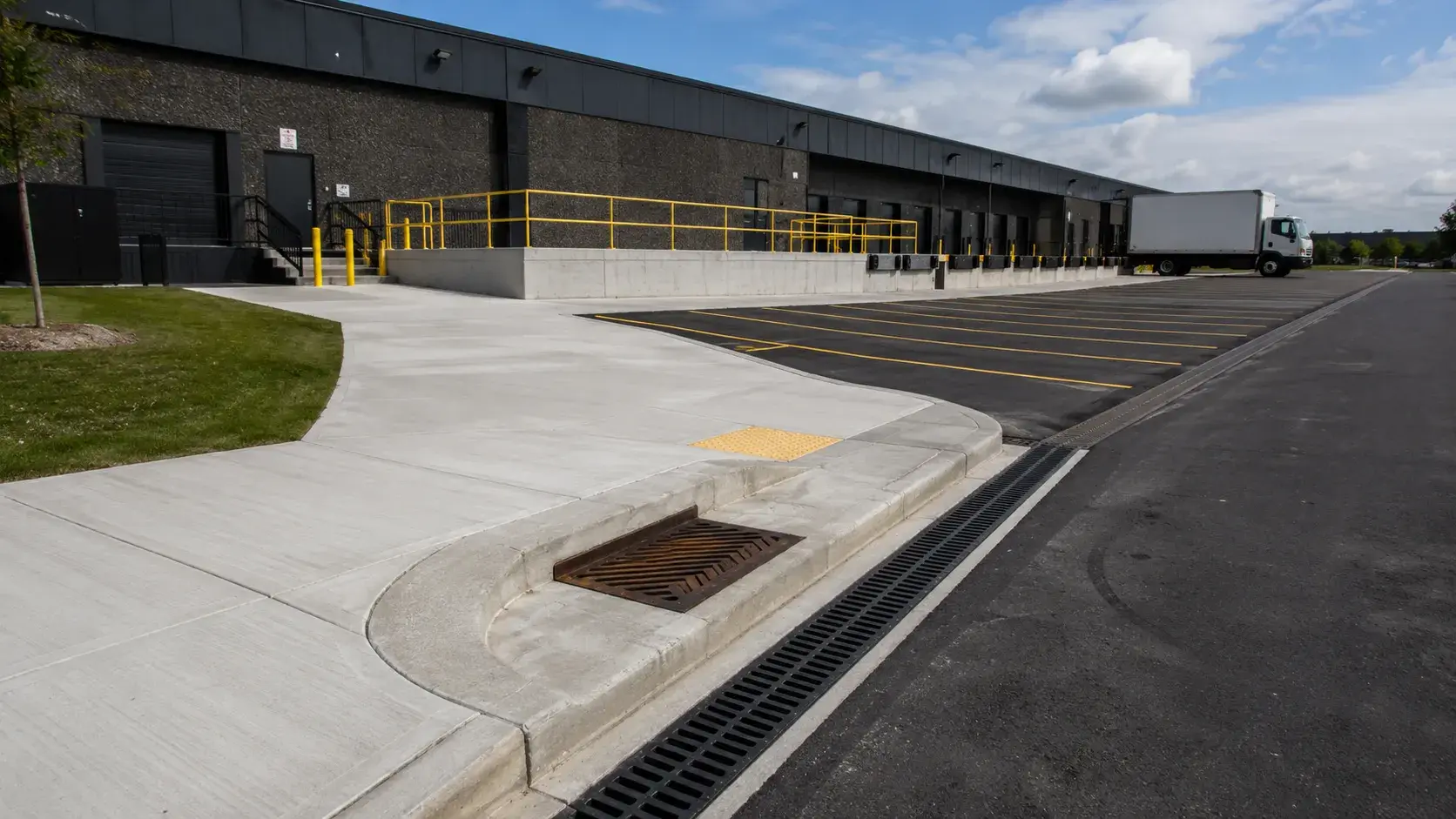
Harrowgate Group holds winter accounts for business property across the GTA and Ontario, running each site to a written service level that fixes the trigger depth, the response window, the clearing order, and the de-icing standard.
Tell us what you need and we’ll get you a quote. Licensed, insured & WSIB-covered · Free, no-obligation quote & on-site assessment.
Licensed, insured & WSIB-covered · Free, no-obligation quote & on-site assessment.
Built to your engineered drawings, survey, and the real site conditions, not a one-size-fits-all approach forced to fit.
Durable materials and methods chosen for the load, traffic, and environment on site.
Send specs, drawings, or photos and get a free, no-obligation site visit and estimate with no guesswork.
Installation and site work completed in accordance with Ontario requirements.
Commercial snow removal is seasonal snow and ice service for business property, run to a written service level rather than a phone call after a storm. Harrowgate Group covers the parking areas, drive aisles, fire routes, loading zones, sidewalks, entrances, and accessible routes across the GTA and Ontario, dispatched on a contracted trigger.
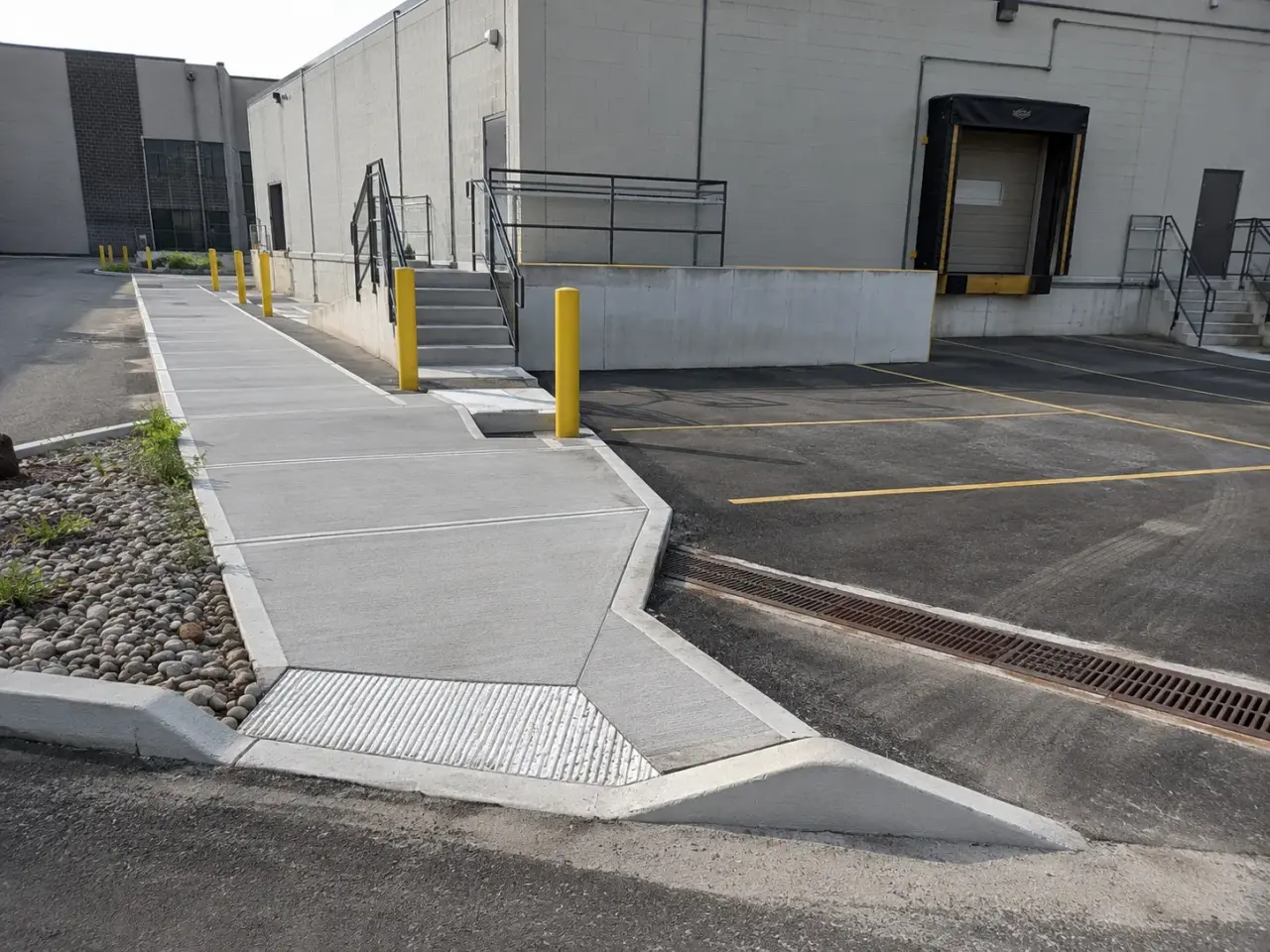
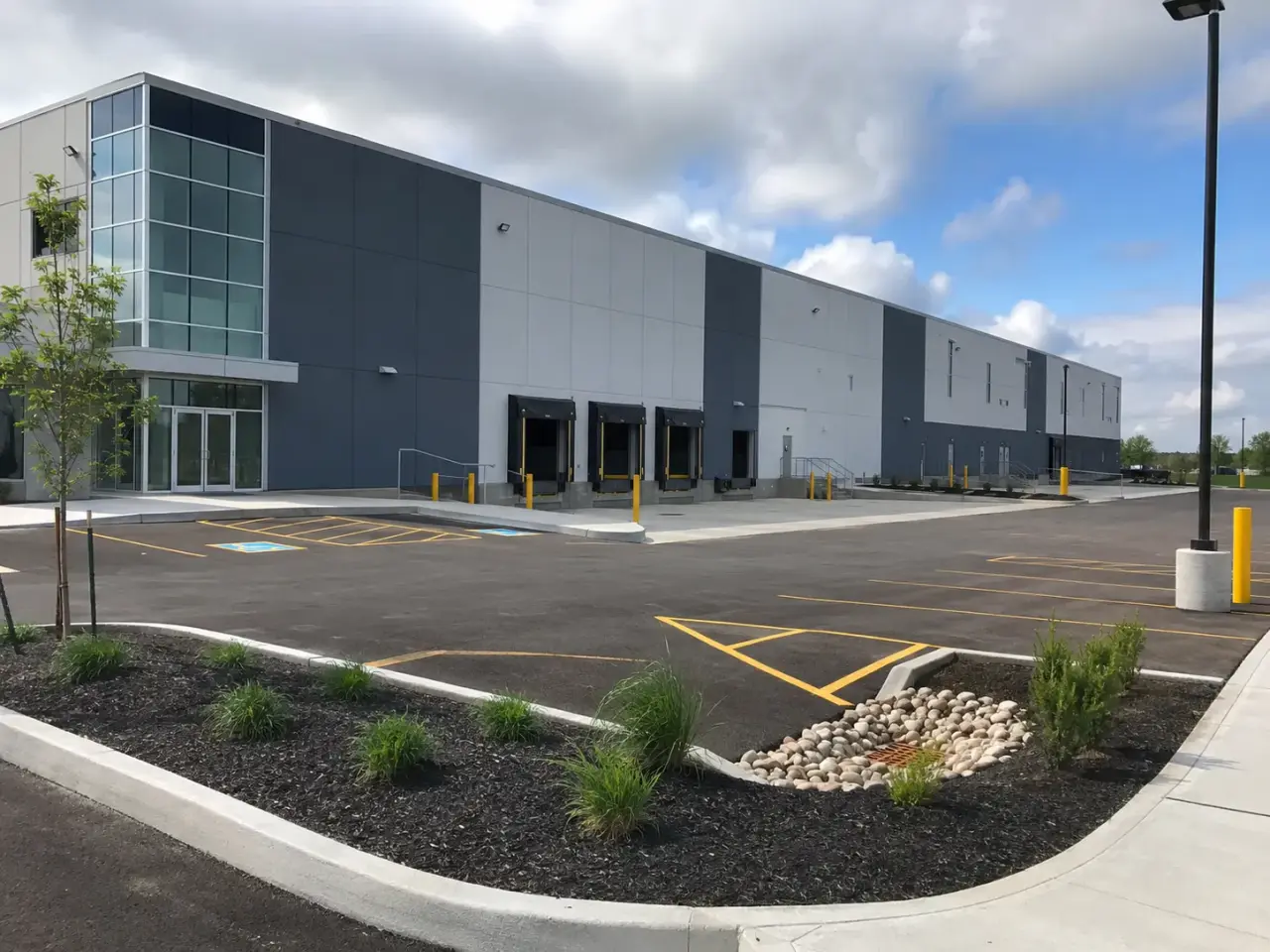
Accounts are set up in the fall, not in the storm. We walk the property, map it, assign it to a route with named crews and committed equipment, stage material, and then run the same sequence on every event.
The pre-season walk produces a site map. We stake curbs, islands, catch basins, hydrants, bollards, and anything else that disappears under snow and gets destroyed by a blade.
We set the plow pattern and the direction snow travels, and we locate storage where the piles will not take stalls the property needs, sit on catch basins, block sightlines at the exits, or occupy accessible parking. We measure sidewalk runs and count entrances so the walk crew is sized correctly rather than borrowed from the lot crew.
During an event we pre-treat ahead of the forecast where the surface and timing allow it, dispatch at the contracted trigger, and clear in the priority order the property needs.
Plow trucks and loaders with box pushers take the open lot; skid steers work the curb lines, islands, and tight corners; sidewalk machines and hand crews run the walks, entrances, stairs, and accessible routes at the same time as the lot rather than afterwards. On long events we return and keep returning, because one pass at the end leaves a packed base.
De-icer goes onto a cleared surface, at a rate matched to pavement temperature and the forecast. Then the visit is logged: trigger, arrival and departure, areas cleared, material applied and where, conditions found. That log is filed automatically, not assembled later when someone asks for it.
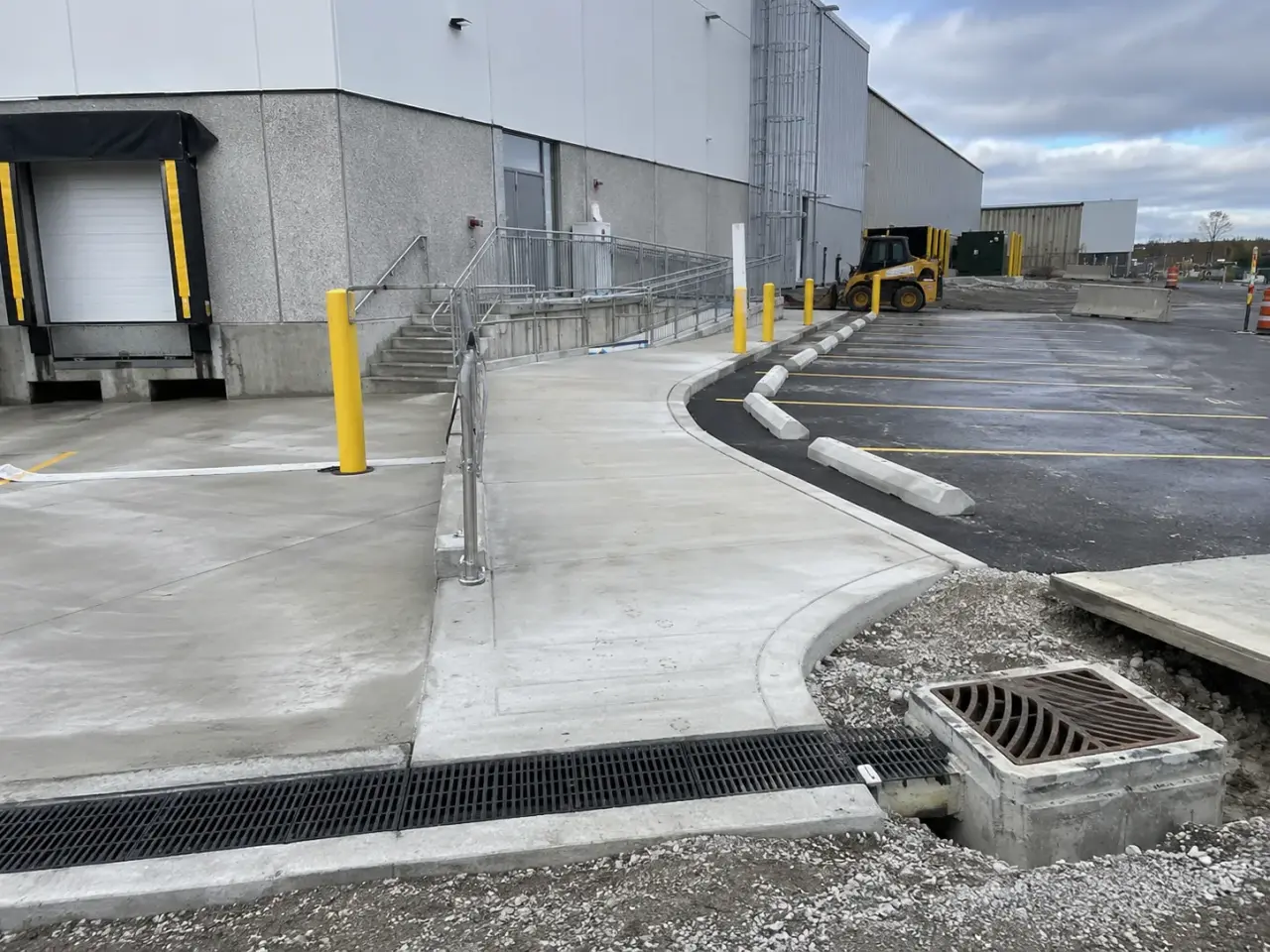
Commercial trigger depths are commonly 2.5 cm or 5 cm, with pedestrian surfaces triggered lower than parking. Sodium chloride works to roughly minus 10 degrees Celsius; below that the plan moves to magnesium or calcium chloride blends. Brine applied before an event prevents the ice bond forming at all.
Service level is the specification. A site that opens at six in the morning needs an overnight trigger and a completed lot before staff arrive. A site with continuous operations needs service through the event. A site with heavy pedestrian traffic needs the walks held to a tighter standard than the parking. Priority order across the lot, the fire routes, the accessible stalls, the walks, and the entrances is written down and priced against.
Two Ontario rules sit inside every commercial plan. The Accessibility for Ontarians with Disabilities Act requires accessible parking and the barrier-free path to the entrance to be maintained, which rules out using an accessible stall for snow storage. Municipal bylaws set clearing deadlines for the public sidewalk fronting the property, and in Toronto that is within 12 hours of the snowfall ending, with sand or salt applied if the surface stays slippery.
Chloride use is managed under the Code of Practice for the Environmental Management of Road Salts, which captures organizations using over 500 tonnes a year on a five year rolling average and anyone operating in a salt vulnerable area. Calibrated spreaders, temperature-matched rates, pre-wetting, and covered storage are the practices that keep chloride out of the storm system and off the landscaping, and they also reduce the corrosion and scaling salt causes on concrete and reinforcing steel.
Have drawings for commercial snow removal? Send them over and we will scope it.
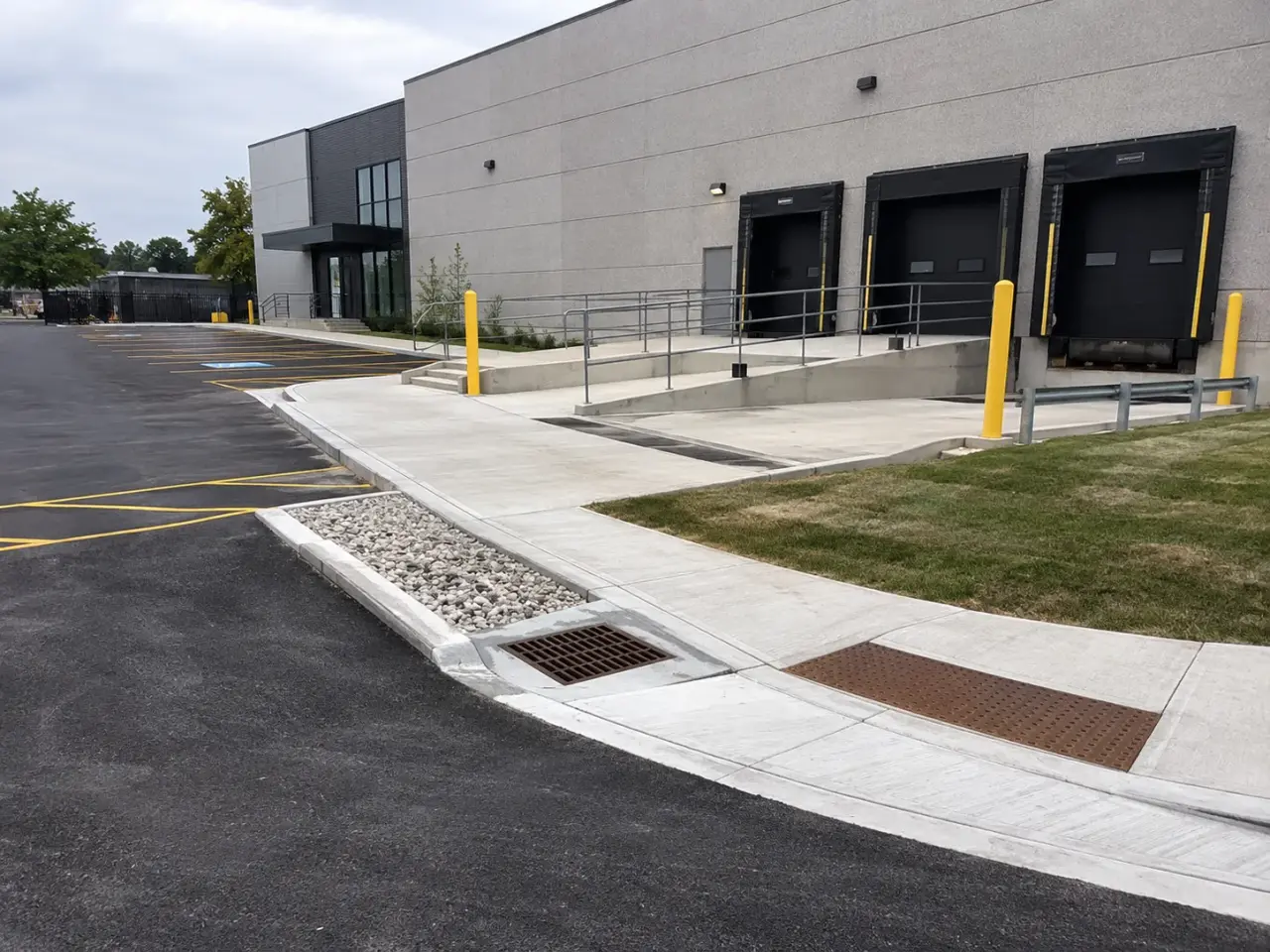
Clean site work and a tidy finish, coordinated with your engineers, the other trades, and the surrounding site conditions, built to the engineered drawings and the applicable codes.
At minimum: the trigger depth that dispatches a crew, the response window from trigger to arrival, the priority order across the lot, fire routes, accessible stalls, walks and entrances, the de-icing standard, whether long events get continuous service, snow storage locations, hauling terms, and the service record you receive after each visit.
Seasonal fixes the cost regardless of how the winter behaves, which suits budgeting and condominium reserves. Per-event tracks actual activity and suits sites that can absorb variance. Hybrid structures cap the downside both ways. Harrowgate Group prices all three against the same written service level so they are directly comparable.
August through early October. Routes are built around committed equipment and crews and they fill. Booking early also leaves time for the pre-season site walk, staking, and route mapping, which is what makes the first storm run properly instead of being improvised.
Yes, and at the same time as the lot rather than afterwards. Pedestrian surfaces are where most winter injury claims originate, so walks, entrances, stairs, and accessible routes are staffed as their own scope with sidewalk machines and hand crews, usually at a lower trigger depth than the parking areas.
The site is serviced continuously rather than once at the end, because a single late pass leaves a packed, refrozen base. The contract states this explicitly. Crews return on the contracted interval, keep the lot and the walks open through the event, and treat once the surface is actually cleared.
Under Ontario's Occupiers' Liability Act the occupier carries the duty, and section 6.1 requires written notice of a snow or ice injury within 60 days, served on the occupier or on the snow contractor. Both are in the chain. Documented service records are what determine how that plays out.
Yes. Portfolios are run to one written service standard with per-site plans, one point of contact, and consolidated reporting, so the same trigger depths and documentation apply everywhere. See Property Management Snow Removal for how multi-site accounts are structured.
A site plan or aerial and the address starts it. Lot area, sidewalk lengths, entrance count, opening hours, whether there is room to stack snow, and any history of ice complaints let us price accurately. We walk the site before finalizing.
Still have a question about commercial snow removal? Ask our team directly.
Commercial and heavy-civil construction delivered for developers, contractors, property managers, and municipalities.
Send drawings, a site plan, or a description of the scope. Harrowgate Group is licensed, insured, and WSIB-covered.
Licensed, Insured & WSIB-Covered, work managed and documented on every job
Tell us what you need and we’ll get you a quote. Licensed, insured & WSIB-covered · Free, no-obligation quote & on-site assessment.
Companies We've Worked With
Harrowgate Group delivers commercial and heavy-civil construction for developers, contractors, institutions, municipalities, and property groups across Ontario.
 Popeyes
  Tim Hortons
  Subway
  University of Toronto
  Madison Group
  RioCan
  Women's College Hospital
  Starbucks
  Mazda
Mazda  TD Bank
  City of Toronto Popeyes Tim Hortons Subway University of Toronto Madison Group RioCan Women's College Hospital Starbucks Mazda TD Bank City of Toronto
 Three fields. We reply with the next step.
Thanks, we will call you shortly.
Press Esc to close
Marcus
Project Coordinator