
Built to spec
Built to your engineered drawings, survey, and the real site conditions, not a one-size-fits-all approach forced to fit.
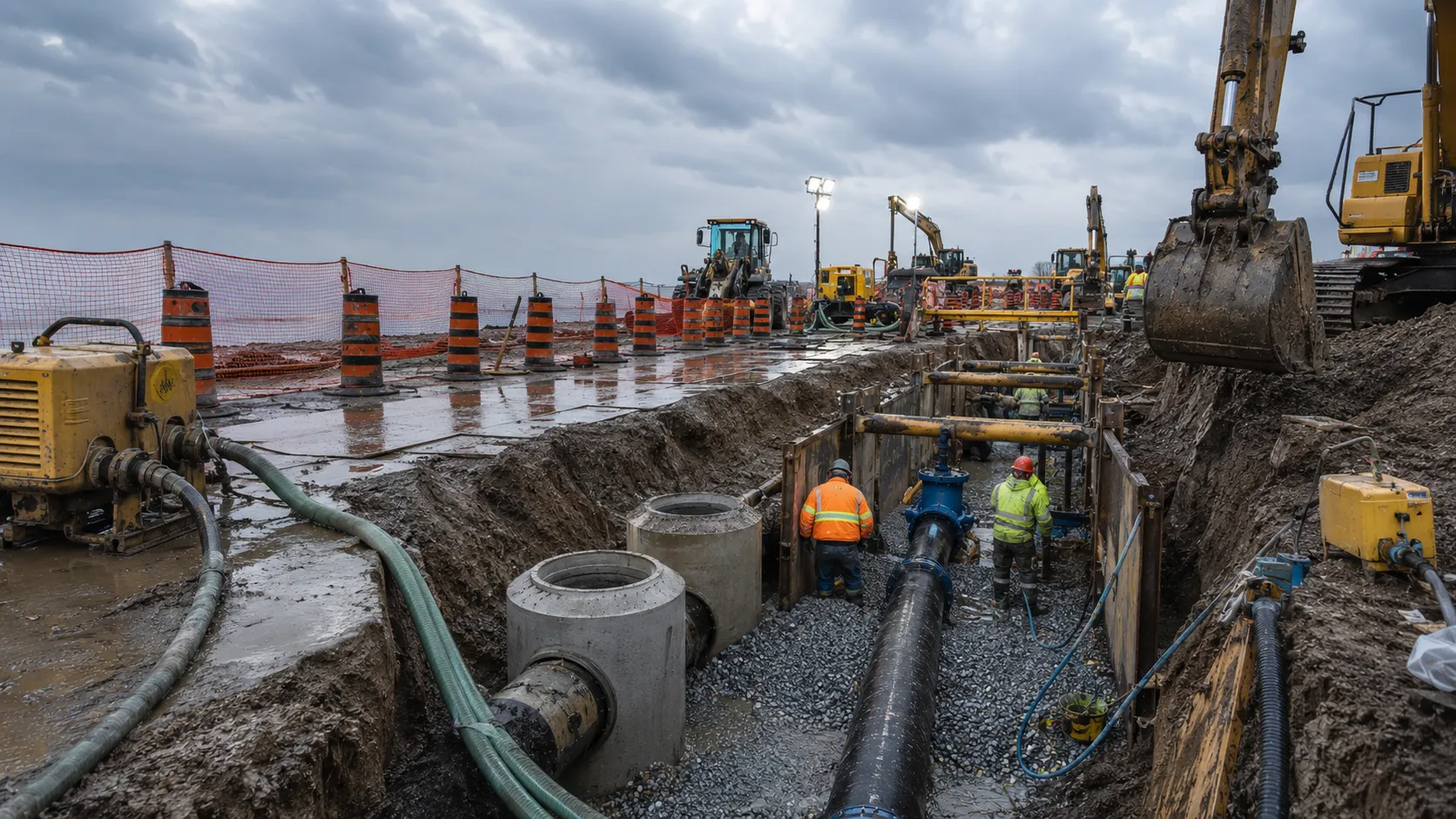
Harrowgate Group takes unscheduled winter callouts across the GTA and Ontario when a contractor has not shown, a storm has overwhelmed coverage, or a site is facing closure.
Tell us what you need and we’ll get you a quote. Licensed, insured & WSIB-covered · Free, no-obligation quote & on-site assessment.
Licensed, insured & WSIB-covered · Free, no-obligation quote & on-site assessment.
Built to your engineered drawings, survey, and the real site conditions, not a one-size-fits-all approach forced to fit.
Durable materials and methods chosen for the load, traffic, and environment on site.
Send specs, drawings, or photos and get a free, no-obligation site visit and estimate with no guesswork.
Installation and site work completed in accordance with Ontario requirements.
Emergency snow response is unscheduled winter callout for a site that needs clearing, de-icing, or snow removal immediately. Harrowgate Group dispatches across the GTA and Ontario whether or not the property sits on one of our seasonal routes, with crews and equipment already staged in the region.
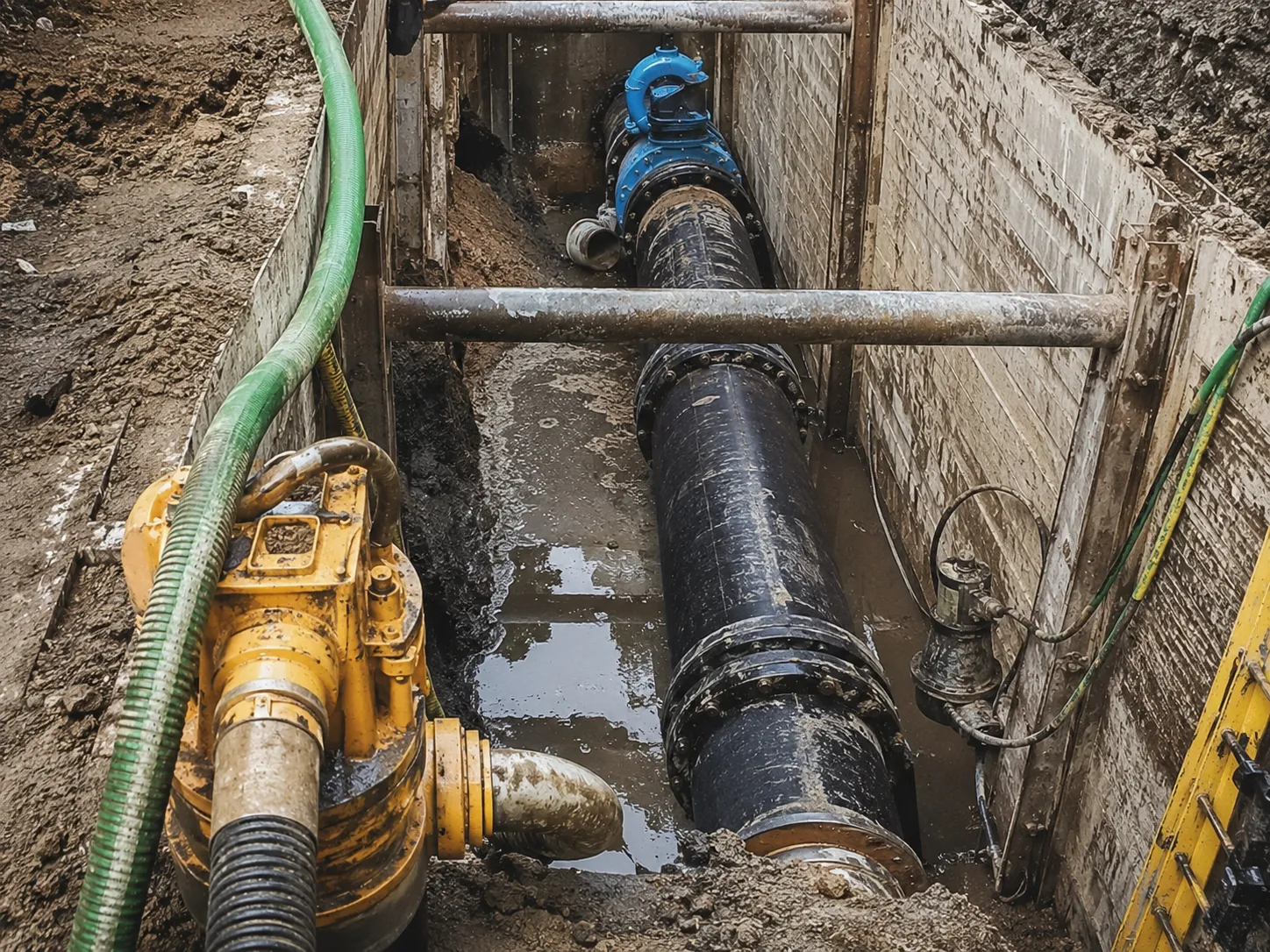
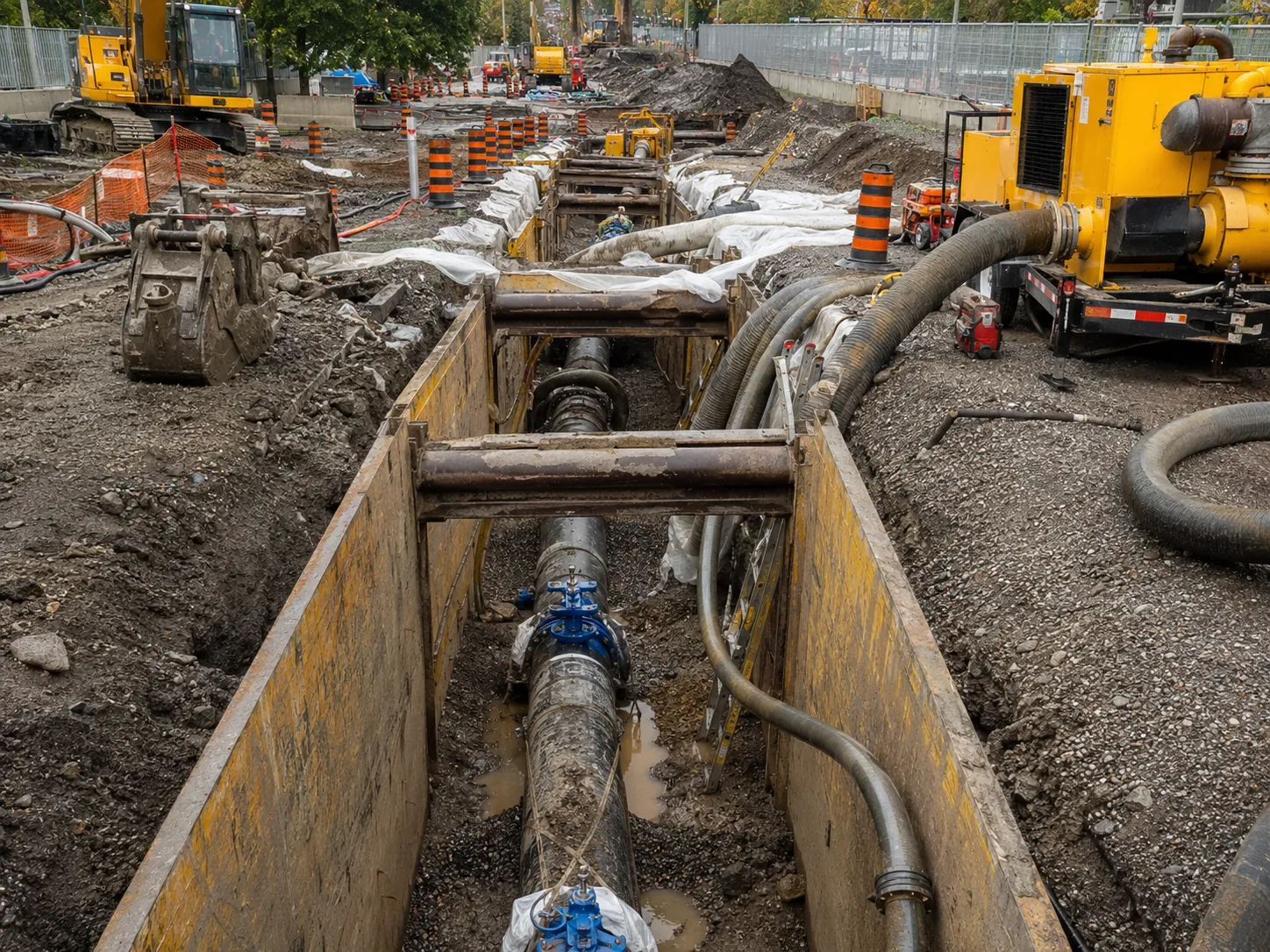
We confirm the site and the hazard, dispatch from the nearest staged crew, clear and treat the highest-risk surfaces first, then complete the rest of the property and document what was found and what was done.
The first question on a callout is what is actually dangerous right now. Entrances, stairs, ramps, accessible routes, and fire routes come first, because those are the surfaces where an injury or an access failure happens in the next hour. Drive aisles and travel routes come next so the property is reachable. Parking areas and lower-priority surfaces follow.
Because we are arriving at a site we may not have mapped, the crew works with the hazards it can see and asks about the ones it cannot. Buried curbs, islands, catch basins, bollards, and wheel stops are the main risk to both the equipment and the property on an unfamiliar lot, so where a property has a plan or a plow map from a previous contractor, it materially speeds the work and reduces the chance of damage.
De-icing follows clearing, at rates matched to pavement temperature. If the site has consolidated piles blocking basins or fire routes, loading and hauling is arranged rather than pushing them further. And the condition on arrival is documented alongside the work performed, which matters more on an emergency callout than on a routine visit, because the property often needs a record showing exactly what state the site was in when we got there.
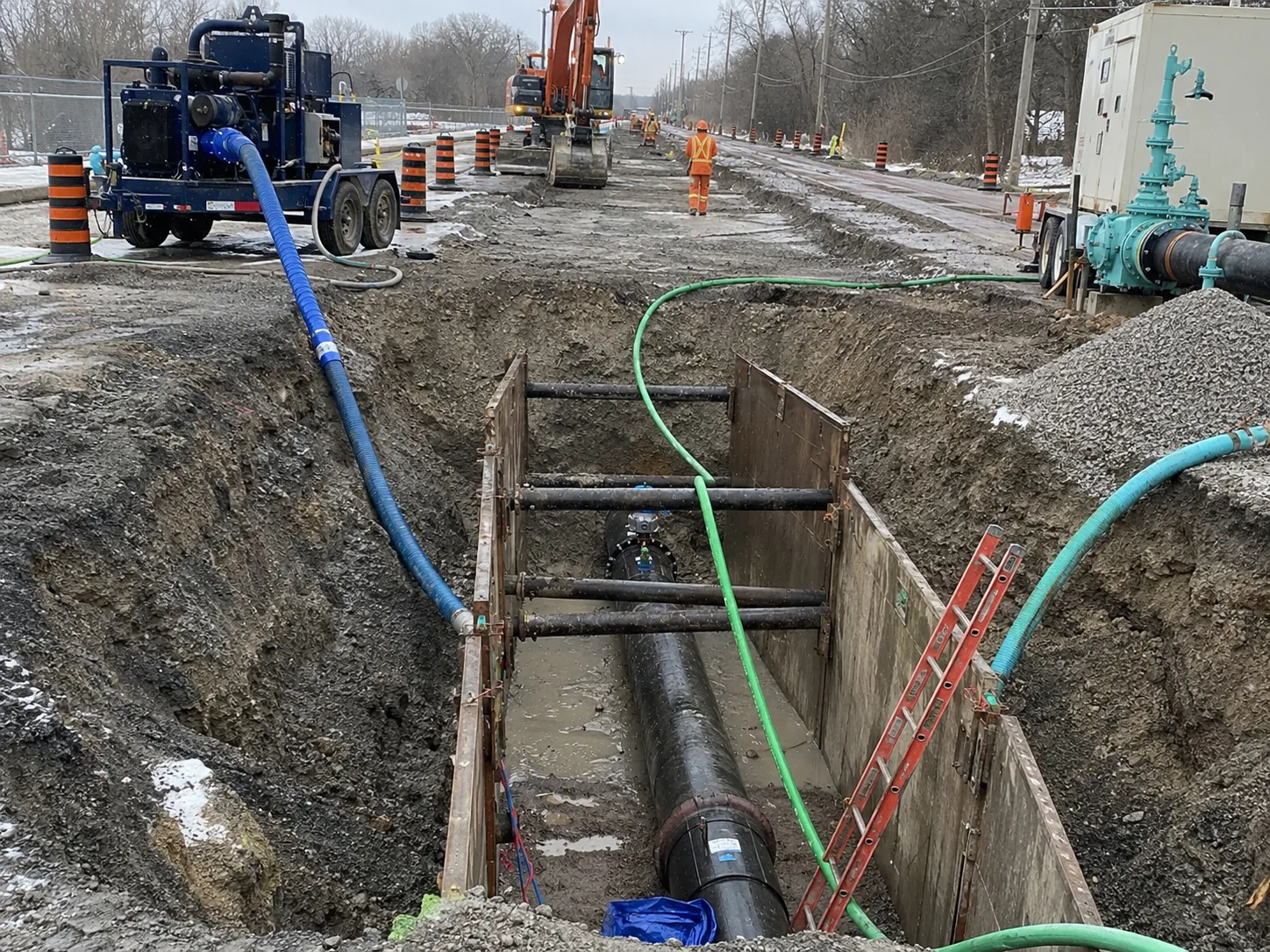
Response time on an unscheduled callout depends on where crews are and what is already running. During a large regional event, contracted seasonal sites are serviced first, because those commitments were made in writing before the season.
We will say honestly what we can do rather than promise a window we cannot hold. That is the same reason we size seasonal routes to committed equipment: a contractor who promises everyone immediate response during a storm is the contractor who caused the callout in the first place.
Section 6.1 of Ontario's Occupiers' Liability Act requires written notice within 60 days of a snow or ice injury, served on the occupier or on the contractor hired to clear the site. When a property has been left unserviced, the exposure sits with the occupier and documentation becomes critical, both of the failure and of the remediation. A callout record showing arrival time, conditions found, surfaces cleared, and material applied is part of what protects the property afterwards.
Accessible parking and the barrier-free path to the entrance have to remain available under the Accessibility for Ontarians with Disabilities Act, and fire routes have to stay passable, so both are treated as immediate-priority elements on any callout regardless of what else the site needs.
Almost always because the seasonal arrangement was weaker than it looked: an oversold route, an not yet defined service level, no pre-treatment, or no plan for storage running out.
The oversold route. A contractor signs more property than their fleet covers, and during a real event the sites at the end of the route wait. This is the single most common cause.
The not yet defined service level. If the contract never fixed a trigger depth or a response window, there is nothing to hold the contractor to, and the property discovers this mid-storm.
No anti-icing. A site that was never pre-treated ices badly on a freezing rain event, and reactive salting on top of established ice does not recover it quickly.
No storage plan. Piles grow all season without a hauling plan until they block basins and fire routes, and the property has a compliance problem rather than a snow problem.
Equipment failure with no backup. A single-truck operator with a breakdown has no coverage, and the property finds out at three in the morning.
Have drawings for emergency snow response? Send them over and we will scope it.
Yes, subject to what is already running. Crews and equipment are staged across the GTA, so unscheduled callouts are taken during and after events. During a large regional storm, contracted seasonal sites are serviced first because those commitments were made in writing before the season.
It depends on where crews are and what is already committed. We will tell you honestly what we can hold rather than promise a window we cannot meet, because a contractor who promises everyone immediate response during a storm is usually the reason the callout was needed.
Whatever is dangerous now: entrances, stairs, ramps, accessible routes, and fire routes, because that is where an injury or an access failure happens next. Drive aisles and travel routes follow so the property is reachable, then the parking areas and lower-priority surfaces.
Yes. That is handled in two parts: immediate coverage to make the site safe, then a proper transition onto a mapped route with a site walk, staking where conditions allow, and a written service plan, so the property is not left on emergency callouts for the rest of the winter.
Yes, subject to truck availability. We run loaders and dump trucks year-round for civil work, so haul-out is a routine operation rather than a subcontracted scramble. Sites with piles blocking catch basins, fire routes, or accessible stalls are treated as priority.
The condition found on arrival as well as the work performed: arrival and departure times, surfaces cleared, material applied, and the state of the site when we got there. That record matters more on a callout than on a routine visit, because it establishes what the property was dealing with.
Get the site made safe first, then preserve the record. Ontario's Occupiers' Liability Act gives an injured party 60 days to serve written notice on the occupier or the snow contractor, so photographs, weather conditions, and a documented account of the remediation all matter. Notify your insurer promptly.
The site address, what is unsafe right now, whether anyone has been injured, whether there is a site plan or plow map available, and any buried hazards such as curbs, islands, catch basins, or bollards. On an unfamiliar lot that information speeds the work and prevents damage.
Still have a question about emergency snow response? Ask our team directly.
Commercial and heavy-civil construction delivered for developers, contractors, property managers, and municipalities.
Send drawings, a site plan, or a description of the scope. Harrowgate Group is licensed, insured, and WSIB-covered.
Licensed, Insured & WSIB-Covered, work managed and documented on every job
Tell us what you need and we’ll get you a quote. Licensed, insured & WSIB-covered · Free, no-obligation quote & on-site assessment.
Companies We've Worked With
Harrowgate Group delivers commercial and heavy-civil construction for developers, contractors, institutions, municipalities, and property groups across Ontario.
 Popeyes
  Tim Hortons
  Subway
  University of Toronto
  Madison Group
  RioCan
  Women's College Hospital
  Starbucks
  Mazda
Mazda  TD Bank
  City of Toronto Popeyes Tim Hortons Subway University of Toronto Madison Group RioCan Women's College Hospital Starbucks Mazda TD Bank City of Toronto
 Three fields. We reply with the next step.
Thanks, we will call you shortly.
Press Esc to close
Marcus
Project Coordinator