
Built to spec
Built to your engineered drawings, survey, and the real site conditions, not a one-size-fits-all approach forced to fit.
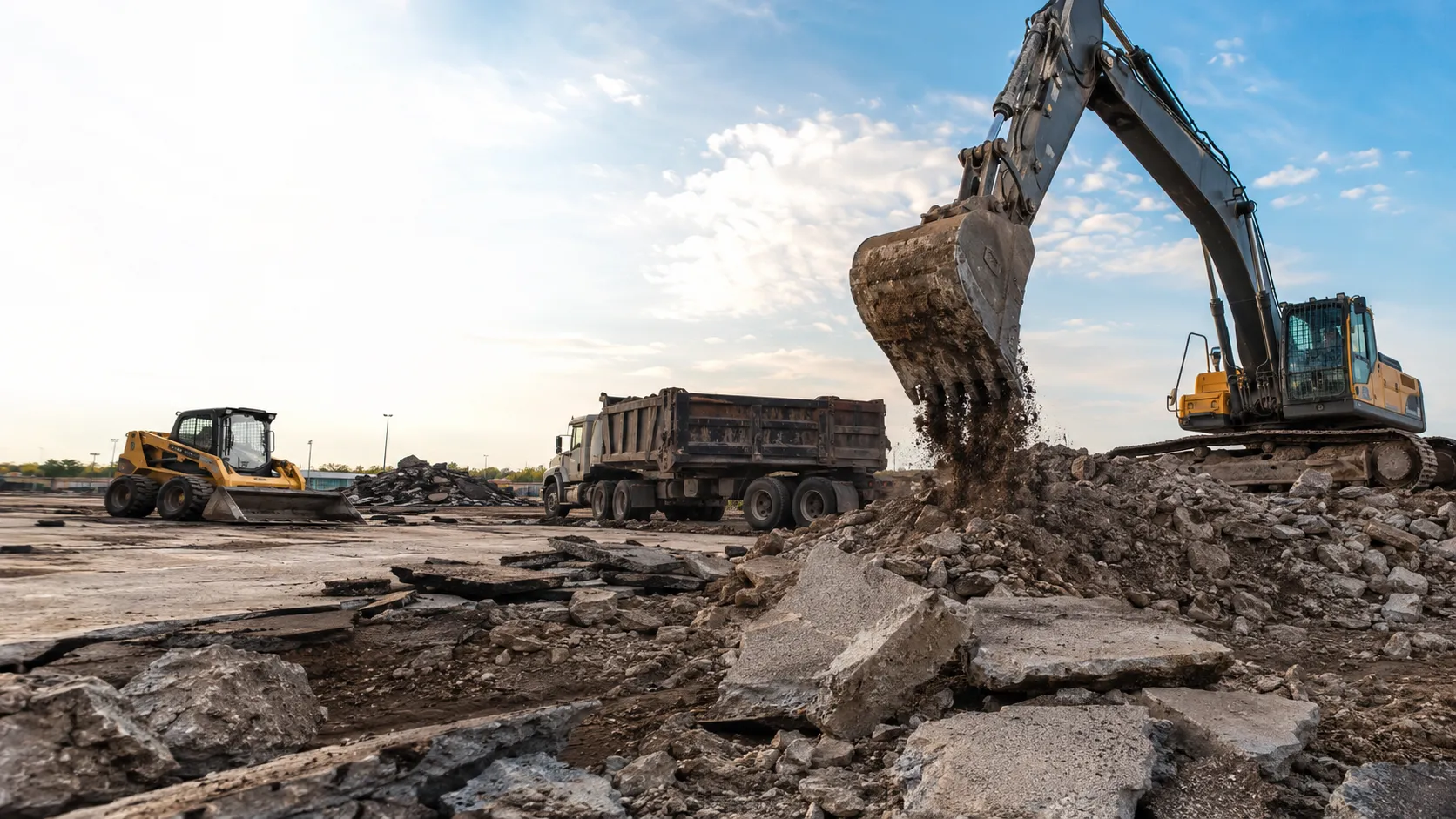
Harrowgate Group loads and hauls stockpiled snow off commercial sites across the GTA and Ontario when a property has run out of room to stack it.
Tell us what you need and we’ll get you a quote. Licensed, insured & WSIB-covered · Free, no-obligation quote & on-site assessment.
Licensed, insured & WSIB-covered · Free, no-obligation quote & on-site assessment.
Built to your engineered drawings, survey, and the real site conditions, not a one-size-fits-all approach forced to fit.
Durable materials and methods chosen for the load, traffic, and environment on site.
Send specs, drawings, or photos and get a free, no-obligation site visit and estimate with no guesswork.
Installation and site work completed in accordance with Ontario requirements.
Snow hauling is loading stockpiled snow into trucks and removing it from the property. Harrowgate Group hauls across the GTA and Ontario when a site has run out of usable storage, when the piles are costing the property parking, blocking sightlines, burying catch basins, or sending meltwater across the drive aisle to refreeze.
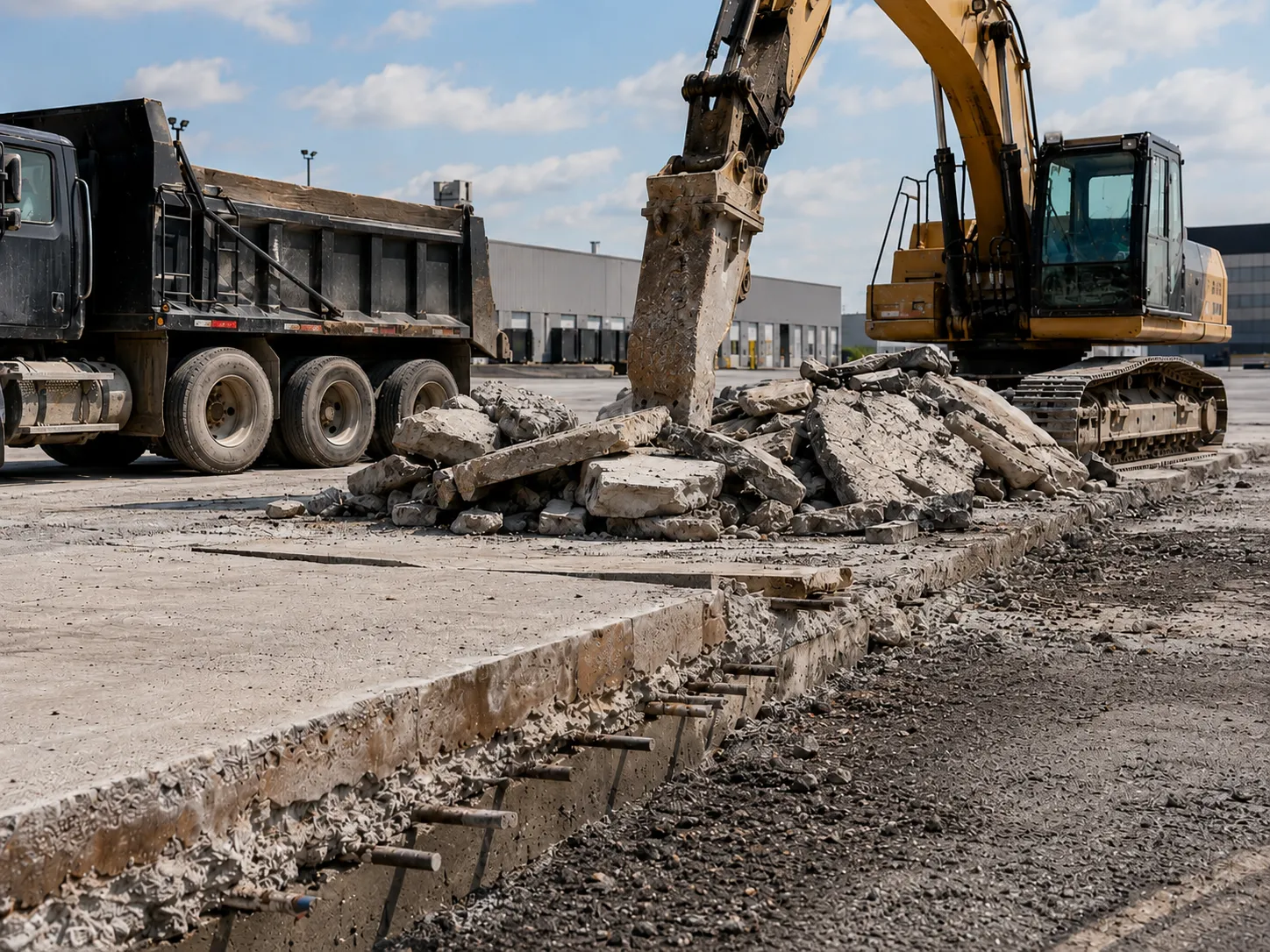
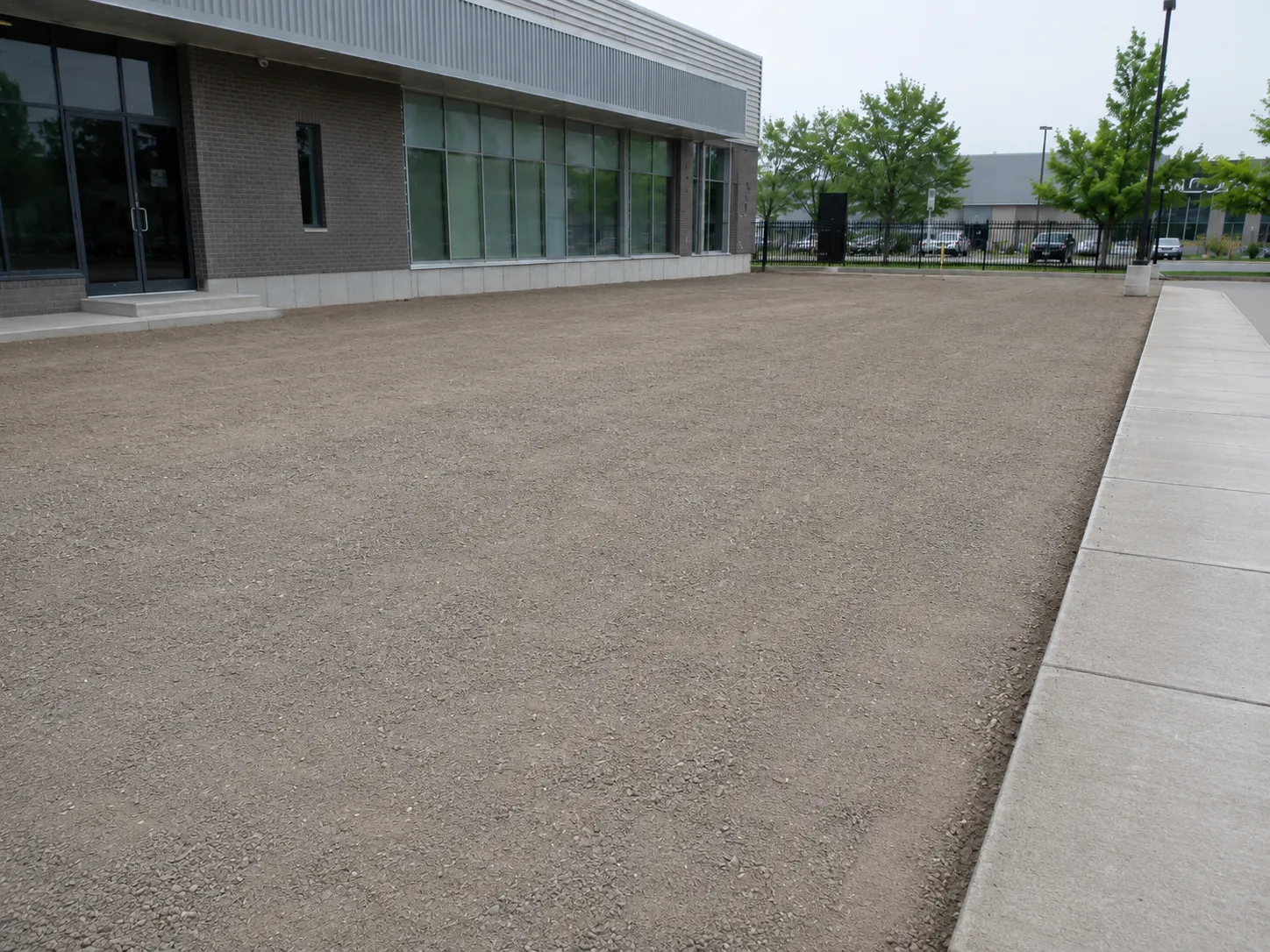
Loaders and blowers feed trucks staged on site, the piles are removed to pavement, the recovered area is cleared and treated, and the load count and disposal location are documented.
Most haul-outs run overnight or outside operating hours, because the operation needs room: a loader working, trucks cycling in and out, and a staging point for loading. On a retail or office site that means starting after close and finishing before opening. On an industrial yard it means coordinating with live truck movement so the shunt route stays open.
Loaders with buckets handle consolidated piles directly. Where a pile has frozen into a solid mass, it is broken down first rather than fought with a bucket, and snow blowers loading directly into trucks are used where volume and speed matter more than reach. Tandem and tri-axle dump trucks cycle the material off site to an approved disposal location.
The work is not finished when the pile is gone. The pavement underneath is usually covered in compacted ice and debris, and it gets scraped, cleared, and treated so the recovered stalls are actually usable rather than a sheet of ice where a pile used to be. Catch basins that were buried are opened so meltwater drains rather than crossing the lot.
Truck loads, timing, and disposal location are recorded, which matters for billing transparency and for sites where the volume removed has to be reported.
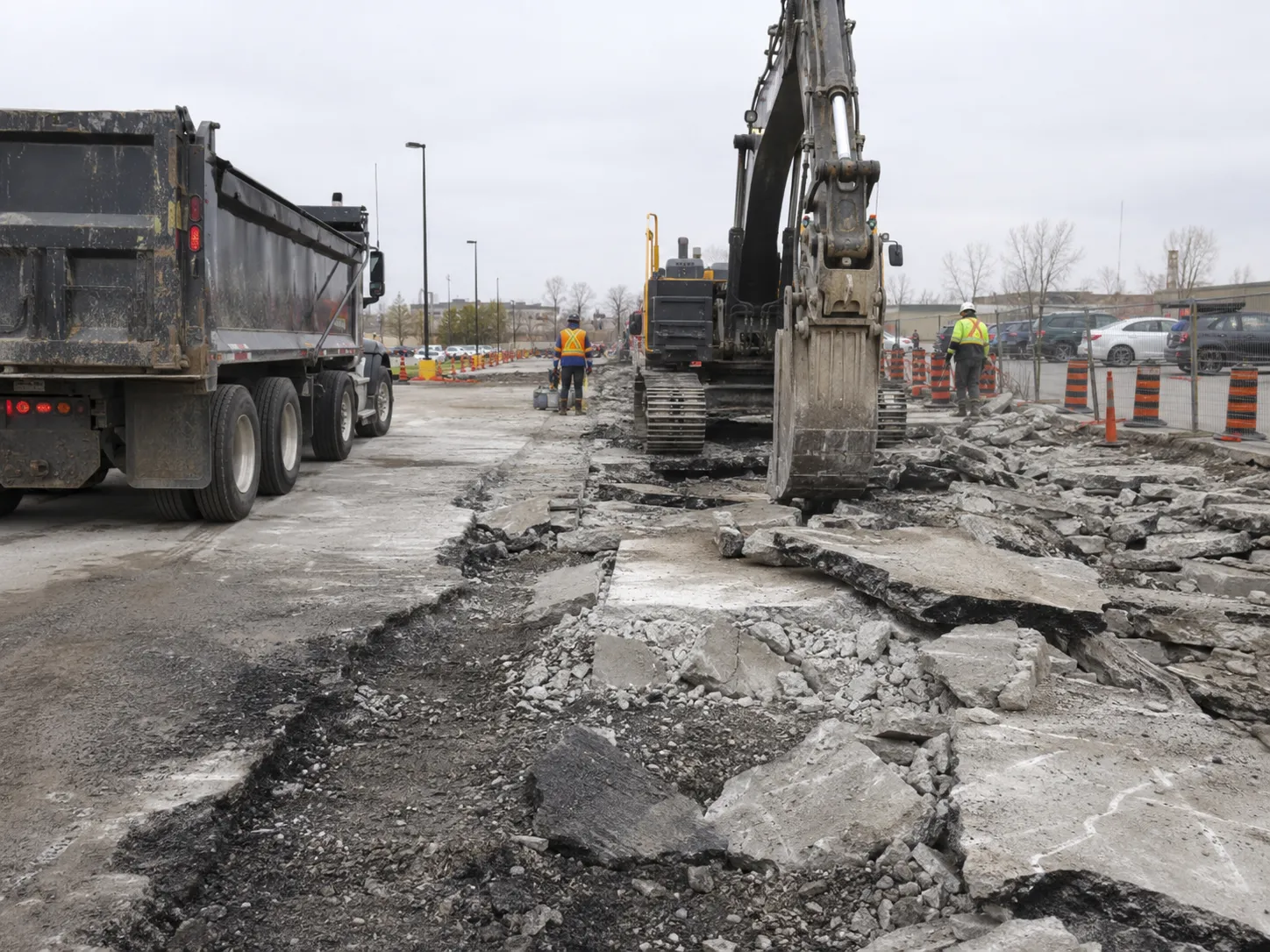
On constrained sites, hauling is planned into the seasonal scope and priced from the start rather than called as an emergency in the middle of winter at whatever rate is available.
Whether a site needs planned hauling is determined in the fall. It comes down to pavement area, the parking the property genuinely needs to keep, and how much usable storage exists that is clear of catch basins, fire routes, accessible stalls, and sightlines. Downtown sites, tight urban plazas, dealerships whose display inventory occupies the space a lot would normally stack in, and high-density condominium sites almost always fall into the planned category.
Snow removed from a commercial site is not clean. It carries chloride, grit, sand, litter, and vehicle residue, so it goes to an approved disposal location rather than being dumped opportunistically. Melting concentrates chlorides, which is exactly the concern the Code of Practice for the Environmental Management of Road Salts addresses for organizations using more than 500 tonnes a year on a five year rolling average and those operating in salt vulnerable areas.
Accessible parking and barrier-free routes have to be maintained under the Accessibility for Ontarians with Disabilities Act, and fire routes have to stay passable, so where storage capacity is genuinely exhausted, hauling is the only compliant option rather than an optional upgrade.
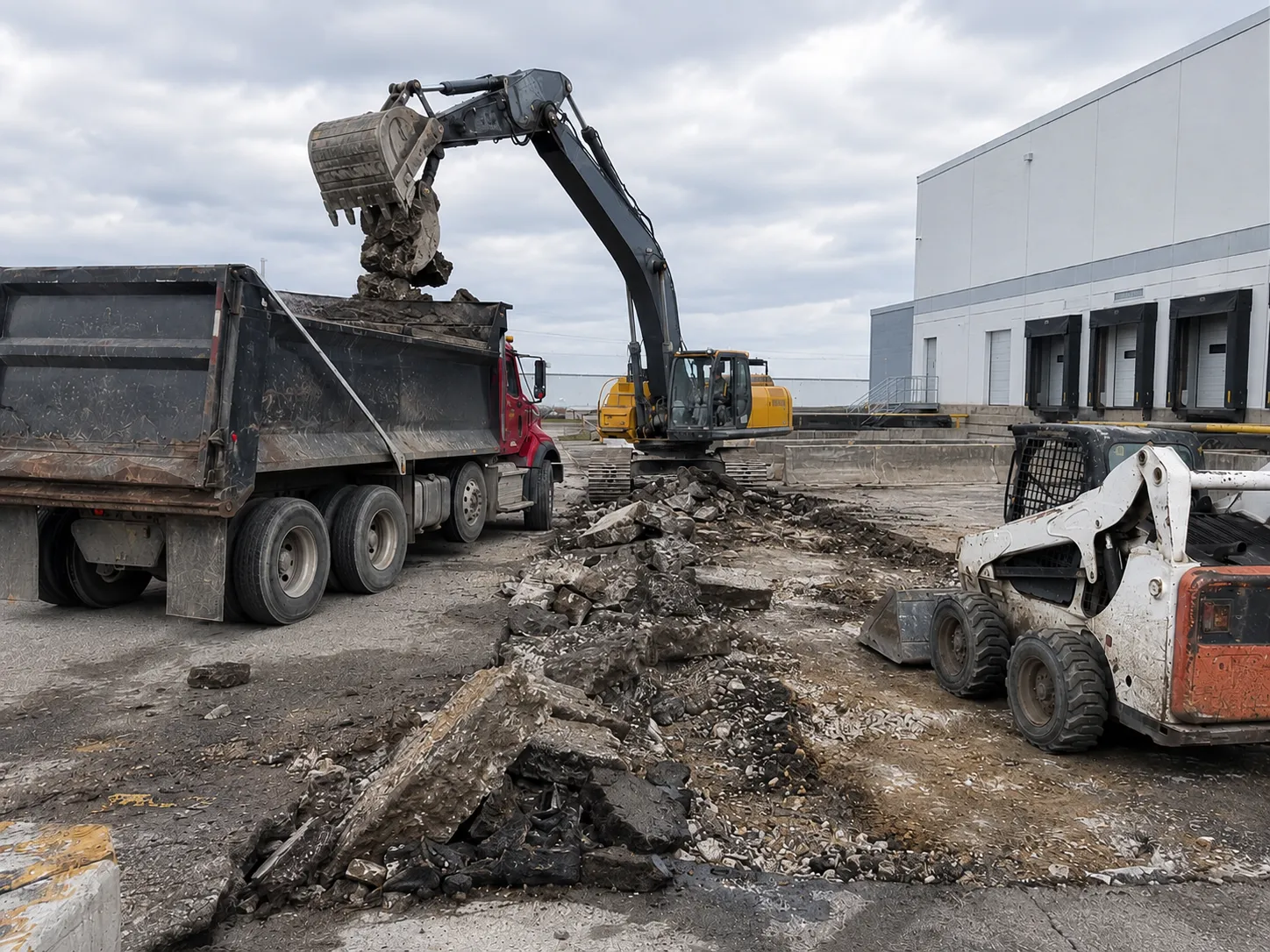
Hauling failures are waiting too long, leaving ice behind, blocking the site during business hours, and no record of what was removed.
Waiting too long. By the time a property calls, the piles have consolidated into ice, the parking loss is already costing tenants, and the work costs more and takes longer. Sites likely to need it are identified in the fall and scheduled.
Ice left behind. Removing a pile and leaving the compacted base underneath produces a slick, unusable area where parking is supposed to be. The recovered pavement is scraped, cleared, and treated as part of the job.
Blocking operations. A loader and a truck queue in a live retail lot at noon is a bigger problem than the snow was. Haul-outs run outside operating hours or in coordinated sections.
Buried drainage. Piles that sat over catch basins leave them blocked, so meltwater runs across the lot and refreezes. Basins are located and opened during the haul.
No documentation. Load counts, timing, and disposal location are recorded, which keeps billing transparent and provides the record where volume removed has to be reported.
Have drawings for snow hauling and off-site removal? Send them over and we will scope it.
When the piles start costing the property parking it needs, blocking sightlines at an exit, burying catch basins so meltwater crosses the drive aisle and refreezes, or encroaching on fire routes and accessible stalls. On constrained sites that point arrives every winter, so hauling is planned rather than reactive.
Usually overnight or outside operating hours, because a loader working and trucks cycling need room. On retail and office sites that means starting after close and finishing before opening. On industrial yards it is coordinated with live truck movement so the shunt route stays open.
To an approved disposal location. Snow from a commercial site carries chloride, grit, sand, litter, and vehicle residue, and melting concentrates chlorides, so it is not dumped opportunistically. Disposal location and load counts are recorded as part of the job.
It is once the job is finished properly. The base under a pile is usually compacted ice and debris, so the recovered area is scraped, cleared, and treated, and any catch basins that were buried are opened so meltwater drains instead of running across the lot.
On constrained sites, in the contract. Calling it mid-winter means competing for trucks at the exact moment every property in the region needs them, at whatever rate is available. Planned hauling is scheduled and priced in the fall, which is both cheaper and more reliable.
It depends on volume, loading access, and the round-trip distance to the disposal site. A tight urban plaza can be a single overnight operation; a large industrial yard after a heavy event can run several nights. Truck count is sized to the window the property can give us.
Yes, subject to equipment availability. Sites with a contractor who does not have trucks, or whose seasonal plan did not account for storage running out, are handled as a standalone operation. See Emergency Snow Response for immediate situations.
Site address and a plan or aerial, the approximate pile locations and volume, available loading access and staging room, the hours the site can be worked, and whether catch basins or accessible stalls are currently buried. A site visit confirms the volume.
Still have a question about snow hauling and off-site removal? Ask our team directly.
Commercial and heavy-civil construction delivered for developers, contractors, property managers, and municipalities.
Send drawings, a site plan, or a description of the scope. Harrowgate Group is licensed, insured, and WSIB-covered.
Licensed, Insured & WSIB-Covered, work managed and documented on every job
Tell us what you need and we’ll get you a quote. Licensed, insured & WSIB-covered · Free, no-obligation quote & on-site assessment.
Companies We've Worked With
Harrowgate Group delivers commercial and heavy-civil construction for developers, contractors, institutions, municipalities, and property groups across Ontario.
 Popeyes
  Tim Hortons
  Subway
  University of Toronto
  Madison Group
  RioCan
  Women's College Hospital
  Starbucks
  Mazda
Mazda  TD Bank
  City of Toronto Popeyes Tim Hortons Subway University of Toronto Madison Group RioCan Women's College Hospital Starbucks Mazda TD Bank City of Toronto
 Three fields. We reply with the next step.
Thanks, we will call you shortly.
Press Esc to close
Marcus
Project Coordinator