
Built to spec
Built to your engineered drawings, survey, and the real site conditions, not a one-size-fits-all approach forced to fit.
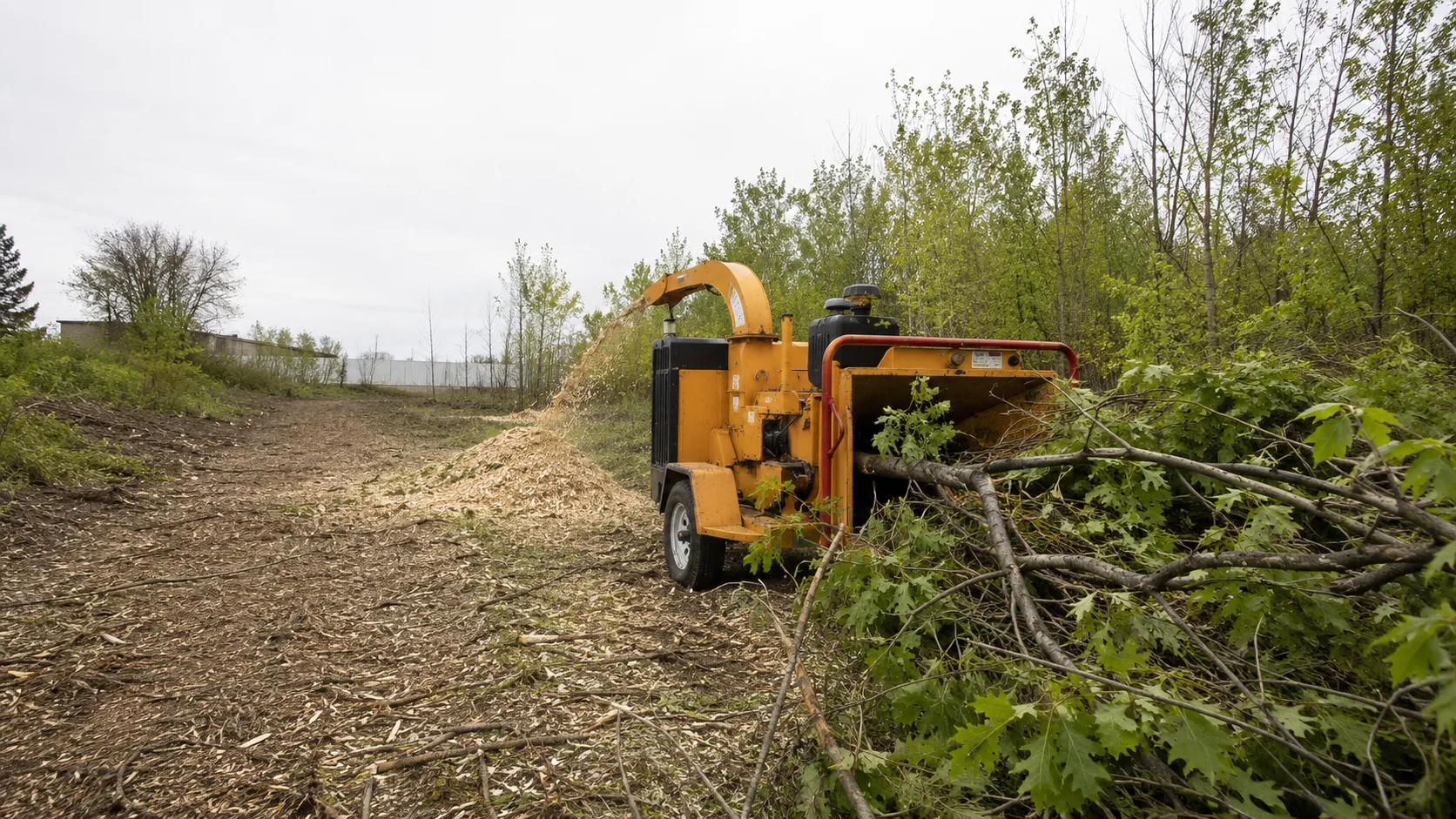
We cut, mulch, chip, collect, and remove brush and small woody growth for commercial, industrial, municipal, and heavy civil sites across Toronto, the GTA, and Ontario, opening controlled access while protecting retained trees, utilities, slopes, and environmental limits.
Tell us what you need and we’ll get you a quote. Licensed, insured & WSIB-covered · Free, no-obligation quote & on-site assessment.
Licensed, insured & WSIB-covered · Free, no-obligation quote & on-site assessment.
Built to your engineered drawings, survey, and the real site conditions, not a one-size-fits-all approach forced to fit.
Durable materials and methods chosen for the load, traffic, and environment on site.
Send specs, drawings, or photos and get a free, no-obligation site visit and estimate with no guesswork.
Installation and site work completed in accordance with Ontario requirements.
Brush clearing and chipping remove shrubs, saplings, vines, slash, and dense low vegetation from defined construction or maintenance limits. Harrowgate performs selective and production clearing throughout Toronto and the GTA, choosing hand cutting, mechanical mulching, or chipping to suit terrain, access, and retained features.
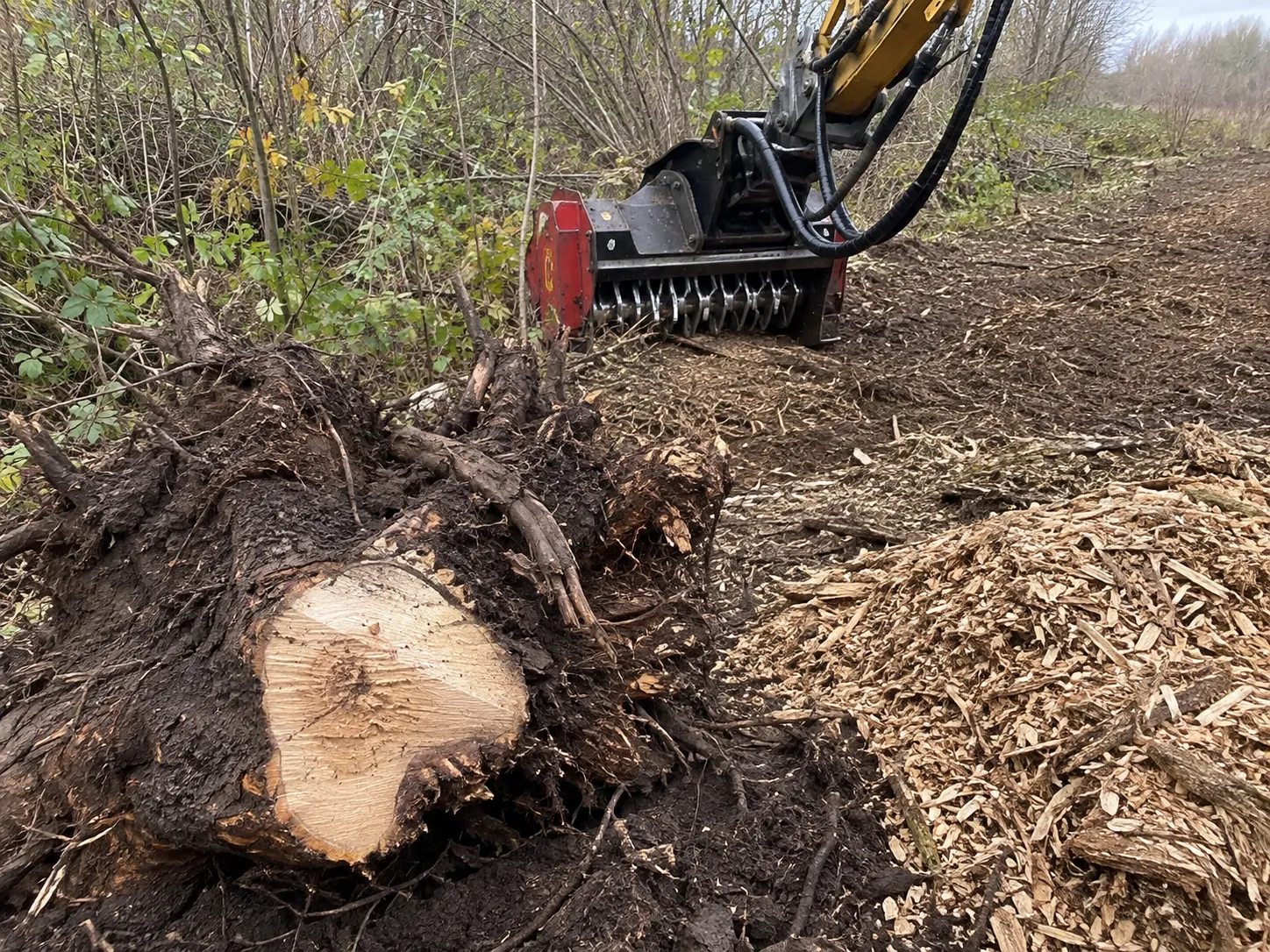
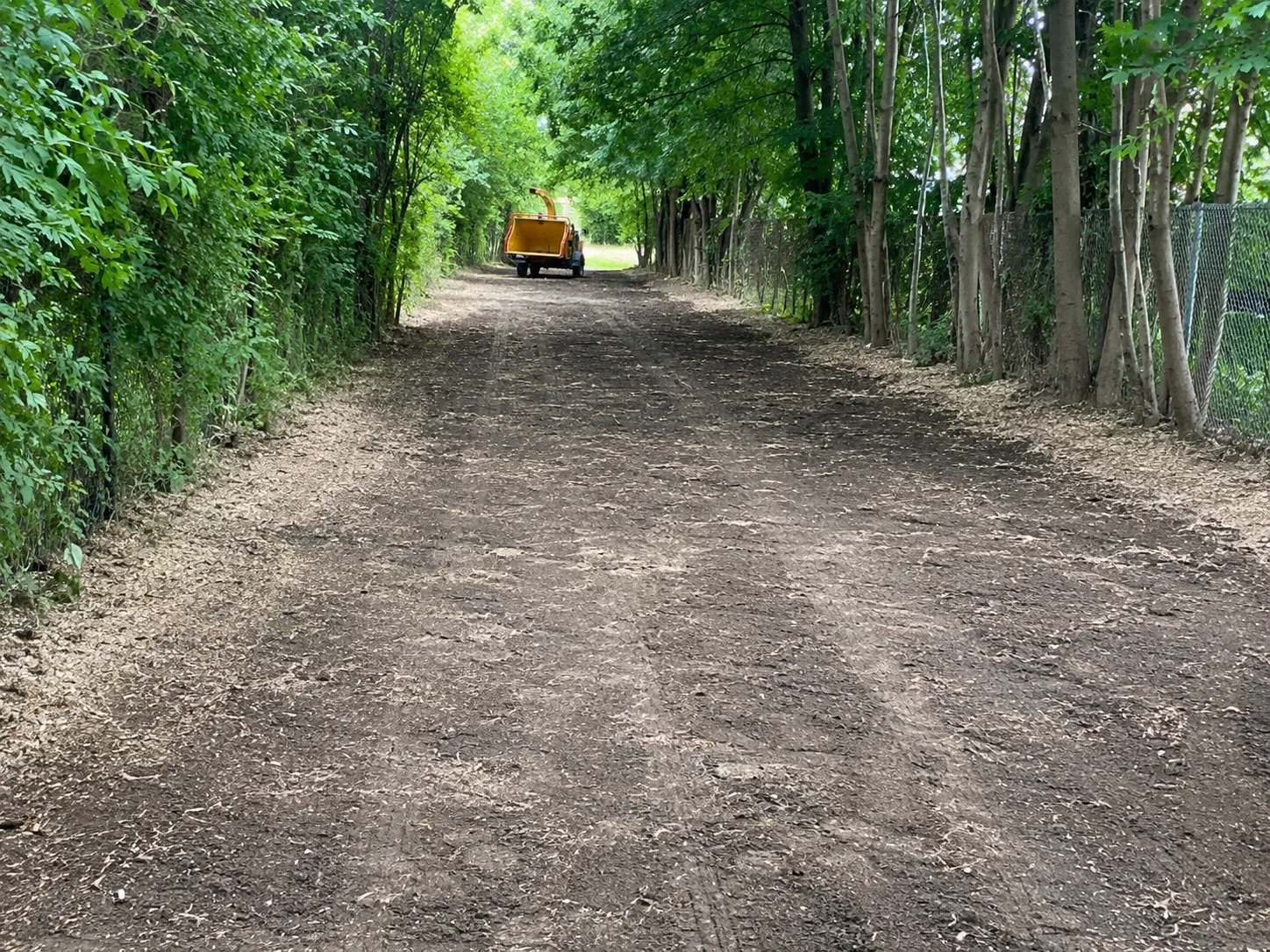
We mark clearing and preservation limits, establish environmental and traffic controls, cut access from the least sensitive approach, remove entangled hazards, fell saplings toward controlled zones, feed suitable material into the chipper, and collect residual debris. Stumps and roots are treated only to the specified level.
Material is sorted before chipping. Wire, stones, metal, soil-heavy roots, garbage, and suspect invasive plants do not enter the machine. Feed zones are arranged to keep workers outside infeed and discharge hazards and away from moving equipment. Mulching height and ground disturbance are adjusted to the next use, whether a survey line, temporary access, fence corridor, or full earthwork footprint. Chips are spread only where approved and at a depth that will not block drainage, bury root collars, or contaminate structural subgrade.
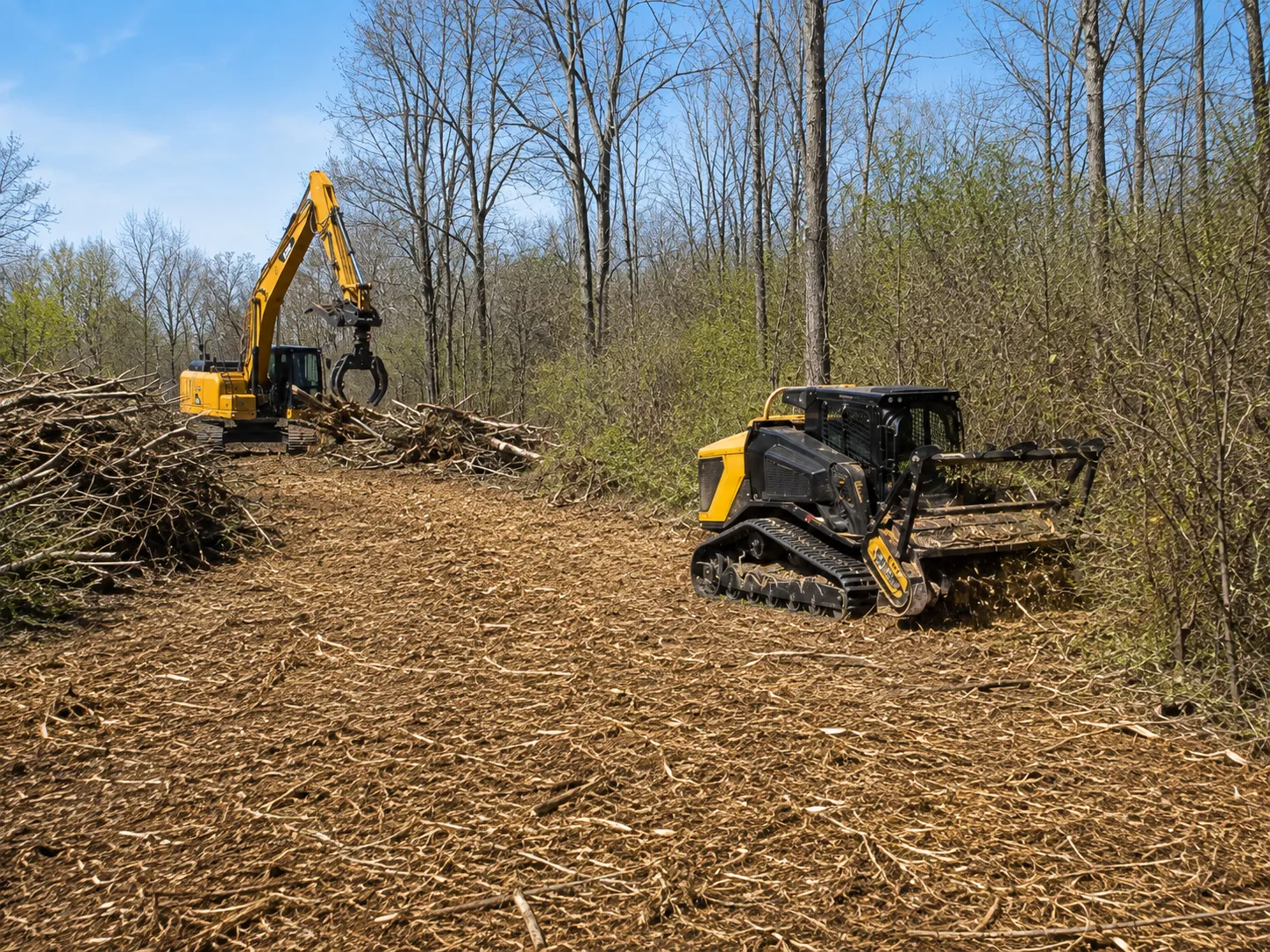
Brush work follows approved clearing drawings, OPSS 201 where specified, municipal tree and ravine protections, erosion and sediment control plans, Ontario construction safety requirements, and applicable natural heritage restrictions. Chipping does not remove the need for permits or screening simply because the stems are small.
Toronto protects trees in City ownership and mapped ravine areas, and grade alteration or woodland vegetation removal within protected areas can be regulated. Brush can also contain active bird nests or protected species habitat. We coordinate timing windows, field screening, buffers, and environmental monitoring identified by the project. Chipper access and chip placement are kept outside retained-tree root zones unless approved. At watercourse or slope edges, work advances with erosion controls and avoids exposing more soil than the stabilization plan can handle.
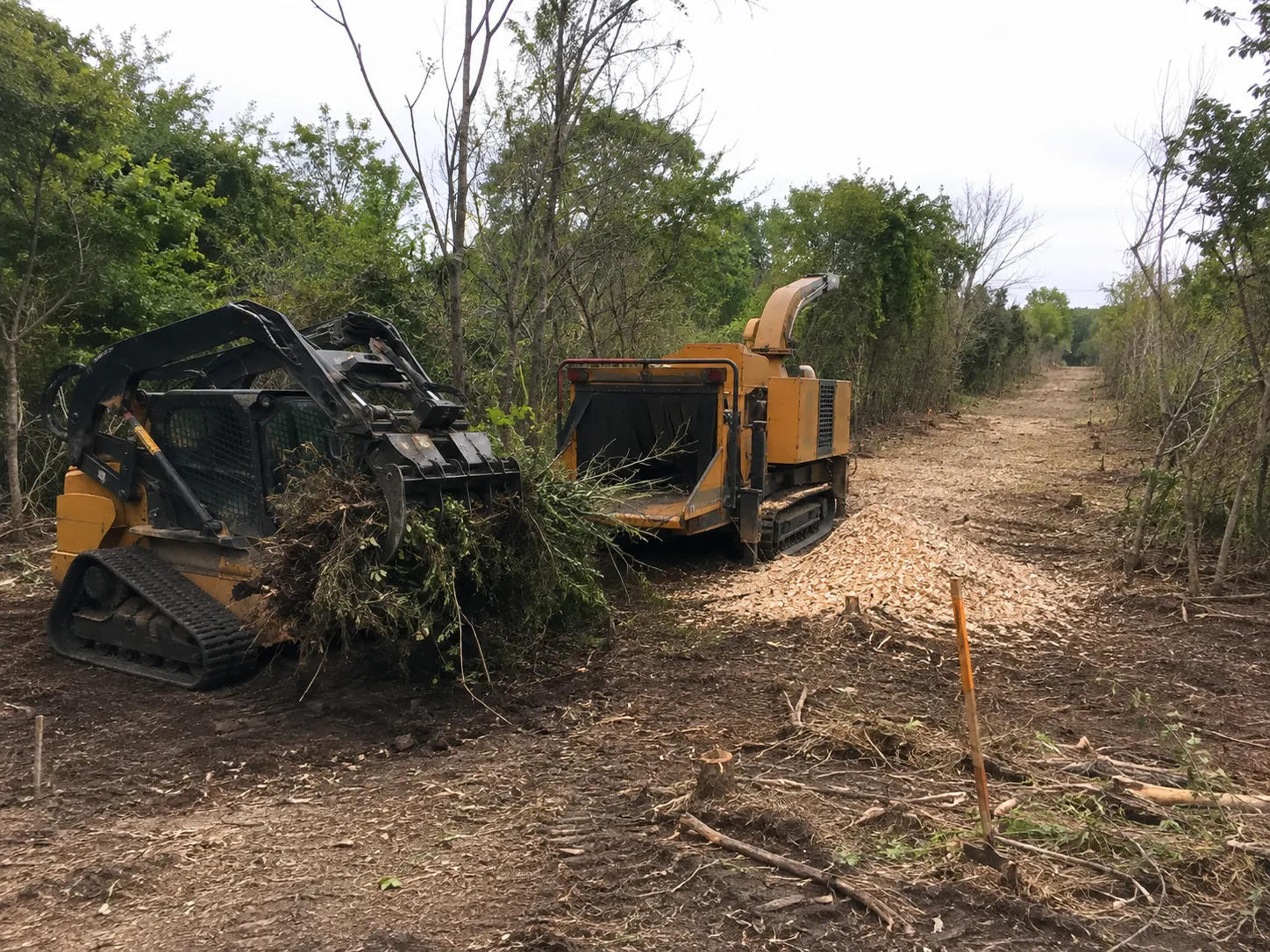
Brush clearing fails when crews cross an unmarked environmental limit, damage retained saplings, spread invasive plants, fire chips toward property or traffic, leave sharp stems, bury drainage paths, or expose unstable soil too early. We prevent these outcomes through limits, segregation, guarded processing, and progressive inspection.
Dense brush often conceals old wire, dumped concrete, wells, steep banks, unstable trees, or utilities. We open sight lines cautiously instead of driving machinery blindly into the growth. Chipping wet, soil-laden, or oversized material causes jams and unsafe clearing, so unsuitable pieces are separated. Mulching can also leave root crowns and short stubs that puncture tires or trip workers. The required finished condition is checked on foot, and remaining hazards are cut, grubbed, flagged, or reported according to scope.
Planning brush clearing and chipping? Talk it through with our team.
Brush clearing is used along utility and survey corridors, fence lines, road allowances, drainage channels, stormwater facilities, rail and transit lands, industrial perimeters, brownfield investigation areas, vacant commercial sites, and future building footprints. It can provide temporary access or form the first stage of full clearing.
For drilling and environmental investigation, narrow paths reduce unnecessary site disturbance while allowing safe rig and sampling access. For municipal maintenance, selective clearing restores sight lines and drainage without removing a whole stand. Industrial owners use it around tanks, security fencing, pipe racks, and emergency access. Development projects use brush work to expose survey control and tree inventory before larger removals. We tailor equipment width and ground pressure to the terrain and the permitted footprint.
Have drawings for brush clearing and chipping? Send them over and we will scope it.
Brush clearing typically covers shrubs, vines, saplings, slash, tall woody growth, and small volunteer trees within defined limits. Diameter thresholds and protected-tree rules vary by contract and municipality. Larger trees, stumps, roots, invasive plants, and mixed dumped debris should be identified separately so the correct method and receiving route are planned.
No. A forestry mulcher processes standing vegetation and surface material in place, leaving a distributed mulch layer. A chipper processes cut and gathered stems through a controlled infeed and discharges chips to a pile, container, or approved area. Access, finished condition, material cleanliness, and soil disturbance determine the method.
Yes, where the owner, environmental plan, drainage design, and next land use permit it. Chips should not be buried in structural fill, placed against retained tree trunks, dumped in protected areas, or spread so deeply that they impede drainage or conceal hazards. Surplus material is loaded for an approved route.
The project first identifies regulated or problematic vegetation and specifies controls. We segregate affected material, avoid tracking fragments or seed into clean areas, clean equipment where required, and use the approved containment and receiving route. Ordinary chipping or spreading may be inappropriate for species that reproduce from fragments.
Yes. We establish the minimum practical corridor, confirm rig width and turning, assess ground bearing and overhead clearance, remove hidden stubs and debris, and protect environmental limits. Brush removal alone does not create a stable road, so mats, grading, aggregate, or drainage may be needed for the selected rig.
Size alone does not decide protection. All trees in Toronto road allowance and mapped ravine and natural feature areas are protected, and replacement trees retain protection regardless of diameter. Woodland vegetation and grade changes may also be regulated. Approved drawings and Urban Forestry direction are checked before cutting.
Provide mapped limits, corridor width or area, vegetation density and size, terrain, slope, access, ground condition, utilities, retained features, chip handling, invasive-species information, environmental timing, and desired finished condition. Hand work, steep terrain, wet ground, selective edges, traffic exposure, and offsite hauling materially affect scope.
Still have a question about brush clearing and chipping? Ask our team directly.
Commercial and heavy-civil construction delivered for developers, contractors, property managers, and municipalities.
Send drawings, a site plan, or a description of the scope. Harrowgate Group is licensed, insured, and WSIB-covered.
Licensed, Insured & WSIB-Covered, work managed and documented on every job
Tell us what you need and we’ll get you a quote. Licensed, insured & WSIB-covered · Free, no-obligation quote & on-site assessment.
Companies We've Worked With
Harrowgate Group delivers commercial and heavy-civil construction for developers, contractors, institutions, municipalities, and property groups across Ontario.
 Popeyes
  Tim Hortons
  Subway
  University of Toronto
  Madison Group
  RioCan
  Women's College Hospital
  Starbucks
  Mazda
Mazda  TD Bank
  City of Toronto Popeyes Tim Hortons Subway University of Toronto Madison Group RioCan Women's College Hospital Starbucks Mazda TD Bank City of Toronto
 Three fields. We reply with the next step.
Thanks, we will call you shortly.
Press Esc to close
Marcus
Project Coordinator