
9 Questions to Ask Before Hiring a Commercial Concrete Contractor
Nine practical questions Ontario owners and general contractors should ask about scope, safety, schedule, quality, crews, changes, and closeout.
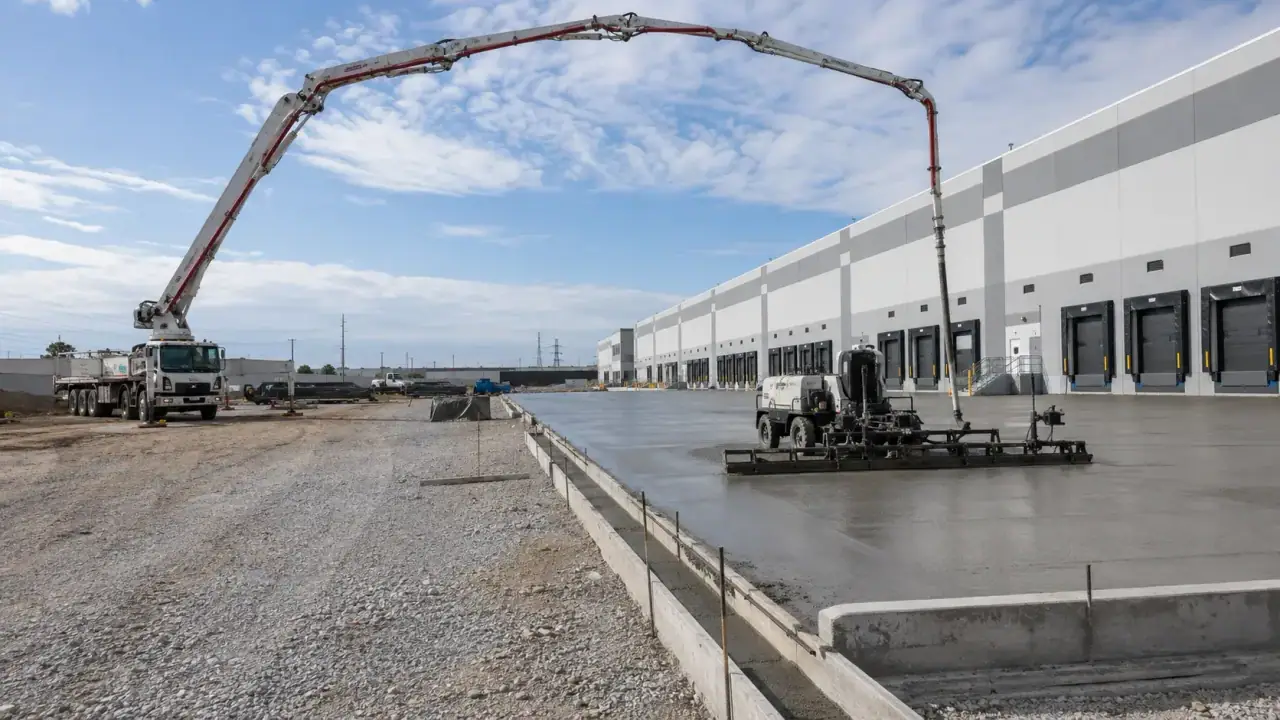
Before hiring a commercial concrete contractor, ask who will supervise the work, what similar projects they completed, exactly what the price includes, how they plan pours and winter protection, how they control quality, how they manage safety and access, how changes are priced, what schedule resources are committed, and what records you receive at closeout.
By Harrowgate Group
Last updated: July 24, 2026
Concrete is difficult and expensive to correct after placement. Contractor selection should test the team’s ability to interpret drawings, plan interfaces, coordinate supply, execute consistent pours, document quality, and respond when site conditions differ from assumptions.
What should you ask a commercial concrete contractor?
| Question | Strong answer includes | Warning sign |
|---|---|---|
| 1. Who supervises? | Named superintendent and relevant experience | Sales contact only |
| 2. What similar work? | Comparable size, system, access, and references | Residential examples for complex commercial scope |
| 3. What is included? | Quantities, assumptions, exclusions, unit rates | One unexplained lump sum |
| 4. What is the pour plan? | Sequence, supply, pump, backup, finishing, curing | Plan deferred until pour day |
| 5. How is quality controlled? | Pre-pour checks, testing, records, deficiency process | Reliance on final appearance |
| 6. How is safety managed? | Site-specific controls, WSIB, insurance, supervision | Generic promises |
| 7. How are changes priced? | Written notice, agreed rates, evidence | No process |
| 8. What resources are committed? | Crew, equipment, supplier, schedule logic | Optimistic duration without resources |
| 9. What is closeout? | Tests, tickets, as-builts, deficiencies, care information | Invoice only |
What affects commercial concrete contractor selection most?
Scope clarity
The proposal should distinguish excavation, granular, forming, reinforcing, embeds, supply, pumping, finishing, curing, testing, protection, stripping, patching, and cleanup.
Project similarity
A contractor may be excellent at slabs but lack experience with architectural walls, suspended decks, industrial pits, mass placements, or restricted facilities.
Field leadership
A capable superintendent coordinates survey, embeds, reinforcement, inspections, trucks, pumps, weather, finishers, curing, and adjacent trades.
Financial and schedule capacity
The contractor must support labour, equipment, procurement, documentation, and overlapping pours without relying on one unavailable crew.
What do Ontario rules and current data say?
Statistics Canada reported a 2.9 percent year-over-year rise in Toronto non-residential construction prices in first-quarter 2026, reinforcing the need to confirm bid validity, escalation assumptions, and procurement dates. Source: Statistics Canada Building Construction Price Index, first quarter 2026.
Ontario Regulation 213/91 sets detailed construction obligations, including engineered support and excavation controls, that competent concrete contractors must integrate when their scope includes related work. Source: Ontario Regulation 213/91, Construction Projects, current July 2026.
How should you plan commercial concrete contractor selection?
- Issue the same bid package. Give every bidder current drawings, specifications, addenda, schedule, logistics, and commercial terms.
- Hold a scope interview. Walk through quantities, sequence, interfaces, exclusions, alternates, unit rates, and risks with the proposed field lead.
- Verify evidence. Review insurance, WSIB, safety information, project examples, references, and the proposed supplier and testing arrangements.
- Document the award. Attach clarified scope, assumptions, schedule, rates, and submission requirements to the contract.
What problems should owners watch for?
- Selecting on total alone: A lower bid may exclude reinforcement, pumping, testing, curing, winter measures, or patching.
- Accepting vague experience: Ask for work comparable in structural system, scale, finish, environment, and constraints.
- Leaving changes informal: Verbal direction creates disputes about scope, quantity, rate, and schedule effect.
For commercial concrete contractor selection, Harrowgate Group’s trust baseline is 20 years in business, licensed, insured, and WSIB-covered.
Frequently asked questions
How many commercial concrete bids should I get?
Enough qualified bids to test the market, often three, but scope quality matters more than an arbitrary count.
Should I ask for unit rates?
Yes for foreseeable quantity changes such as concrete volume, reinforcement, formwork, excavation, pumps, and winter protection, with clear inclusions.
What insurance should a contractor have?
Requirements are project-specific. Ask for current certificates matching the contract and verify WSIB status and any bonding requirements.
Who pays for concrete testing?
The contract should state who retains and pays the testing agency, who coordinates tests, and how failed results are investigated.
What should happen before every pour?
A documented pre-pour review should confirm drawings, forms, elevations, reinforcement, embeds, access, concrete supply, weather, testing, finishing, curing, and backup plans.
Is the lowest bid ever the right bid?
Yes, when it covers the same defined scope and the contractor demonstrates capacity, safety, quality, and schedule reliability. Normalize bids before deciding.
What is the next step?
Review Harrowgate Group’s commercial concrete foundations, structural concrete, and excavation, then request a commercial quote.
Get a quote for your project
Tell us about the site, the scope, and your timeline. We review it and reply with the next step.