
Built to spec
Built to your engineered drawings, survey, and the real site conditions, not a one-size-fits-all approach forced to fit.
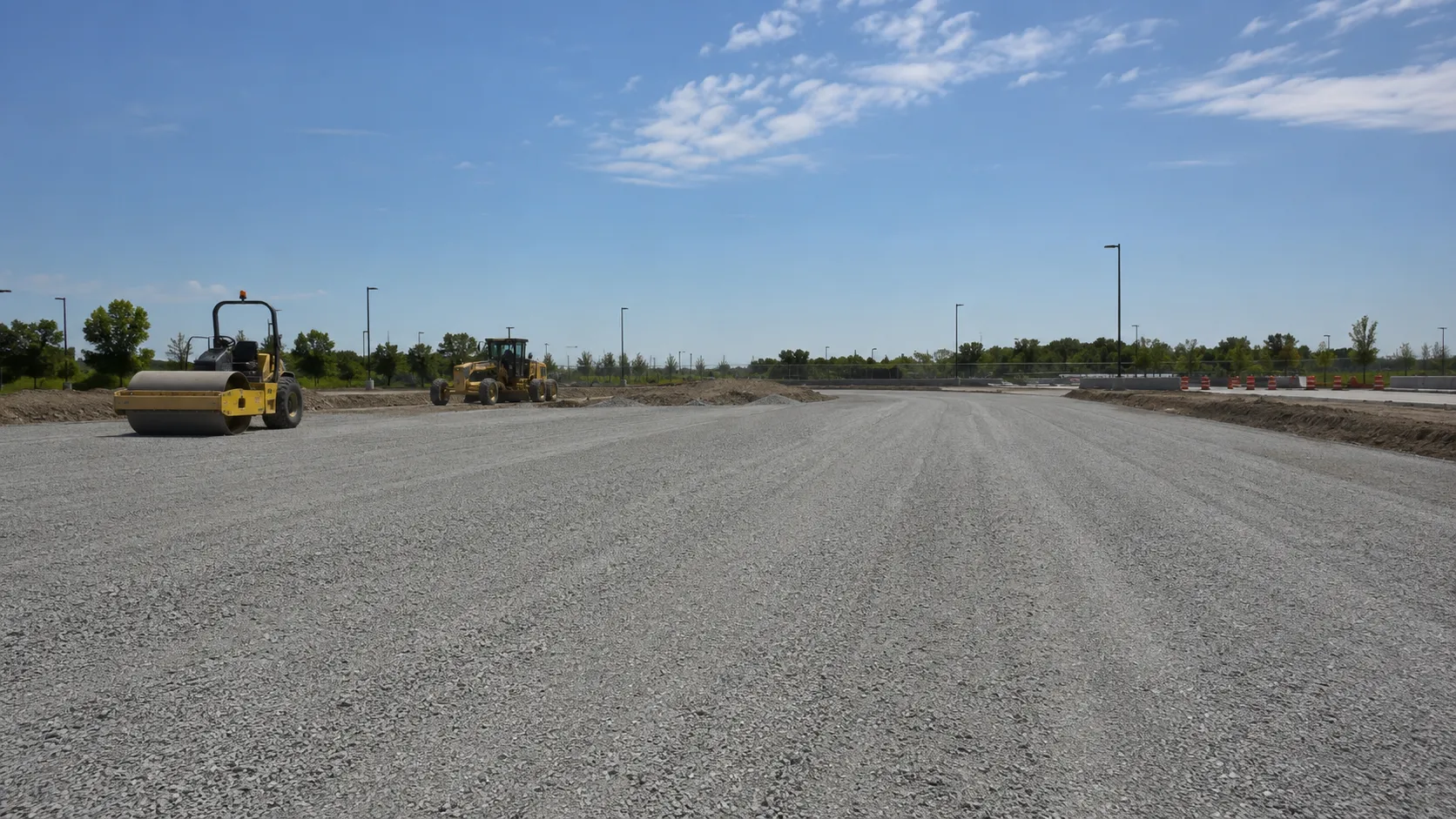
Harrowgate Group plows commercial lots, private roads, and yards across the GTA and Ontario to a pattern mapped before the season, dispatched on a contracted trigger depth and repeated through a long event.
Tell us what you need and we’ll get you a quote. Licensed, insured & WSIB-covered · Free, no-obligation quote & on-site assessment.
Licensed, insured & WSIB-covered · Free, no-obligation quote & on-site assessment.
Built to your engineered drawings, survey, and the real site conditions, not a one-size-fits-all approach forced to fit.
Durable materials and methods chosen for the load, traffic, and environment on site.
Send specs, drawings, or photos and get a free, no-obligation site visit and estimate with no guesswork.
Installation and site work completed in accordance with Ontario requirements.
Snow plowing is the mechanical clearing of accumulated snow from a surface to a mapped pattern, dispatched at a contracted trigger depth and repeated as an event continues. Harrowgate Group plows commercial lots, drive aisles, private roads, and yards across the GTA and Ontario with our own equipment.
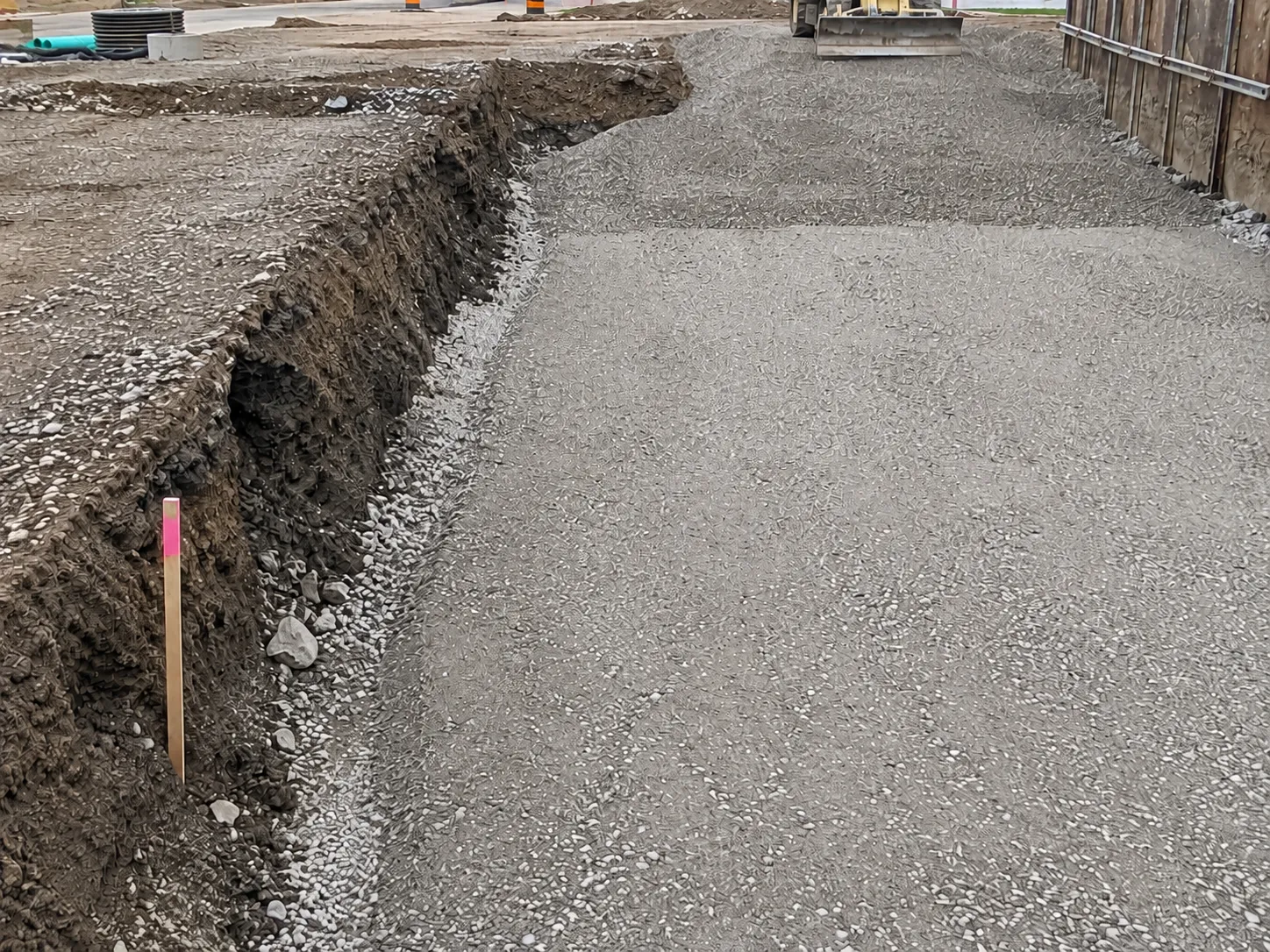
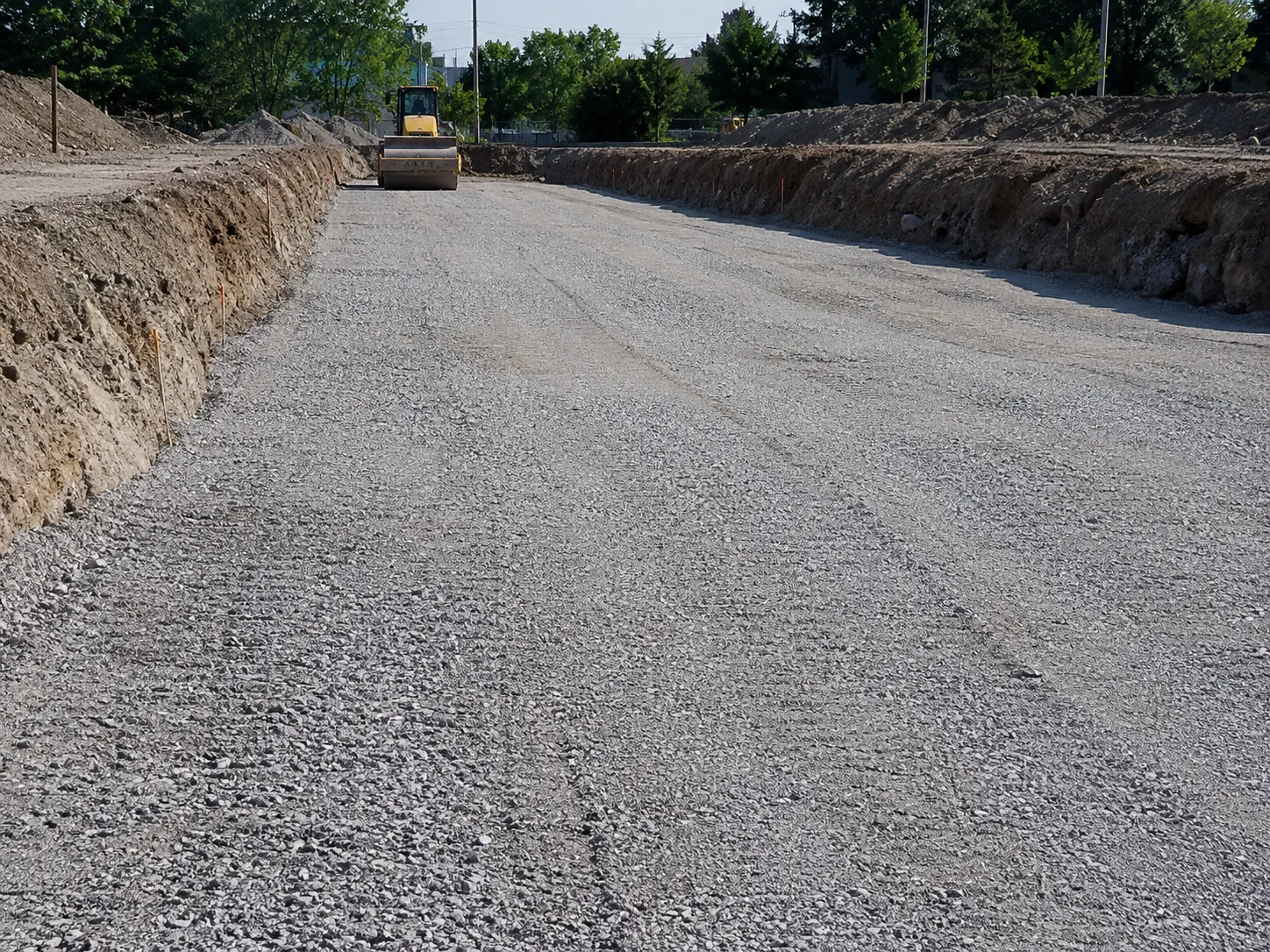
Every site is walked and staked in the fall, the pattern and the storage are mapped, equipment is matched to each area, and then every event is cleared to that same pattern.
Staking comes first. Curbs, islands, catch basins, hydrants, bollards, wheel stops, soft edges, and anything else that vanishes under accumulation is marked before the season, because an operator working in the dark in a whiteout cannot see them and a blade will find them at speed. This single step prevents most of the damage that shows up as a spring repair invoice.
The pattern determines efficiency. Snow should travel to its storage location in as few movements as possible, which means the direction of each pass is planned rather than improvised. Windrowing snow back and forth across a lot doubles the machine hours and leaves ridges across the parking rows that then have to be cleaned up separately.
Equipment is matched to the area. Loaders with box pushers carry high volume across open lots and yards and deliver it to storage rather than pushing it repeatedly. Plow trucks handle drive aisles, private roads, and travel routes where speed and manoeuvring matter. Skid steers with blades or pushers work curb lines, islands, tight corners, dumpster enclosures, and the spaces between parked vehicles where a large machine causes damage. Blade setup changes on concrete, pavers, and decorative surfaces to protect the finish.
On a long event we return and keep returning at the contracted interval. A single pass at the end leaves a packed base under traffic that no amount of de-icer will lift, and that base then takes days of scraping to recover.
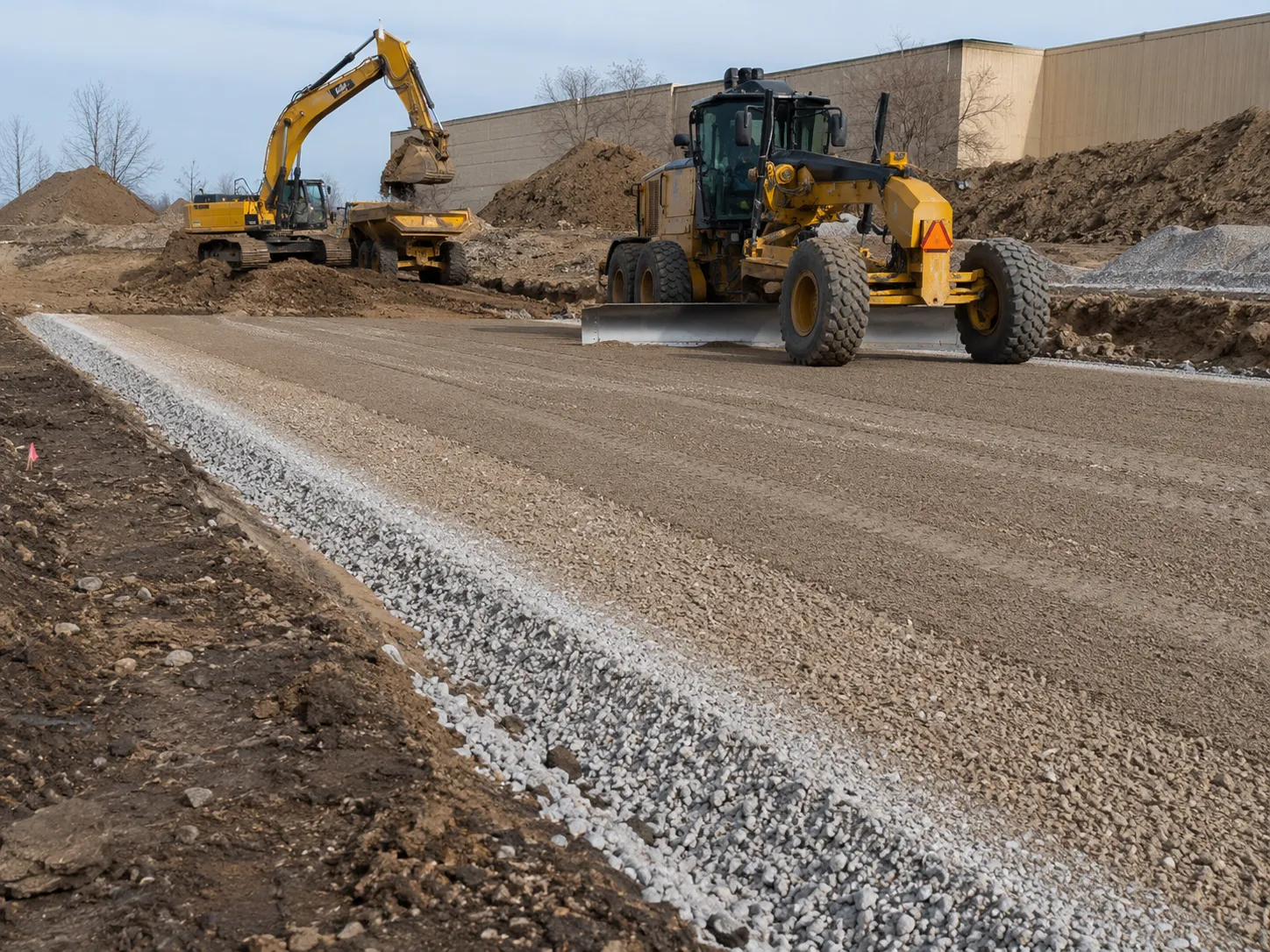
Commercial trigger depths are commonly 2.5 cm or 5 cm. The depth, the response window, the priority order, and whether long events receive continuous service are all fixed in writing before the season rather than negotiated during a storm.
Fire routes and accessible parking are cleared on every visit regardless of accumulation, because both have to remain usable at all times. Under the Accessibility for Ontarians with Disabilities Act accessible stalls and the barrier-free path to the entrance have to be maintained, and they are never used for snow storage.
Storage placement is a drainage decision. Piles are located so meltwater runs to a catch basin rather than across a drive aisle where it refreezes overnight, clear of sightlines at the exits, and off fire routes. Once a site has run out of usable room, plowing stops being the answer and hauling begins.
Plowing alone does not make a surface safe. It leaves a thin bonded layer that becomes ice under traffic, which is why de-icing follows clearing on every commercial contract, at rates matched to pavement temperature. Sodium chloride is effective to roughly minus 10 degrees Celsius; colder events require magnesium or calcium chloride blends.
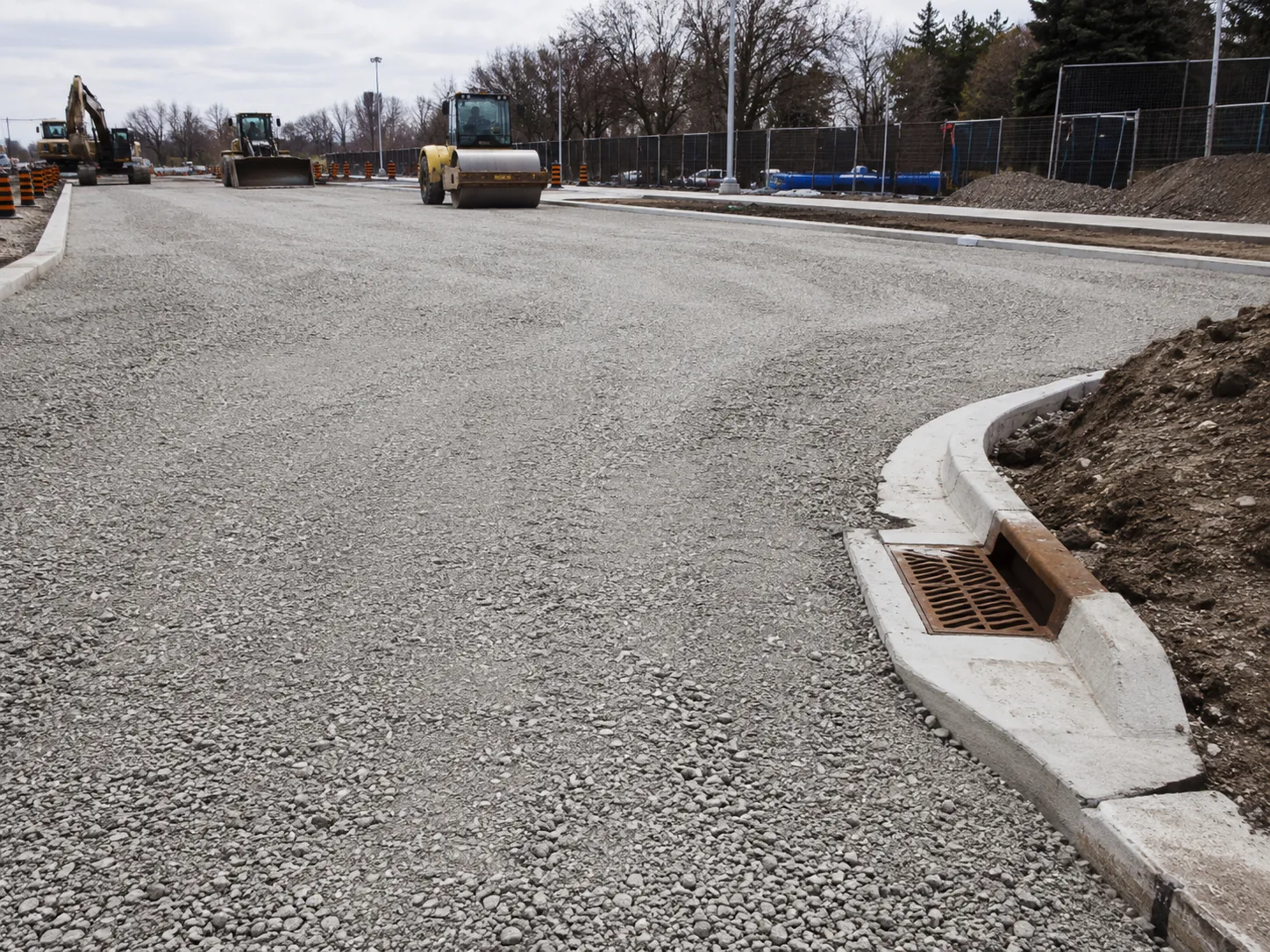
Plowing failures are damage, windrows, packed base, and arriving too late for the property to use the result.
Damage. Unstaked curbs and islands, oversized equipment in tight areas, and wrong blade setup produce gouged asphalt, sheared bollards, broken curb edges, and destroyed landscaping. Staking, matched equipment, and operators who ran the same site last season prevent nearly all of it.
Windrows across the parking. Clearing the aisles and leaving ridges across the stalls is fast for the contractor and expensive for the property, because it costs capacity all winter. We clear back to the stall line and clean up the rows.
Packed base. Waiting for a storm to finish before plowing lets traffic compact the accumulation into a bonded layer that takes days to recover. Dispatching on trigger and returning through the event prevents it.
Late arrival. An oversold route serves whoever calls loudest. Routes are sized to committed equipment and crews, which is why we decline additions a route cannot carry.
Plowing without treating. A plowed lot with no de-icer is still an ice claim waiting to happen, and section 6.1 of Ontario's Occupiers' Liability Act puts both the occupier and the snow contractor in the notice chain when it does.
Have drawings for snow plowing? Send them over and we will scope it.
Commonly 2.5 cm or 5 cm on commercial sites, fixed in the contract before the season. Fire routes and accessible stalls are cleared on every visit regardless of accumulation, and pedestrian surfaces usually run on a lower trigger than the parking areas.
During. Waiting until a storm ends lets traffic compact the accumulation into a bonded base that takes days of scraping to recover. Crews dispatch at the trigger and return at the contracted interval through a long event.
No. Plowing leaves a thin bonded layer that turns to ice under traffic. Commercial contracts pair plowing with de-icing applied to the cleared surface, plus separate clearing of walks and entrances, because those are the surfaces where injuries actually happen.
Everything that disappears under snow is staked before the season, equipment is matched to the area rather than using one machine everywhere, and blade setup is adjusted on concrete, pavers, and decorative surfaces. Operators run the same sites season to season so they know the property.
A windrow is the ridge of snow a blade leaves at the end of a pass. Left across parking rows it costs the property stalls all winter and eventually freezes solid. Patterns are planned so snow travels to storage in as few movements as possible, and rows are cleaned back to the stall line.
Yes. Travel surfaces need to stay continuously open rather than being cleared once, and they rarely have adjacent room to stack, so both the equipment mix and the storage plan differ from a parking lot. These are usually serviced on a lower trigger with more frequent passes.
Loaders with box pushers for volume across open lots and yards, plow trucks for drive aisles, private roads, and travel routes, and skid steers for curb lines, islands, tight corners, and areas around bollards and enclosures. Equipment is matched to the area rather than one machine used everywhere.
A site plan or aerial and the address, the pavement area, whether there is usable on-site snow storage, fire route and accessible stall locations, and the hours the property has to be usable. We walk the site before finalizing the plan.
Still have a question about snow plowing? Ask our team directly.
Commercial and heavy-civil construction delivered for developers, contractors, property managers, and municipalities.
Send drawings, a site plan, or a description of the scope. Harrowgate Group is licensed, insured, and WSIB-covered.
Licensed, Insured & WSIB-Covered, work managed and documented on every job
Tell us what you need and we’ll get you a quote. Licensed, insured & WSIB-covered · Free, no-obligation quote & on-site assessment.
Companies We've Worked With
Harrowgate Group delivers commercial and heavy-civil construction for developers, contractors, institutions, municipalities, and property groups across Ontario.
 Popeyes
  Tim Hortons
  Subway
  University of Toronto
  Madison Group
  RioCan
  Women's College Hospital
  Starbucks
  Mazda
Mazda  TD Bank
  City of Toronto Popeyes Tim Hortons Subway University of Toronto Madison Group RioCan Women's College Hospital Starbucks Mazda TD Bank City of Toronto
 Three fields. We reply with the next step.
Thanks, we will call you shortly.
Press Esc to close
Marcus
Project Coordinator