
Built to spec
Built to your engineered drawings, survey, and the real site conditions, not a one-size-fits-all approach forced to fit.
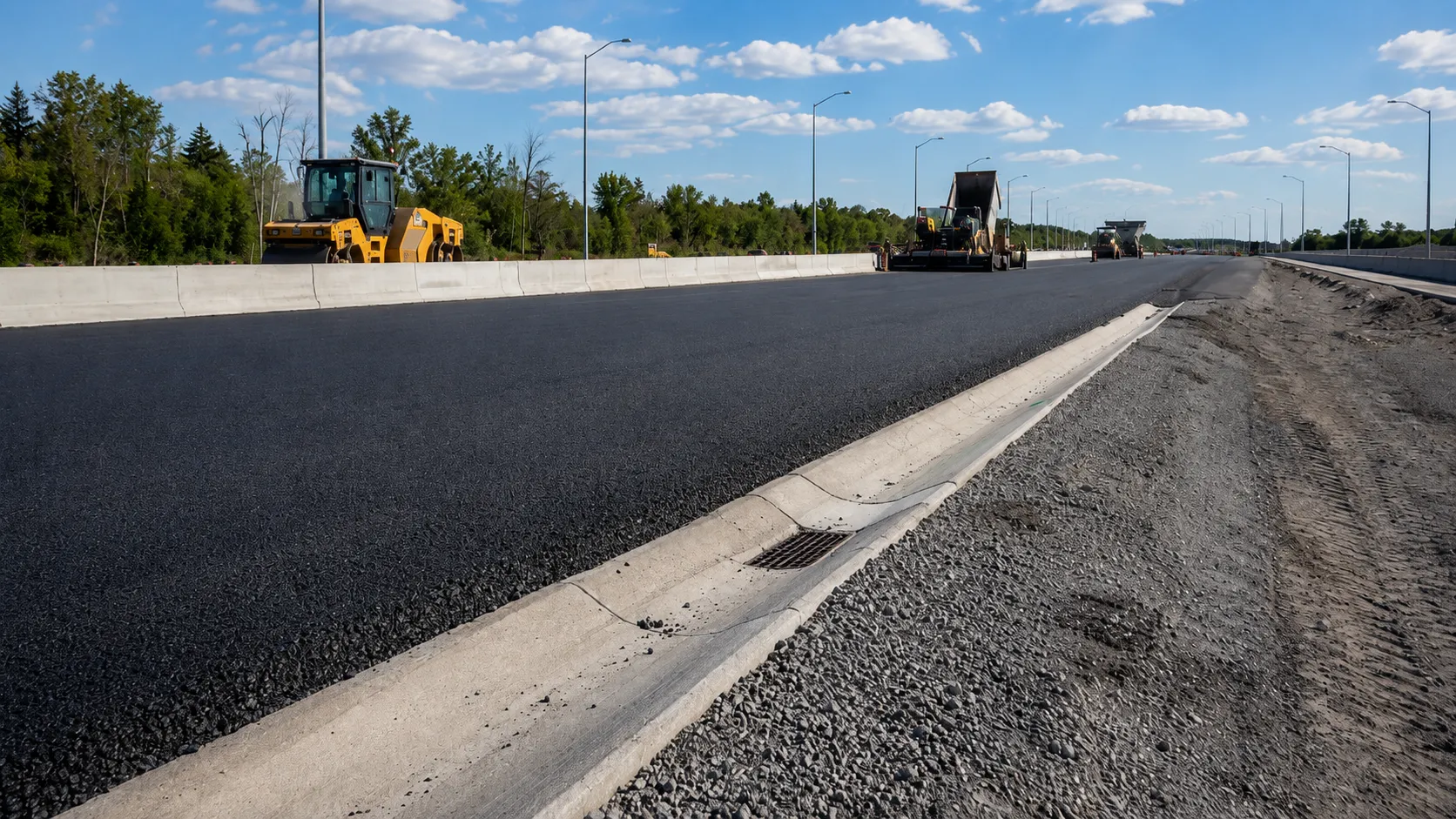
Harrowgate Group runs contracted winter maintenance on roads, private roadways, and public facility sites across the GTA and Ontario, plowing and treating to the route, the standard, and the reporting the contract sets out.
Tell us what you need and we’ll get you a quote. Licensed, insured & WSIB-covered · Free, no-obligation quote & on-site assessment.
Licensed, insured & WSIB-covered · Free, no-obligation quote & on-site assessment.
Built to your engineered drawings, survey, and the real site conditions, not a one-size-fits-all approach forced to fit.
Durable materials and methods chosen for the load, traffic, and environment on site.
Send specs, drawings, or photos and get a free, no-obligation site visit and estimate with no guesswork.
Installation and site work completed in accordance with Ontario requirements.
Municipal and roadway snow plowing is contracted winter maintenance of travel surfaces: municipal roads, private roadways, campus and facility road networks, and public facility sites. Harrowgate Group runs these contracts across the GTA and Ontario to the route, the service standard, and the reporting requirements the agreement specifies.
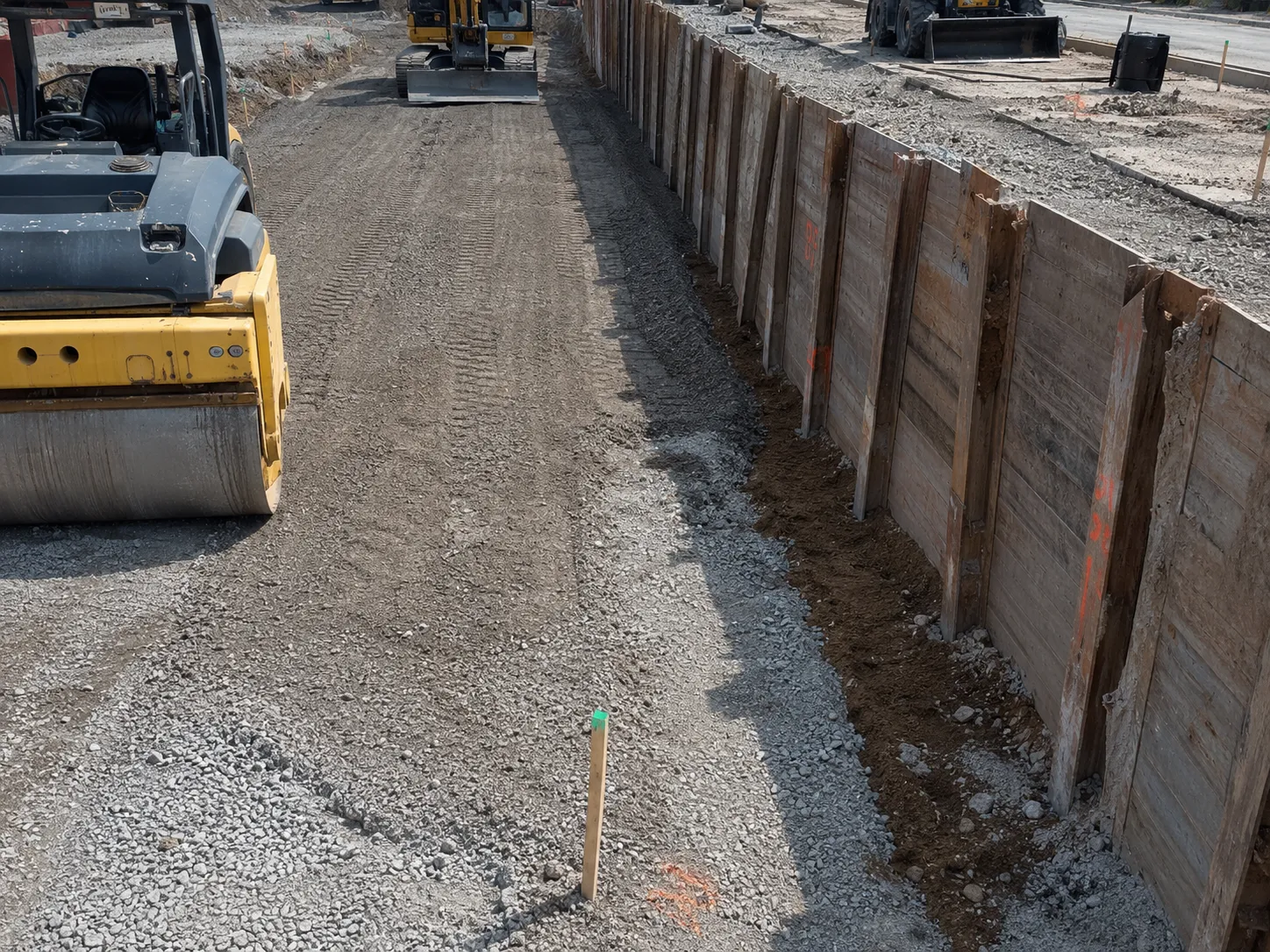
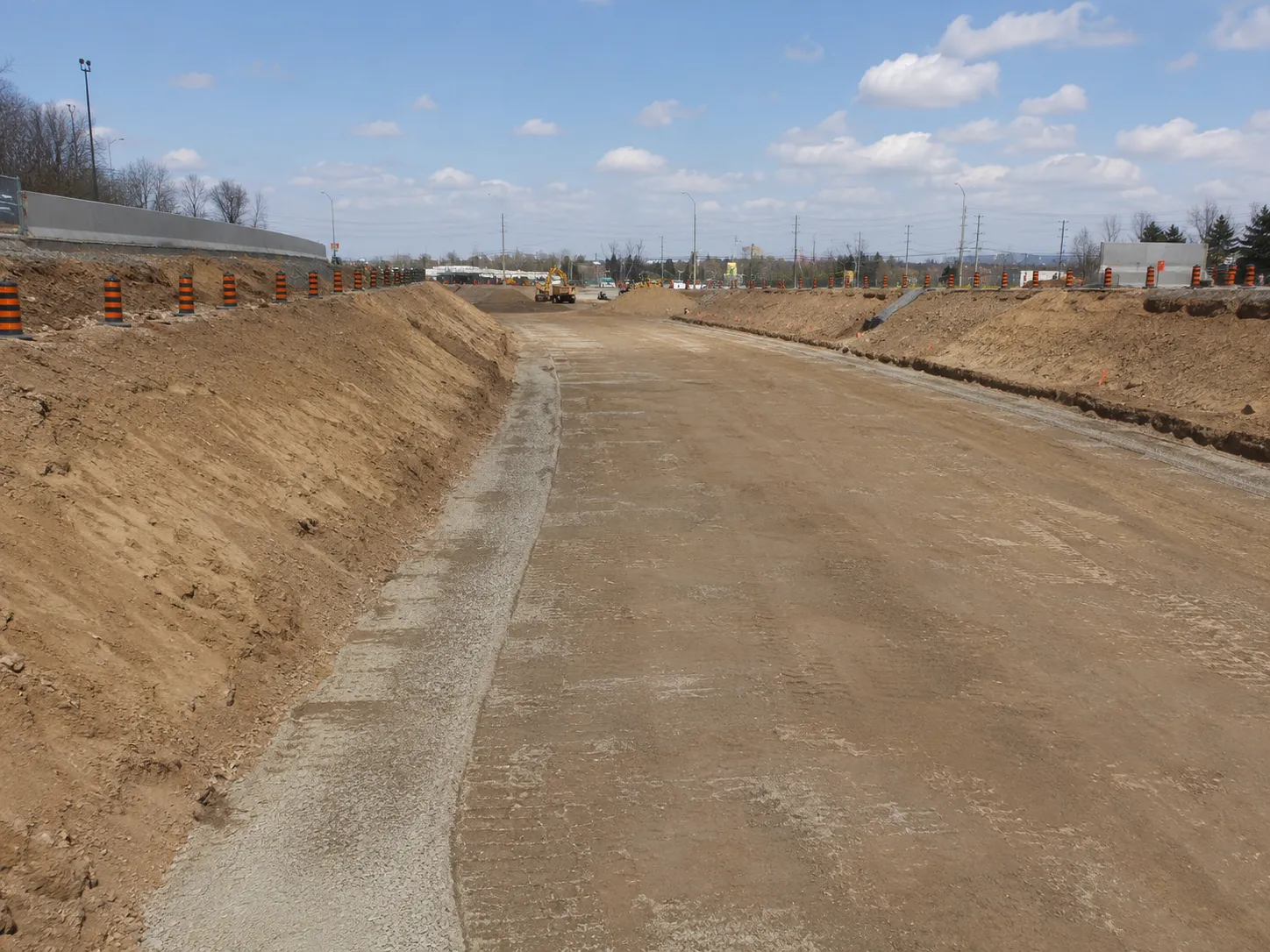
Routes are driven and mapped before the season, equipment and operators are assigned to each circuit, and during an event the route is run in continuous cycles with treatment applied on the same pass.
The pre-season work is route knowledge. Operators drive their circuits, note the hazards that disappear under snow, catch basins, culvert ends, guide rails, hydrants, curb transitions, and identify the sections that drift, the grades that ice first, the intersections and stops that need priority treatment, and any locations where snow cannot be cast off the road because of what sits beside it.
During an event, the route is run as a cycle rather than a single pass. Plow trucks with front blades, and wing plows where the road width calls for it, keep the travel lanes open while calibrated spreaders lay material on the same pass. Intersections, stops, grades, curves, and pedestrian crossings receive priority treatment because those are the locations where traction actually matters. Loaders come in behind for windrow removal, intersection cleanup, and widening once the event allows it.
Casting is planned rather than assumed. Snow thrown off a road onto a sidewalk, a driveway, a bus pad, or a parked vehicle creates a second problem, so the direction of discharge and the cleanup obligations are worked out in advance for the sections where it matters.
Route completion is documented: circuit times, passes completed, material applied and where, and conditions encountered.
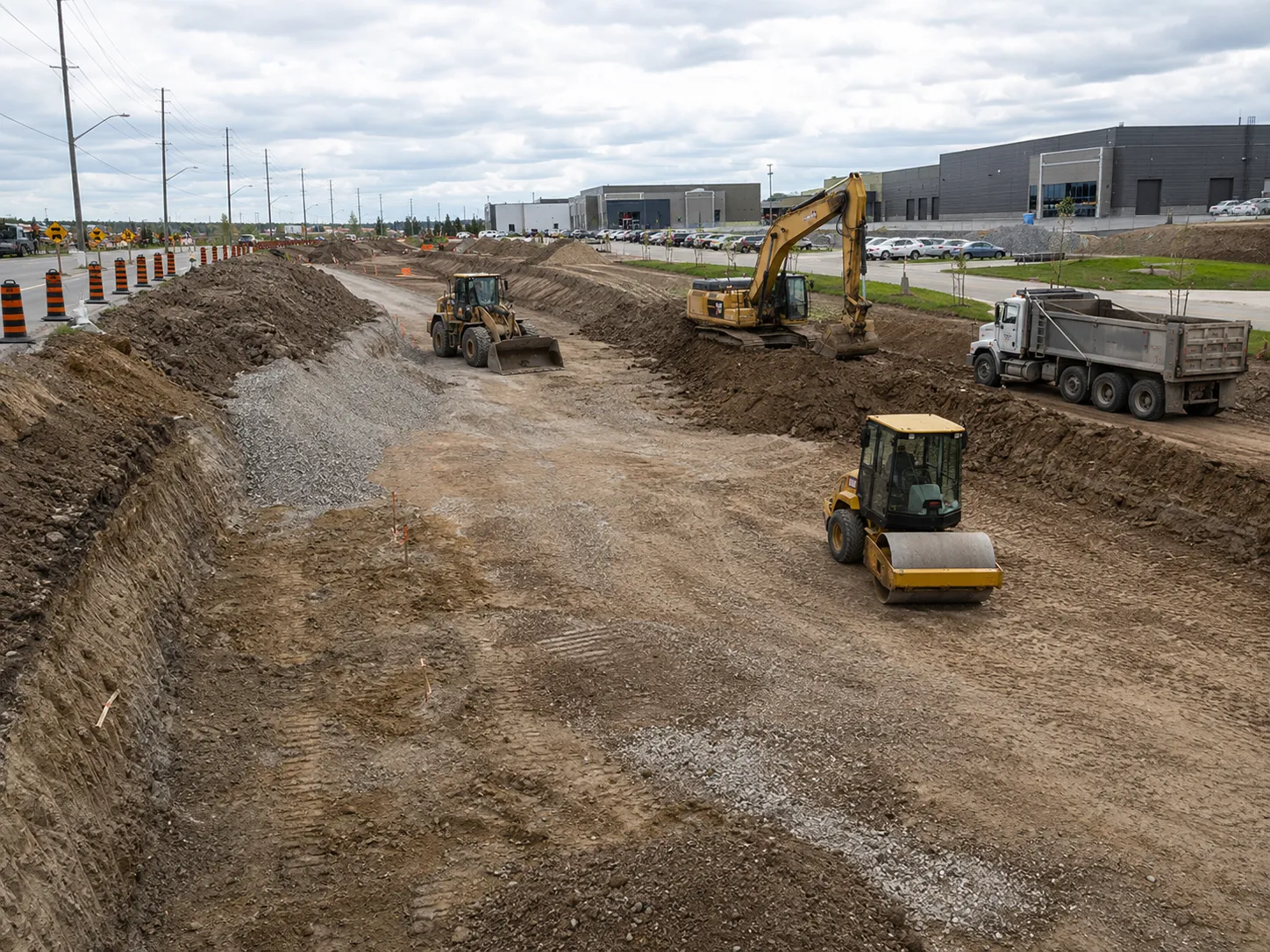
Roadway contracts specify a service standard, usually expressed as the condition the surface has to reach and the time within which it has to reach it after an event ends, with classes of road treated to different standards.
Material practice on roadways follows the same chemistry as commercial work but at a different scale. Sodium chloride is effective to roughly minus 10 degrees Celsius, with magnesium and calcium chloride blends used below that. Brine anti-icing applied before an event prevents the bond forming and is markedly more efficient than reactive salting, and pre-wetting at the spreader keeps material on the road instead of in the ditch, which matters both for effectiveness and for cost.
Chloride management is a formal obligation at this scale. The Code of Practice for the Environmental Management of Road Salts applies to organizations using more than 500 tonnes a year on a five year rolling average and to any organization with salt vulnerable areas in its territory, and it points to calibrated spreaders, application rates matched to conditions and pavement temperature, anti-icing rather than over-salting, covered storage, and record keeping. Contracts increasingly require evidence of those practices, not just an assurance.
Reporting is a contract deliverable. Circuit times, completion against the standard, material quantities, and conditions encountered are recorded and provided, because a public body has to be able to show what was done and when, and because section 6.1 of Ontario's Occupiers' Liability Act allows an injured party 60 days to serve written notice on the occupier or on the contractor engaged to clear the site.
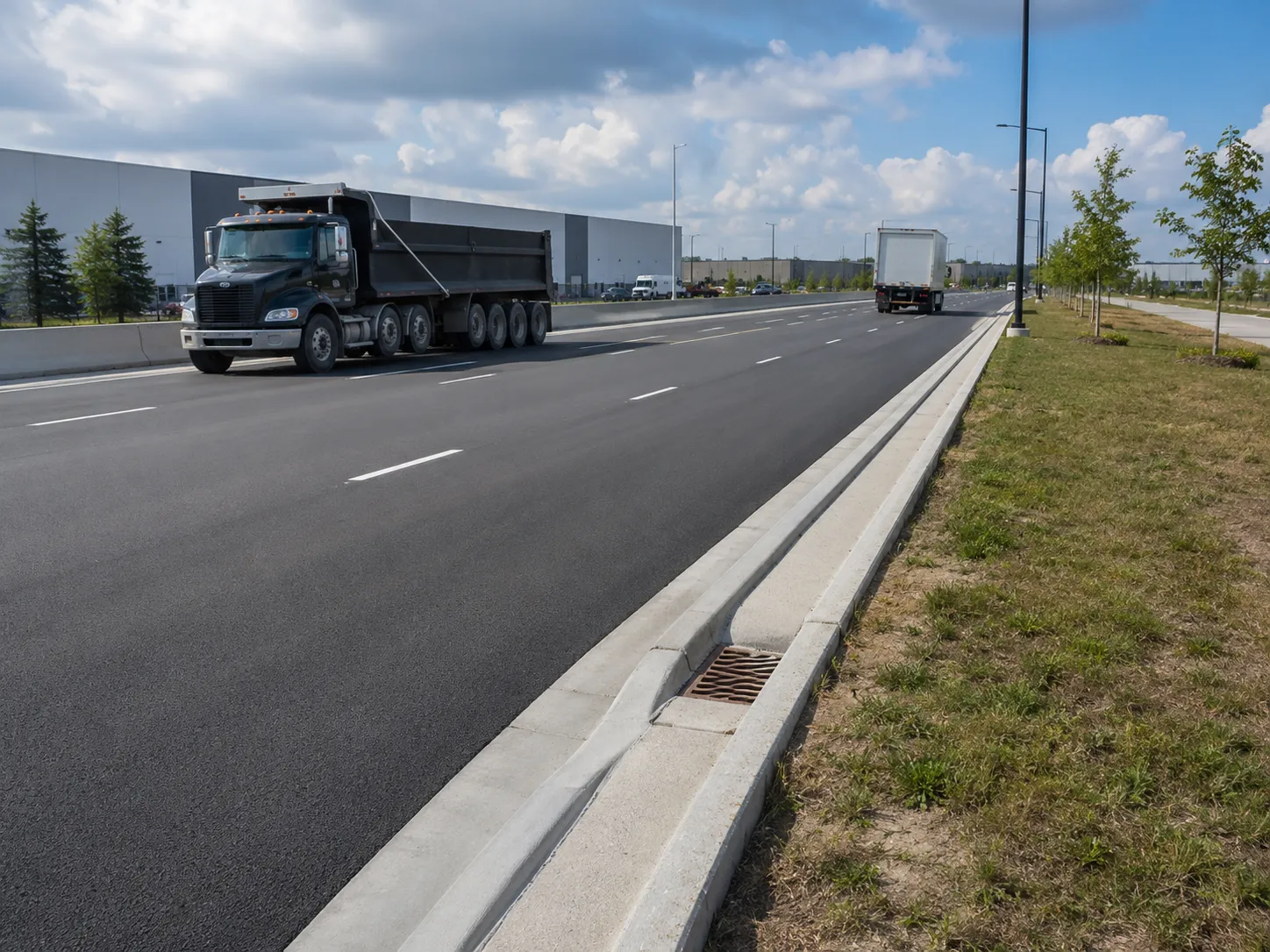
Route failures are unrealistic route sizing, treatment applied after the plow rather than with it, casting problems, damaged infrastructure, and reporting that cannot demonstrate compliance.
Route sizing. A circuit that cannot be completed inside the contracted cycle time will never meet the standard, no matter how the season goes. We size routes against real cycle times with the equipment actually assigned, and we price accordingly rather than winning on an assumption we cannot deliver.
Treating after plowing. Running the plow and coming back later to spread means the surface bonds in between. Material goes down on the same pass.
Casting. Snow discharged onto sidewalks, bus pads, driveways, and parked vehicles creates complaints and secondary hazards. Discharge direction and cleanup obligations are planned by section.
Infrastructure damage. Guide rails, curb transitions, culvert ends, catch basins, and signage are all vulnerable to a blade at speed. Route familiarity and pre-season marking prevent most of it, and operators run the same circuits season to season.
Weak reporting. A contract that specifies a standard requires evidence that the standard was met. Circuit records, material quantities, and timing are captured as the work happens rather than reconstructed afterwards.
Have drawings for municipal and roadway snow plowing? Send them over and we will scope it.
A lot is a destination that has to be usable by a certain hour; a road is a continuous travel surface that has to stay passable throughout. Routes are run in cycles rather than cleared once, material goes down on the same pass as the plow, and completion is measured against the route and the clock.
Whatever the agreement specifies, usually the surface condition that has to be reached and the time within which it must be reached after an event ends, with different classes of road held to different standards. Priority sections such as intersections, grades, curves, and crossings are treated first.
Because plowing and then returning to spread allows the remaining film to bond to the surface in between. Spreading on the same pass treats the surface while it is freshly cleared, which uses less material and produces a better result, particularly on grades and at intersections.
The Code of Practice for the Environmental Management of Road Salts applies to organizations using more than 500 tonnes a year on a five year rolling average and to those with salt vulnerable areas in their territory. It points to calibrated spreaders, temperature-matched rates, anti-icing, covered storage, and record keeping.
Discharge direction is planned by section before the season, and cleanup obligations are agreed for the locations where casting cannot be avoided. Snow thrown onto a sidewalk, a bus pad, or a driveway creates a second hazard and a complaint, so it is handled as part of the route design.
Circuit times, passes completed, completion against the contracted standard, material quantities and where they were applied, and conditions encountered, captured as the work happens rather than reconstructed afterwards. Public and institutional contracts generally require this as a deliverable.
Yes. Private drives that function as roads need continuous passability rather than a single clearing, and they usually have limited room to cast or stack snow, which changes both the equipment and the storage plan. They are scoped as route work rather than lot work.
Route mapping or a description of the sections and their lengths, the road classes and the service standard required, cycle time expectations, material supply arrangements, reporting requirements, and any known problem sections such as drifting areas, steep grades, or locations where casting is restricted.
Still have a question about municipal and roadway snow plowing? Ask our team directly.
Commercial and heavy-civil construction delivered for developers, contractors, property managers, and municipalities.
Send drawings, a site plan, or a description of the scope. Harrowgate Group is licensed, insured, and WSIB-covered.
Licensed, Insured & WSIB-Covered, work managed and documented on every job
Tell us what you need and we’ll get you a quote. Licensed, insured & WSIB-covered · Free, no-obligation quote & on-site assessment.
Companies We've Worked With
Harrowgate Group delivers commercial and heavy-civil construction for developers, contractors, institutions, municipalities, and property groups across Ontario.
 Popeyes
  Tim Hortons
  Subway
  University of Toronto
  Madison Group
  RioCan
  Women's College Hospital
  Starbucks
  Mazda
Mazda  TD Bank
  City of Toronto Popeyes Tim Hortons Subway University of Toronto Madison Group RioCan Women's College Hospital Starbucks Mazda TD Bank City of Toronto
 Three fields. We reply with the next step.
Thanks, we will call you shortly.
Press Esc to close
Marcus
Project Coordinator