
Built to spec
Built to your engineered drawings, survey, and the real site conditions, not a one-size-fits-all approach forced to fit.
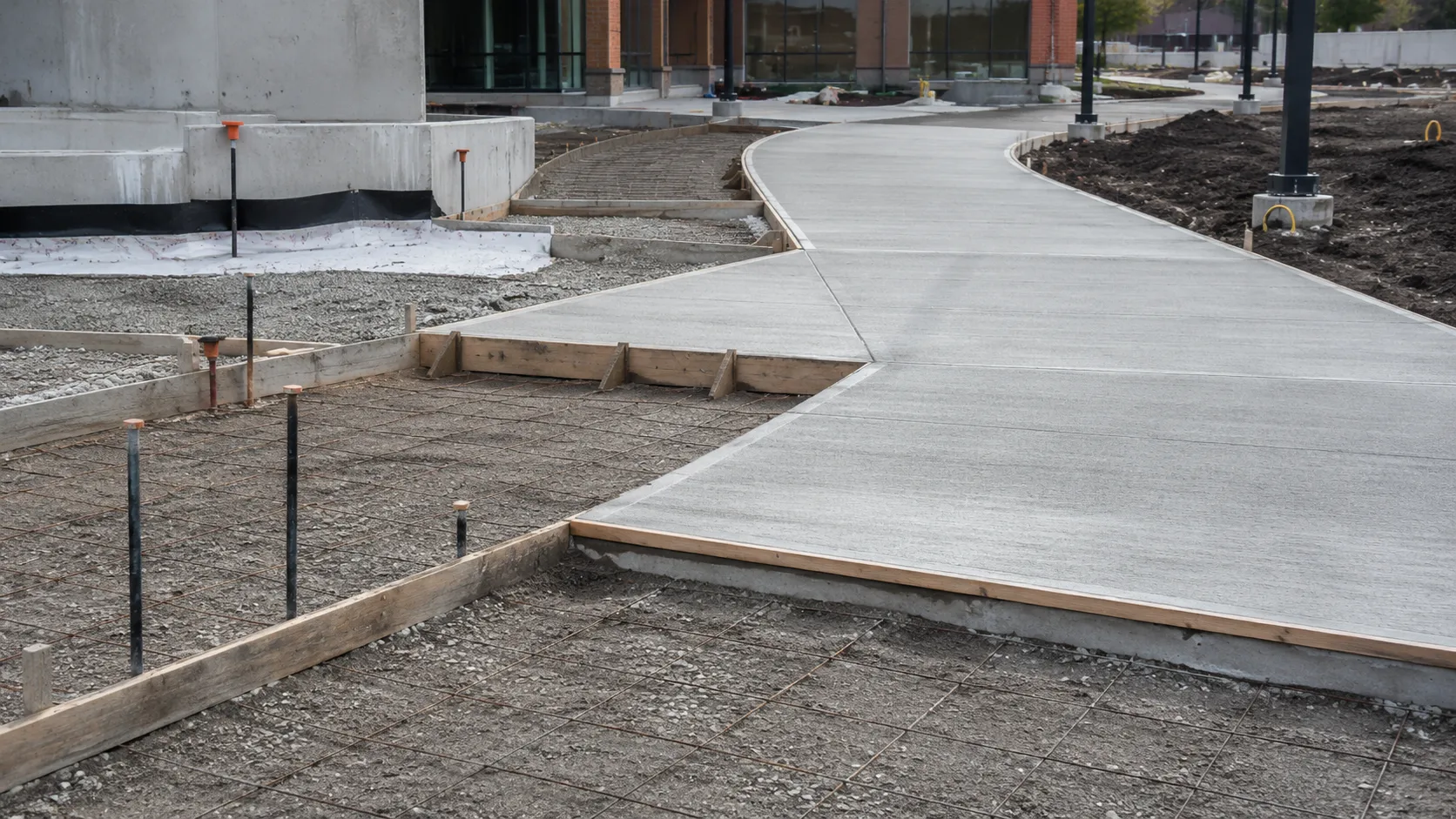
Harrowgate Group clears and treats the pedestrian surfaces on commercial property across the GTA and Ontario: sidewalks, entrances, stairs, and accessible routes, on a lower trigger than the parking and at the same time as the lot.
Tell us what you need and we’ll get you a quote. Licensed, insured & WSIB-covered · Free, no-obligation quote & on-site assessment.
Licensed, insured & WSIB-covered · Free, no-obligation quote & on-site assessment.
Built to your engineered drawings, survey, and the real site conditions, not a one-size-fits-all approach forced to fit.
Durable materials and methods chosen for the load, traffic, and environment on site.
Send specs, drawings, or photos and get a free, no-obligation site visit and estimate with no guesswork.
Installation and site work completed in accordance with Ontario requirements.
Sidewalk and walkway snow clearing covers the surfaces people walk on: storefront and perimeter sidewalks, building entrances, stairs, ramps, accessible routes, and courtyards. Harrowgate Group clears and treats them across the GTA and Ontario on their own trigger depth, with their own crews, at the same time as the parking rather than afterwards.
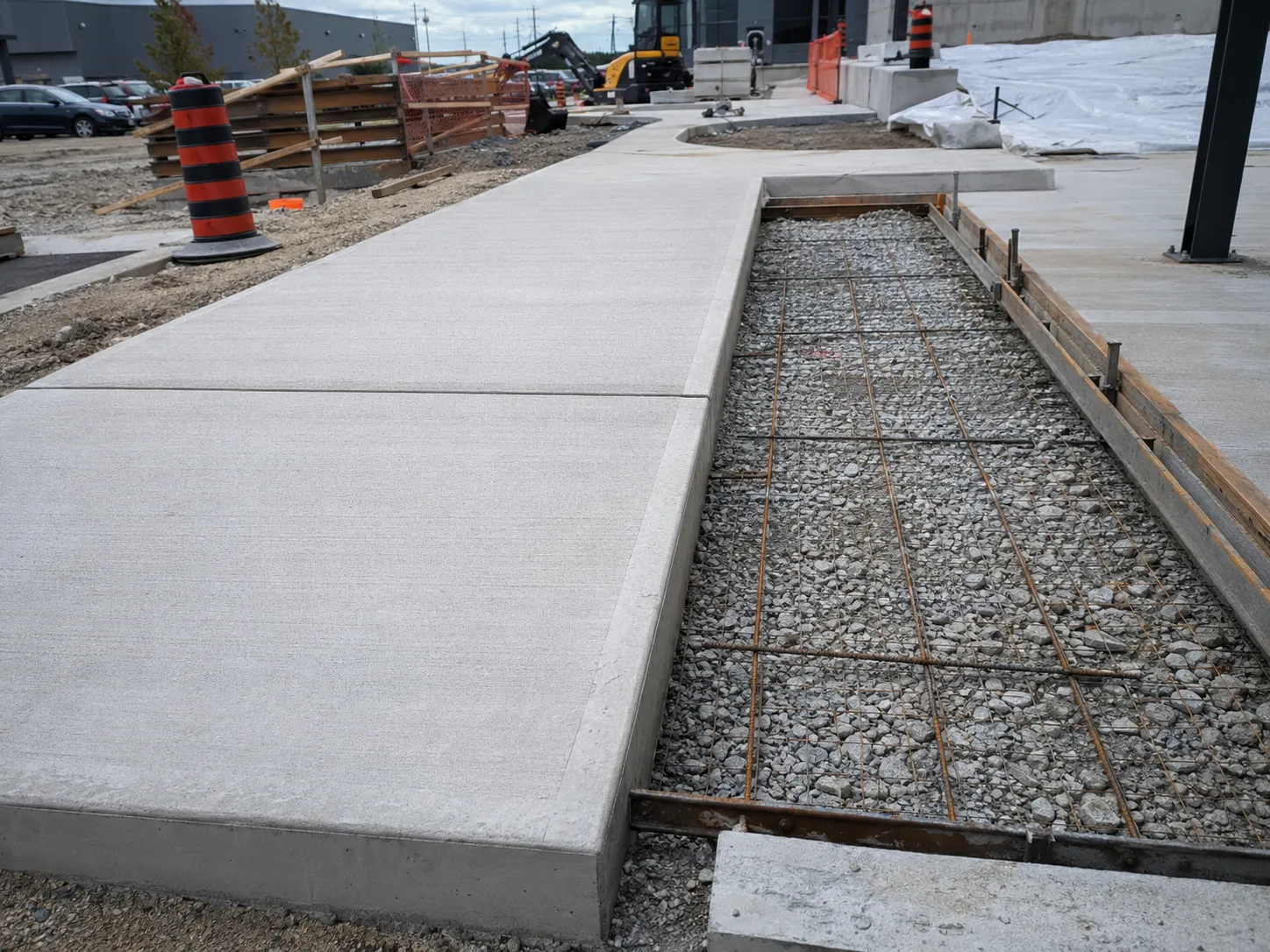
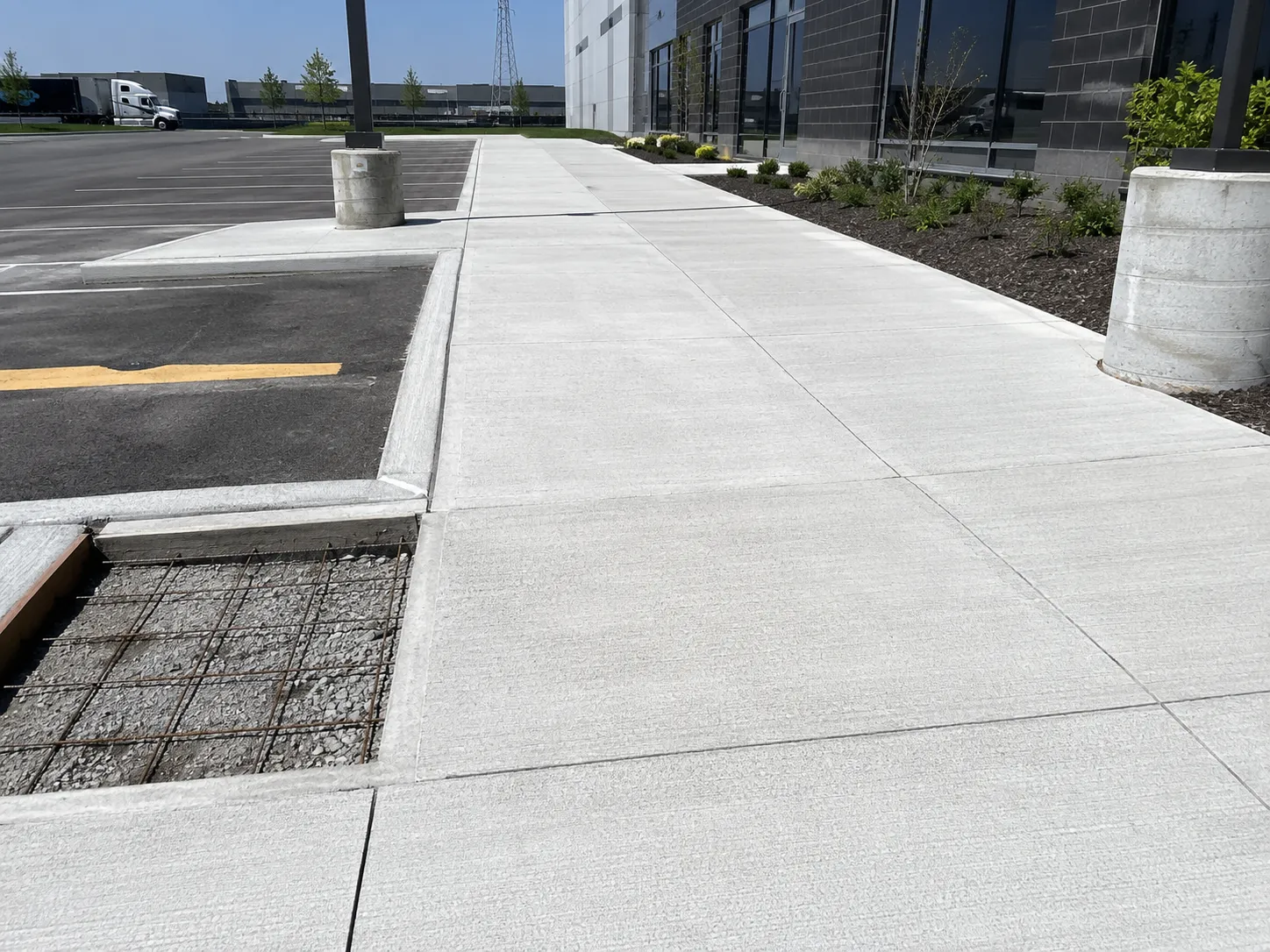
Walk crews run at the same time as the lot crew, on a lower trigger, clearing to the surface and then treating, with entrances and stairs revisited through freeze-thaw cycles.
The pre-season walk measures the full network: the length of sidewalk runs, the number of entrances, every set of stairs, each ramp and accessible route, and the connections between parking and doors. That measurement determines crew size and equipment, because a property with two thousand metres of walkway needs machines and a property with three doors and a short frontage needs hand crews.
Sidewalk machines handle continuous runs efficiently. Snow blowers and hand crews handle entrances, stairs, landings, ramps, tight courtyards, and anywhere a machine cannot reach or would damage a finish. Snow cleared from a walkway is placed where it will not melt back across the surface, which matters more on pedestrian areas than anywhere else, because a walkway that drains across itself refreezes into exactly the sheet of ice the clearing was meant to prevent.
Treatment follows clearing. Entrances, stairs, and ramps are the highest-risk elements and are revisited during thaw and refreeze cycles rather than treated once and left. Tracked-in moisture, roof runoff, and downspout discharge all create localized ice that a single morning application does not address, and those locations are identified in the fall so they get proactive attention.
Every visit is logged: the trigger, the arrival, the areas cleared, and the material applied and where.
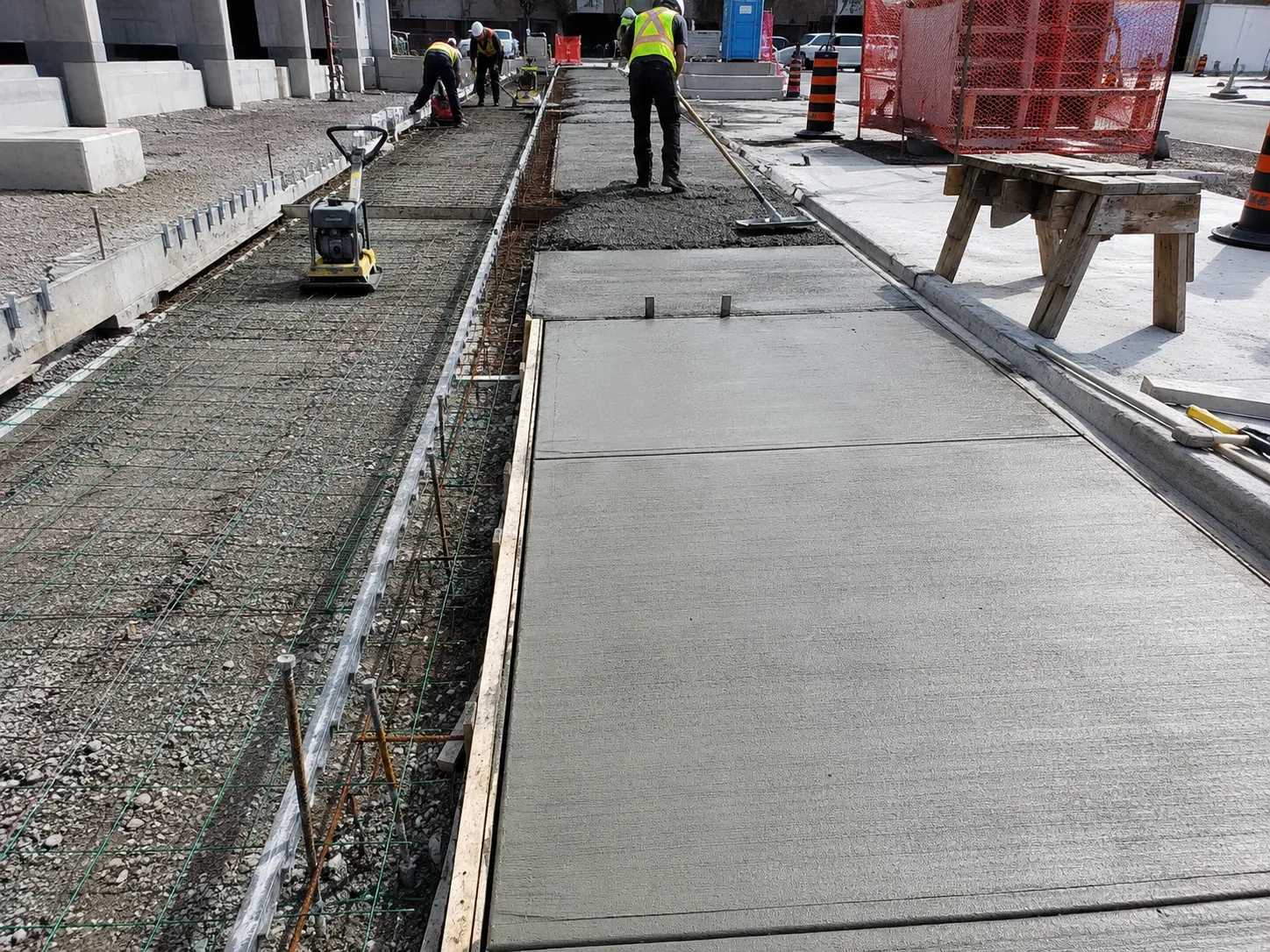
Municipal bylaws set clearing deadlines for the public sidewalk fronting a property. In Toronto the requirement is to clear within 12 hours of the snowfall ending, and to apply sand, salt, or another suitable material if the surface remains slippery, with fines for failing to do so.
Deadlines and details vary by municipality across Ontario, so plans are written to the local requirement rather than to one blanket assumption. What is consistent is that the obligation sits with the owner or occupant of the property, and it applies whether or not a contractor showed up.
The Accessibility for Ontarians with Disabilities Act requires accessible parking and the barrier-free path from it to the entrance to be maintained. In winter that means the accessible route is a priority clearing element, the path from accessible stalls to the door is cleared and treated, and no accessible stall or route is used for snow storage. It is one of the most commonly missed obligations on commercial property and one of the easiest to get right with a mapped plan.
Material selection on pedestrian surfaces differs from the lot. Sodium chloride is effective to roughly minus 10 degrees Celsius; below that magnesium or calcium chloride blends are needed. Concrete walks, stairs, and entrance slabs are vulnerable to chloride scaling, particularly on newer pours, so rates are calibrated and products chosen with the surface in mind. Over-application also tracks into the building on footwear, which damages interior flooring and creates a second slip hazard inside the door.
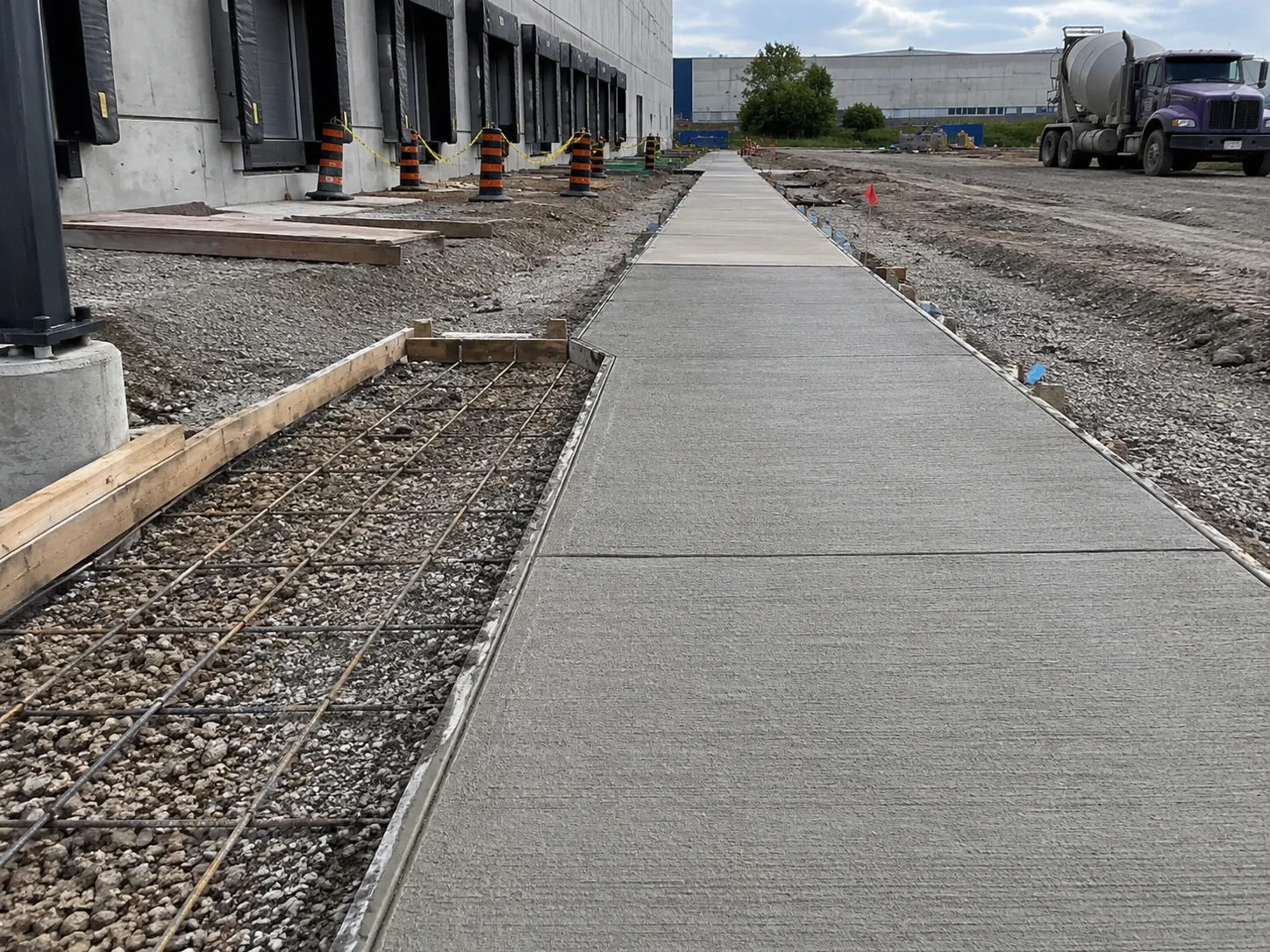
Walkway failures are late clearing, meltwater refreeze, missed entrances and stairs, blocked accessible routes, and no record of treatment.
Cleared last. When walks are done after the lot, pedestrian surfaces sit untreated through the exact window when people are arriving. Walk crews run concurrently, on their own trigger.
Meltwater refreeze. Snow piled against a walkway, roof runoff, and downspouts discharging across a path all produce localized ice that reappears every thaw. These locations are identified in the fall and either re-routed, cleared differently, or treated proactively.
Missed elements. Stairs, landings, ramps, and side entrances are the elements most often skipped and the most dangerous when they are. They are counted and named in the plan.
Blocked accessible routes. Snow pushed from a lot into an accessible stall or across a barrier-free path is both a safety failure and a compliance failure under the Accessibility for Ontarians with Disabilities Act.
No record. Section 6.1 of Ontario's Occupiers' Liability Act requires written notice within 60 days of a snow or ice injury, served on the occupier or on the contractor hired to clear the site. Since most claims originate on pedestrian surfaces, walkway service records are the ones most often requested.
Have drawings for sidewalk and walkway snow clearing? Send them over and we will scope it.
Within 12 hours of the snowfall ending, under the municipal bylaw, and sand, salt, or another suitable material must be applied if the surface remains slippery afterwards. Failing to do so carries a fine. Deadlines vary across Ontario municipalities, so plans are written to the local requirement.
Because that is where people fall. Pedestrian surfaces carry far higher injury exposure per square metre than parking areas, and a few centimetres on a set of stairs is more dangerous than the same depth in a drive aisle. Walk crews run concurrently with the lot crew on their own trigger.
Under the Accessibility for Ontarians with Disabilities Act, accessible parking and the barrier-free path from it to the entrance must be maintained. In practice, accessible routes are cleared as a priority, treated after clearing, and never used for snow storage. It is one of the most commonly missed winter obligations.
Usually meltwater, not snowfall. A downspout discharging across the path, roof runoff, a reverse slope, or a missing drain sends water across the surface where it refreezes. Salt manages it temporarily. The permanent fix is a drainage or grading correction, which is spring work.
Yes, and they are counted and named in the plan because they are the elements most often skipped and the most dangerous when they are. Stairs, landings, ramps, and secondary entrances are cleared by hand or blower and treated, then revisited through thaw and refreeze cycles.
Chloride causes surface scaling on concrete and drives corrosion in reinforcing steel, and newer pours are more vulnerable. Rates are calibrated and products chosen for the surface. Over-application also tracks indoors on footwear, damaging interior flooring and creating a second slip hazard inside the door.
The occupier carries the duty under Ontario's Occupiers' Liability Act, and section 6.1 requires written notice within 60 days of a snow or ice injury, served on the occupier or on the snow contractor. Since most claims start on pedestrian surfaces, walkway service records are the ones most often requested.
The length of the sidewalk runs, the number of entrances, stairs, and ramps, the location of accessible routes, a site plan or aerial where available, and any locations with a history of ice. Walkway-dominant sites like townhouse complexes and campuses are priced separately from lot work.
Still have a question about sidewalk and walkway snow clearing? Ask our team directly.
Commercial and heavy-civil construction delivered for developers, contractors, property managers, and municipalities.
Send drawings, a site plan, or a description of the scope. Harrowgate Group is licensed, insured, and WSIB-covered.
Licensed, Insured & WSIB-Covered, work managed and documented on every job
Tell us what you need and we’ll get you a quote. Licensed, insured & WSIB-covered · Free, no-obligation quote & on-site assessment.
Companies We've Worked With
Harrowgate Group delivers commercial and heavy-civil construction for developers, contractors, institutions, municipalities, and property groups across Ontario.
 Popeyes
  Tim Hortons
  Subway
  University of Toronto
  Madison Group
  RioCan
  Women's College Hospital
  Starbucks
  Mazda
Mazda  TD Bank
  City of Toronto Popeyes Tim Hortons Subway University of Toronto Madison Group RioCan Women's College Hospital Starbucks Mazda TD Bank City of Toronto
 Three fields. We reply with the next step.
Thanks, we will call you shortly.
Press Esc to close
Marcus
Project Coordinator