
Built to spec
Built to your engineered drawings, survey, and the real site conditions, not a one-size-fits-all approach forced to fit.
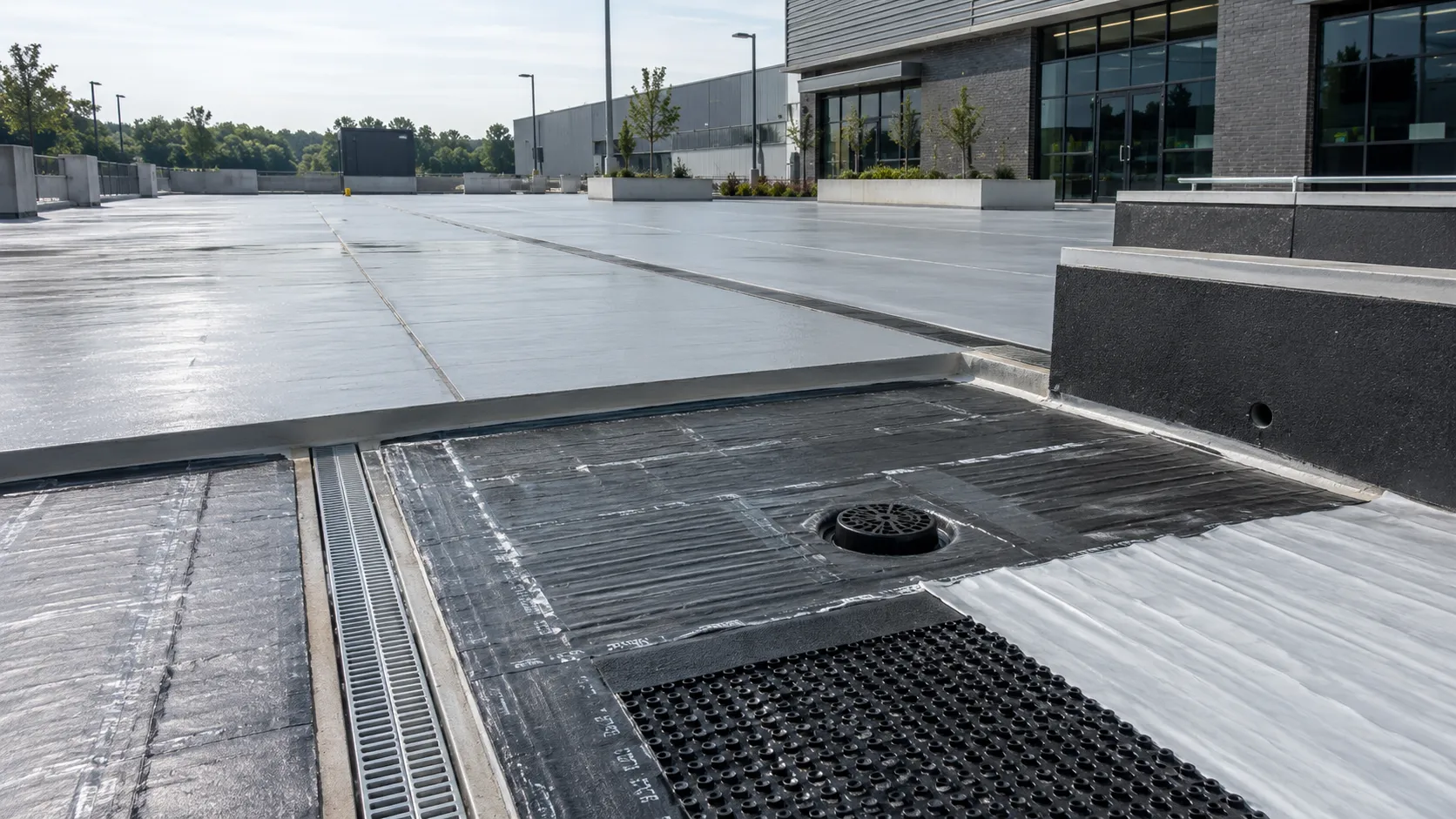
Harrowgate Group reduces snow and ice load on commercial roofs across the GTA and Ontario, protecting the structure and the membrane and stopping ice falling onto entrances below.
Tell us what you need and we’ll get you a quote. Licensed, insured & WSIB-covered · Free, no-obligation quote & on-site assessment.
Licensed, insured & WSIB-covered · Free, no-obligation quote & on-site assessment.
Built to your engineered drawings, survey, and the real site conditions, not a one-size-fits-all approach forced to fit.
Durable materials and methods chosen for the load, traffic, and environment on site.
Send specs, drawings, or photos and get a free, no-obligation site visit and estimate with no guesswork.
Installation and site work completed in accordance with Ontario requirements.
Roof snow removal is the controlled reduction of accumulated snow and ice load on a commercial roof, done to protect the structure and the membrane and to stop meltwater and falling ice reaching the areas below. Harrowgate Group performs it across the GTA and Ontario with crews working under proper fall protection.
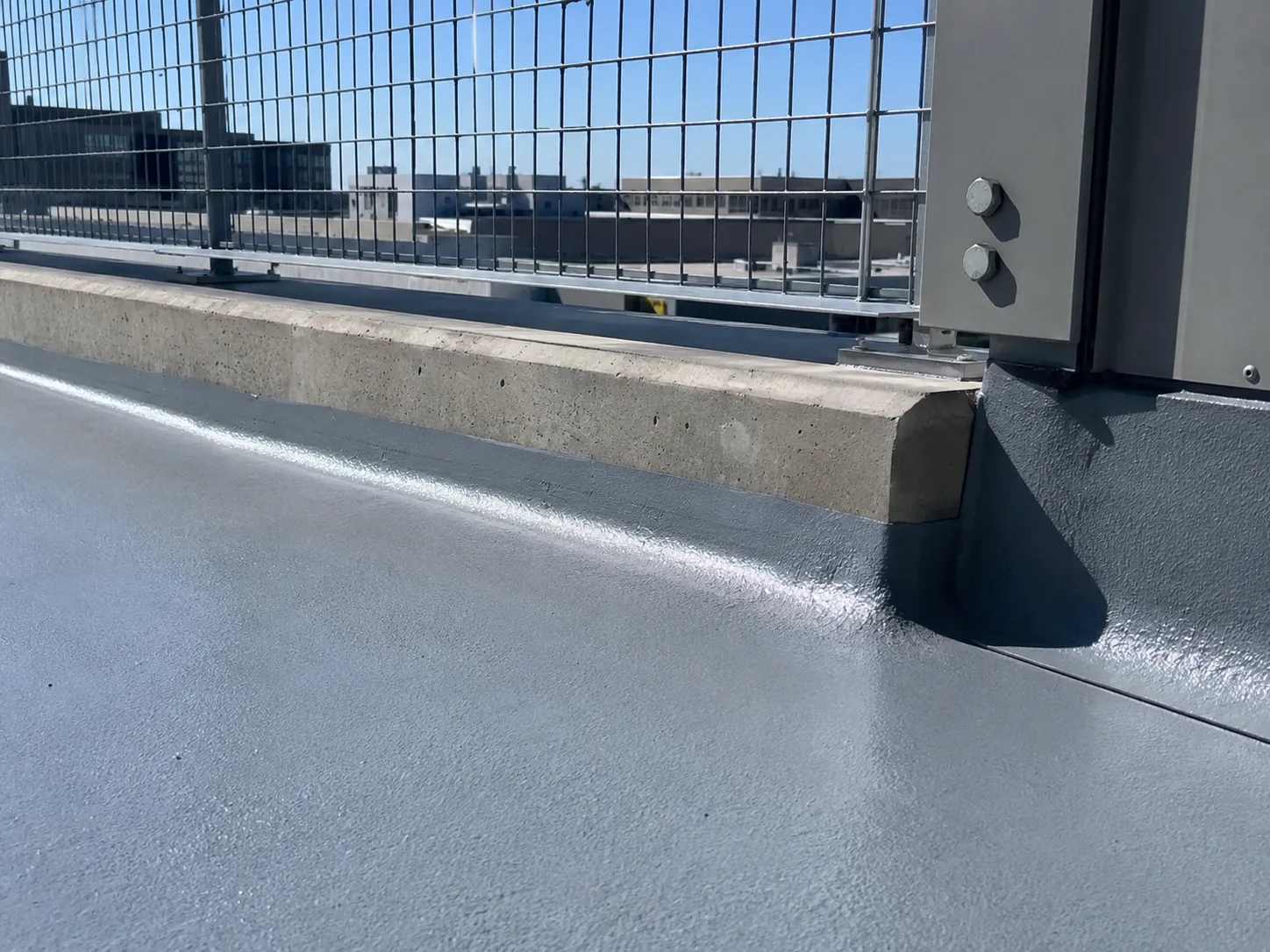
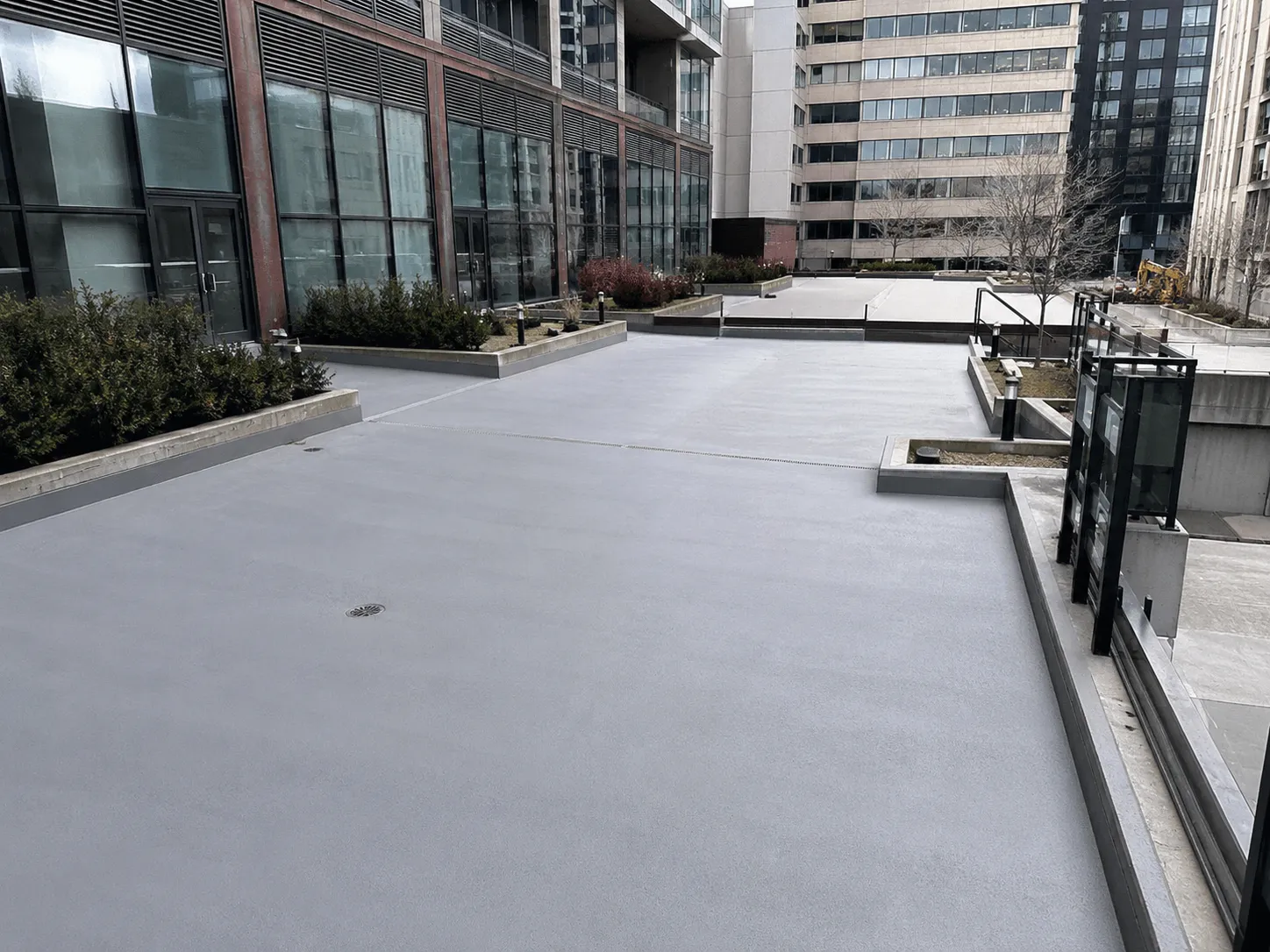
We assess the roof and the access first, then reduce load in the drift zones and clear the drains, working under fall protection with hand tools and leaving a protective layer rather than scraping to the membrane.
The assessment covers the roof type and structure, the drainage layout, where the drifting has occurred, the state of any ice at the drains and scuppers, what sits below the roof edge, and how crews and removed snow will get on and off. Where the loading question is genuinely structural, that belongs to a structural engineer, and we work to their direction rather than guessing at capacity.
Drains and scuppers come first in almost every case. A blocked drain turns a melting roof into a ponding roof, and ponded water is heavier than the snow it came from and does not drain itself. Clearing ice from drains, using steam where the ice is bonded rather than chipping at it, is often the single highest-value part of the job.
Load reduction is then done selectively in the drift zones rather than uniformly across the roof, because removing snow unevenly from a structure can be worse than leaving it. Crews work with plastic shovels and hand tools, never steel blades or powered equipment, and deliberately leave a thin protective layer of snow rather than scraping down to the membrane. A cut or punctured membrane in January is a far more expensive problem than the snow was.
Where snow is being thrown off the roof, the drop zone below is closed and controlled, and removed snow is cleared from the ground area afterwards rather than left piled against the building or over an entrance.
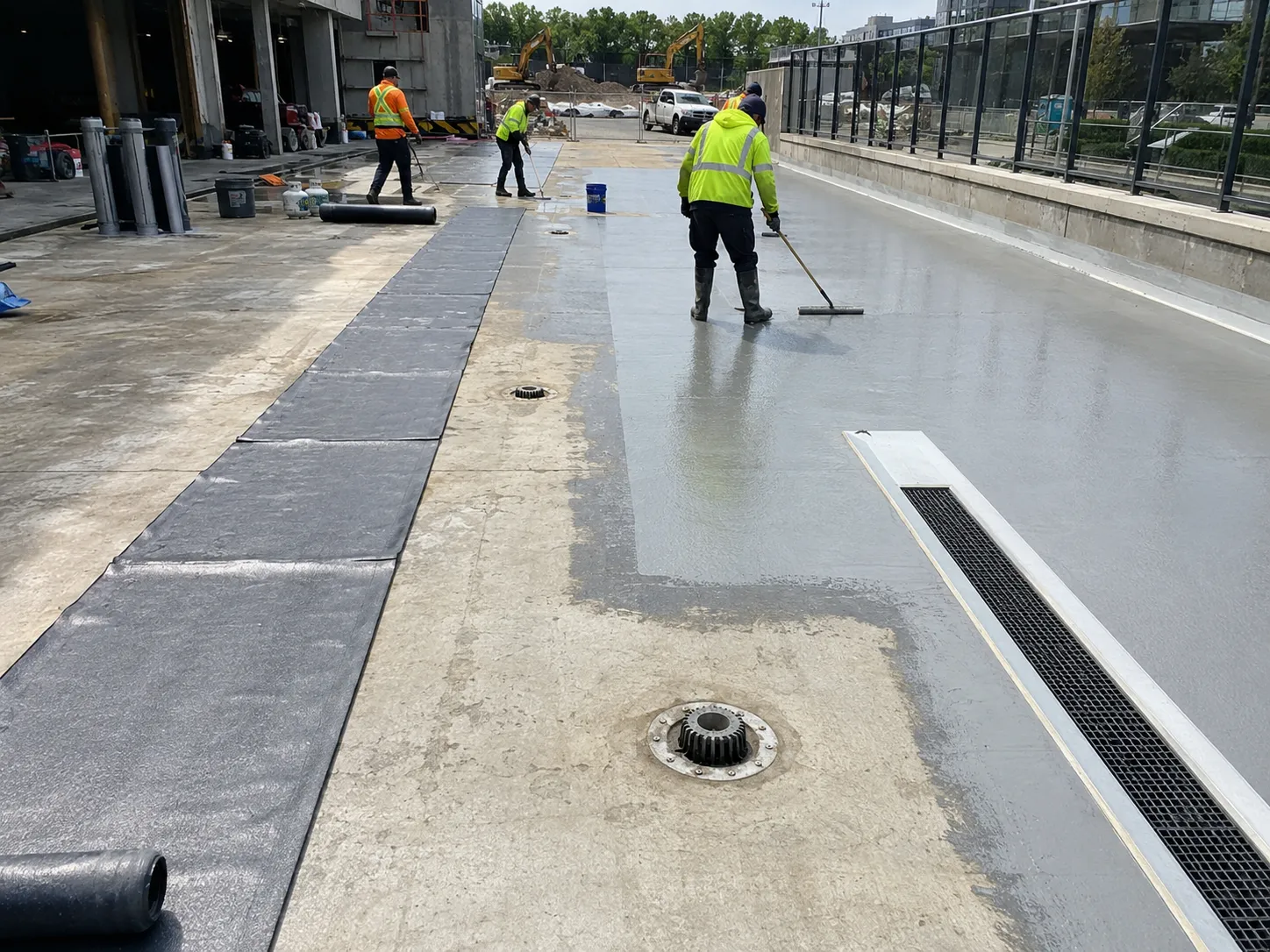
Roof structures in Ontario are designed to the snow load values the Ontario Building Code sets for the location, combining a ground snow load with a rain load component. The design assumption is about a code-level event, not an unlimited accumulation with ice and ponded water on top.
What matters in practice is that load is not distributed the way people assume. Code accounts for drifting and accumulation at obstructions, which is exactly why parapets, mechanical curbs, screens, and low-roof-to-high-wall junctions carry concentrated loads. Any assessment that only looks at average depth across the field of the roof is measuring the wrong thing.
Fall protection is not optional. Ontario's construction regulation requires fall protection where a worker may fall three metres or more, and a snow-covered commercial roof has hidden edges, buried skylights, and concealed openings, which makes it one of the more hazardous winter work environments. Crews work under anchored fall protection with the roof plan understood before anyone steps onto it. Skylights in particular are a fatality risk when buried under snow, and their locations are confirmed in advance.
Membrane protection governs the method. Modified bitumen, single-ply, and inverted assemblies all damage differently, and none of them tolerate steel tools or powered equipment. That is also why a protective snow layer is left in place rather than clearing to the surface.
Roof snow failures are punctured membranes, uneven removal, blocked drains left blocked, ice falling on people below, and crews working unprotected on a hidden edge.
Membrane damage. Steel shovels, ice chippers, and powered equipment cut membranes. Hand tools, plastic blades, and a retained protective layer prevent it, and steam is used on bonded ice rather than chipping.
Uneven removal. Stripping one area of a structure while leaving adjacent load in place can create a worse condition than the original. Removal is planned across the roof, not improvised from wherever access is easiest.
Drains left blocked. Reducing depth while leaving the drains iced means the next thaw ponds on the roof, and ponded water is heavier than the snow and does not leave on its own.
Ice falling on entrances. Overhangs, canopies, and parapet edges shed ice onto the areas people walk through. Drop zones are closed, and areas below known shedding points are managed from the ground as well.
Unprotected work. Buried skylights, hidden roof edges, and concealed openings make an unprotected snow-covered roof genuinely dangerous. Anchored fall protection and a known roof plan are prerequisites, not a preference.
Have drawings for roof snow removal? Send them over and we will scope it.
When the weight becomes a concern, not when the depth looks impressive. The dangerous condition is usually rain on snow, or a long accumulation followed by a thaw and refreeze, because wet and consolidated snow is far heavier than fresh snow at the same depth. Drift zones matter more than average depth.
Because snow does not sit evenly. It piles against parapets, mechanical units, roof screens, and where a lower roof meets a higher wall, and those zones carry a multiple of the load on the open field of the roof. Building codes account for that concentration, and it is where problems begin.
Not if it is done properly. Crews use plastic shovels and hand tools rather than steel blades or powered equipment, and deliberately leave a thin protective layer of snow instead of scraping to the membrane. Bonded ice at drains is steamed rather than chipped.
Because a blocked drain turns a melting roof into a ponding roof, and standing water is heavier than the snow it came from and will not drain itself. Clearing ice from drains and scuppers is often the highest-value part of the work, regardless of how much snow is removed.
Ontario's construction regulation requires fall protection where a worker may fall three metres or more. A snow-covered roof also hides edges, openings, and skylights, and buried skylights are a serious fatality risk, so their locations are confirmed before anyone steps onto the roof.
Where the question is genuinely whether the structure is at risk, yes. We assess condition, drift patterns, drainage, and access, and we perform removal, but capacity determinations belong to a structural engineer. We coordinate with yours and work to their direction rather than making that call ourselves.
That is often the more immediate risk. Overhangs, canopies, and parapet edges shed ice onto areas people walk through. Drop zones are closed and controlled during the work, and the ground area below known shedding points is managed and cleared afterwards rather than left piled against the building.
The building address, roof type and approximate area, roof plan and drainage layout if available, access arrangements, what sits below the roof edges, and any known problem areas such as recurring drifting, ponding, or drains that ice every year. We assess on site before quoting.
Still have a question about roof snow removal? Ask our team directly.
Commercial and heavy-civil construction delivered for developers, contractors, property managers, and municipalities.
Send drawings, a site plan, or a description of the scope. Harrowgate Group is licensed, insured, and WSIB-covered.
Licensed, Insured & WSIB-Covered, work managed and documented on every job
Tell us what you need and we’ll get you a quote. Licensed, insured & WSIB-covered · Free, no-obligation quote & on-site assessment.
Harrowgate Group provides roof snow removal, delivered and installed with quote-ready support across Toronto and surrounding Ontario communities.
Companies We've Worked With
Harrowgate Group delivers commercial and heavy-civil construction for developers, contractors, institutions, municipalities, and property groups across Ontario.
 Popeyes
  Tim Hortons
  Subway
  University of Toronto
  Madison Group
  RioCan
  Women's College Hospital
  Starbucks
  Mazda
Mazda  TD Bank
  City of Toronto Popeyes Tim Hortons Subway University of Toronto Madison Group RioCan Women's College Hospital Starbucks Mazda TD Bank City of Toronto
 Three fields. We reply with the next step.
Thanks, we will call you shortly.