Built to spec
Built to your engineered drawings, survey, and the real site conditions, not a one-size-fits-all approach forced to fit.
Harrowgate Group performs tank and vessel cleaning directly for plant operators, facility managers, tank owners, and environmental consultants across Toronto, the GTA, and Ontario, with field execution, controls, material handling, and closeout managed by one accountable construction team.
Tell us what you need and we’ll get you a quote. Licensed, insured & WSIB-covered · Free, no-obligation quote & on-site assessment.
Licensed, insured & WSIB-covered · Free, no-obligation quote & on-site assessment.
Built to your engineered drawings, survey, and the real site conditions, not a one-size-fits-all approach forced to fit.
Durable materials and methods chosen for the load, traffic, and environment on site.
Send specs, drawings, or photos and get a free, no-obligation site visit and estimate with no guesswork.
Installation and site work completed in accordance with Ontario requirements.
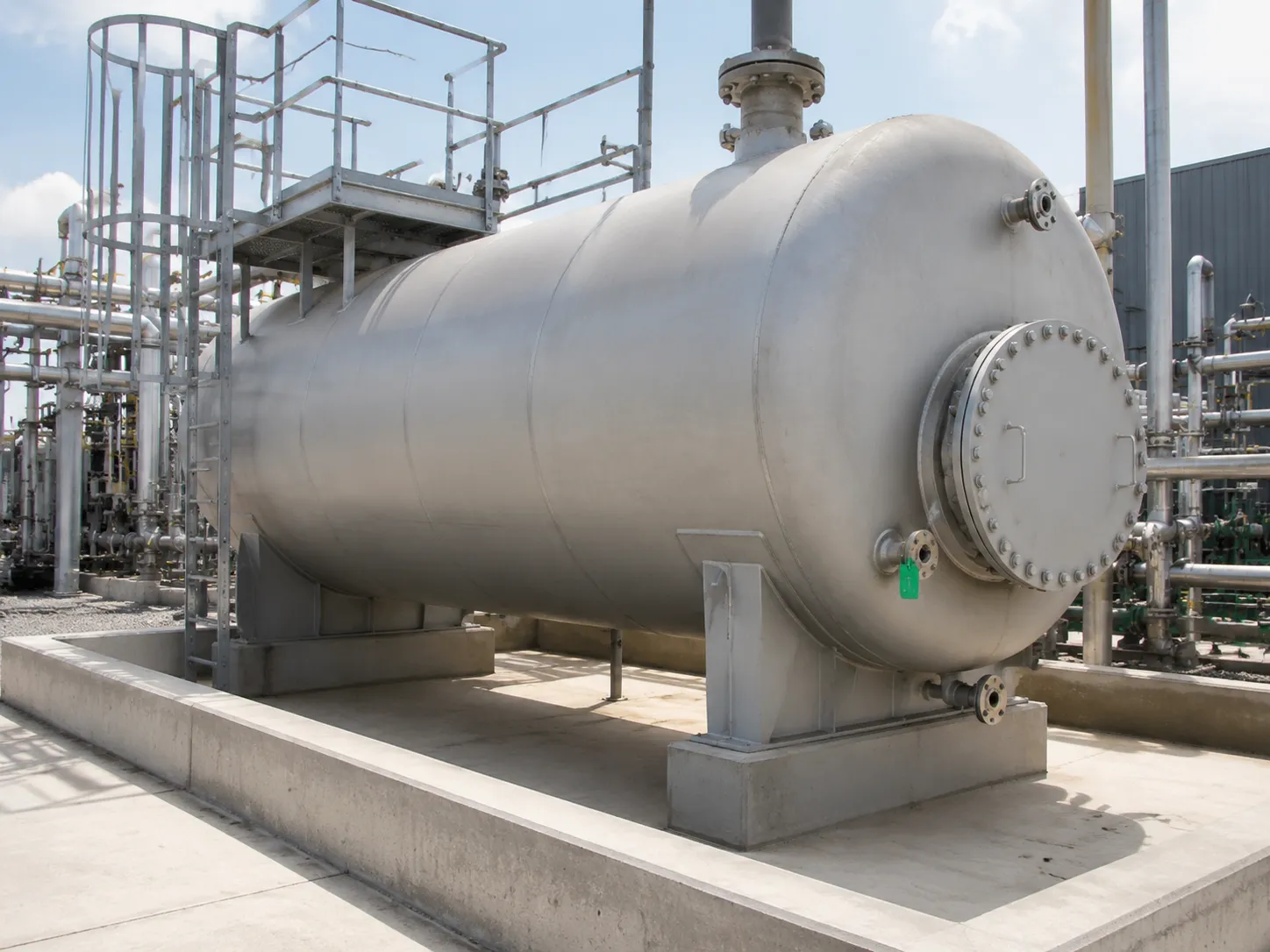
Tank and Vessel Cleaning is the controlled removal of product heels, sludge, scale, and residues from storage tanks, reactors, separators, and process vessels before inspection, repair, change of service, or removal. Harrowgate Group performs this work directly on commercial, industrial, and heavy-civil sites in Toronto and the GTA, with controlled field execution and documented handoff.
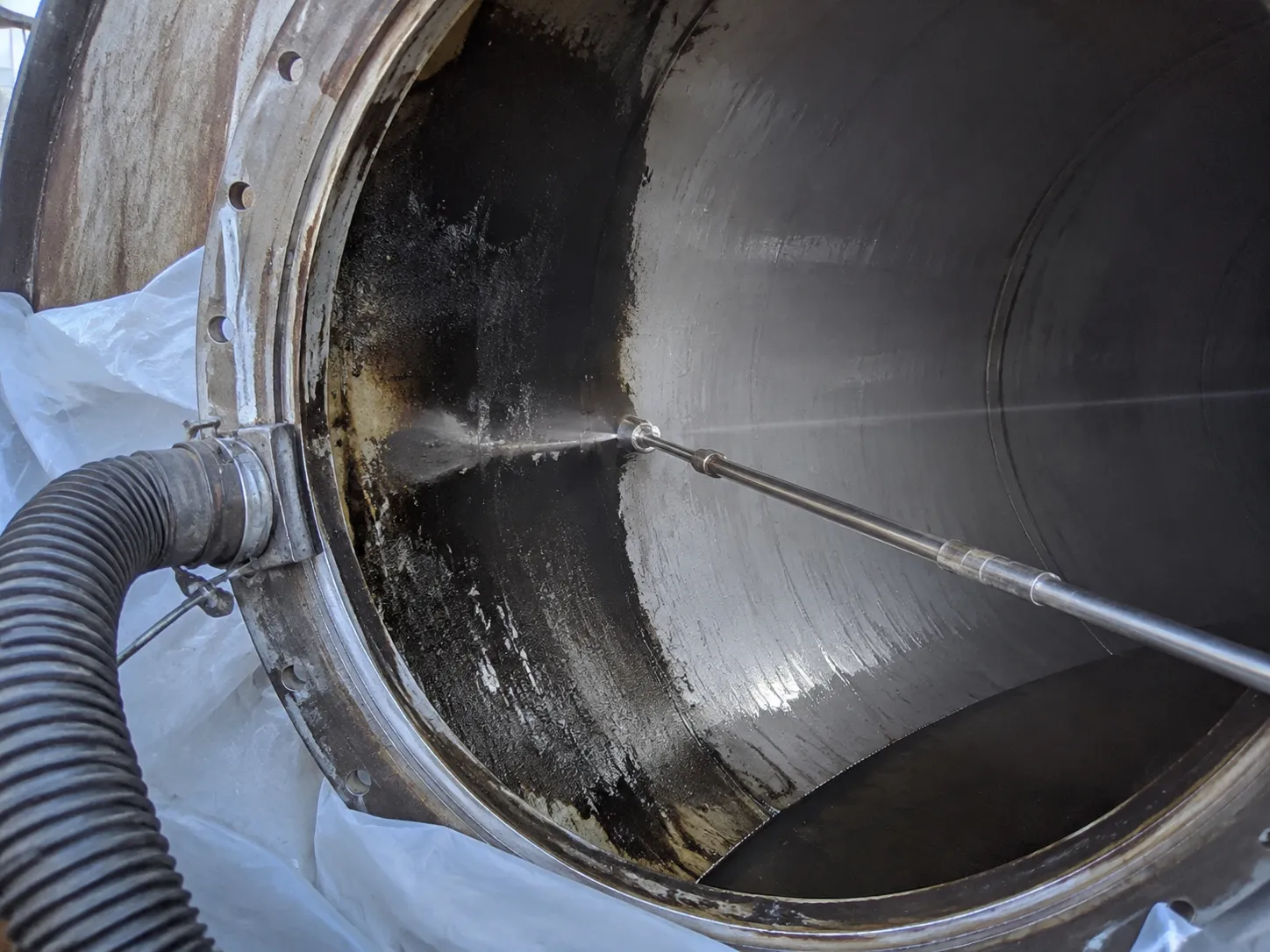
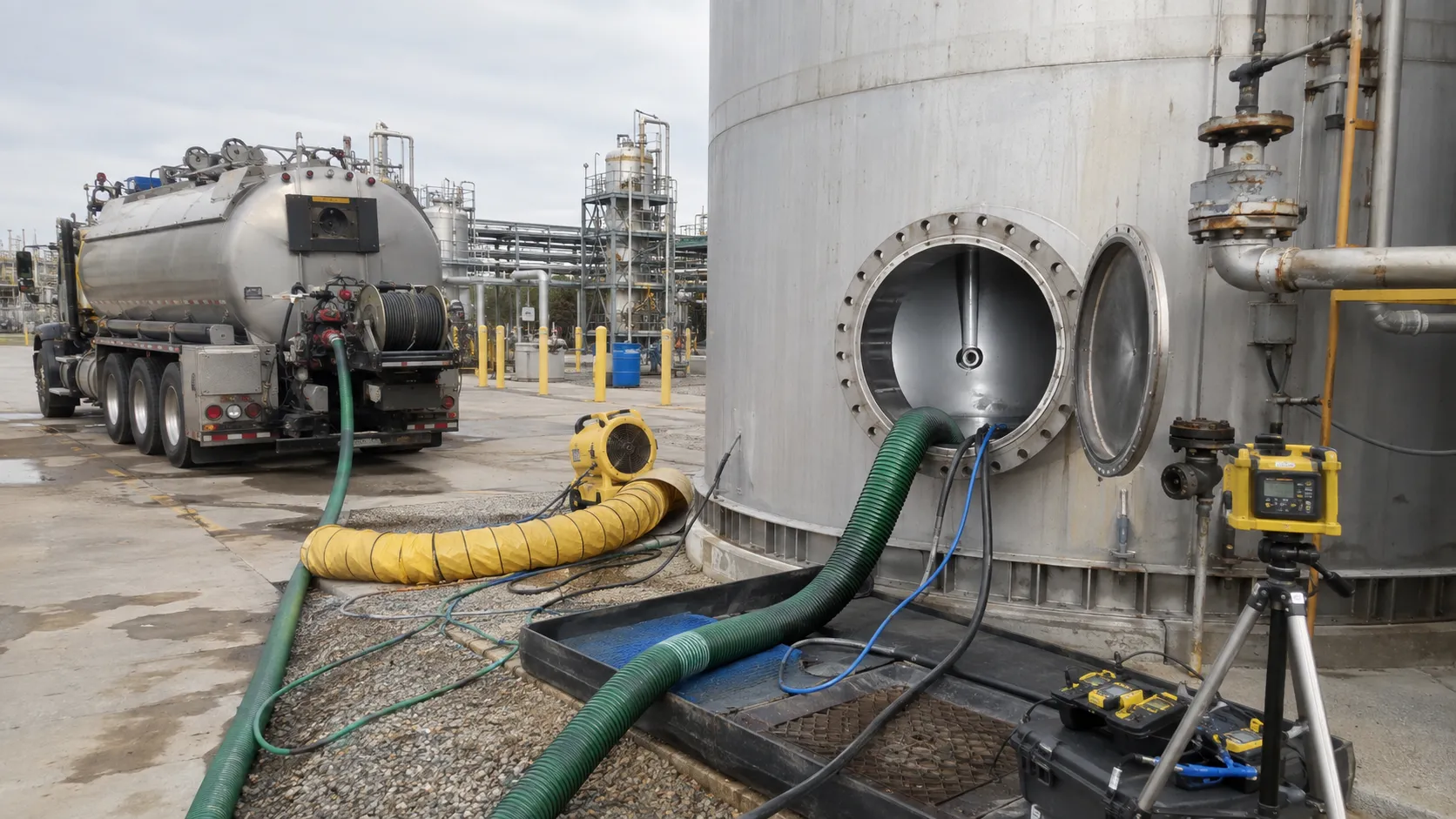
We execute tank and vessel cleaning through a verified sequence with clear release points between activities. Existing conditions, isolations, access, temporary stability, material destinations, and required inspections are confirmed before production advances. The supervisor keeps each work face in a safe, known state when the crew changes tasks or encounters a variance.
Our working sequence is to review service history and product information, isolate and blind connected lines, remove recoverable product, ventilate or purge as required, test the atmosphere, enter only under the approved plan when entry is necessary, loosen deposits, vacuum residues, pressure clean surfaces, recover wash water, and complete inspection. The sequence is translated into daily work packs with prerequisites, access routes, inspection points, crew assignments, and the condition required at shift handoff.
We select equipment for the real task and working envelope, including vacuum trucks, air movers, intrinsically suitable lighting where required, atmospheric monitors, pumps, pressure washers, hydro-blasting equipment, remote nozzles, sludge tools, retrieval systems, and dewatering containers. Equipment capacity is checked against load, reach, ground bearing, headroom, travel route, material characteristics, and the planned production rate. We stage attachments, consumables, containers, backup pumps, and critical spares before a constrained shift or shutdown begins.
Field control is built around positive isolation, a confined-space assessment, entry permit, continuous or specified atmospheric testing, attendant and rescue arrangements, bonding and grounding where required, controlled ignition sources, hose management, wastewater containment, and stop-work limits.
Supervisors record progress and conditions at each shift, compare them with the issued plan, and stop advancement when the next prerequisite is not proven. If hidden construction, changed soil, unknown services, unexpected contamination, or an access conflict appears, we stabilize the area and obtain the required direction before changing the method.
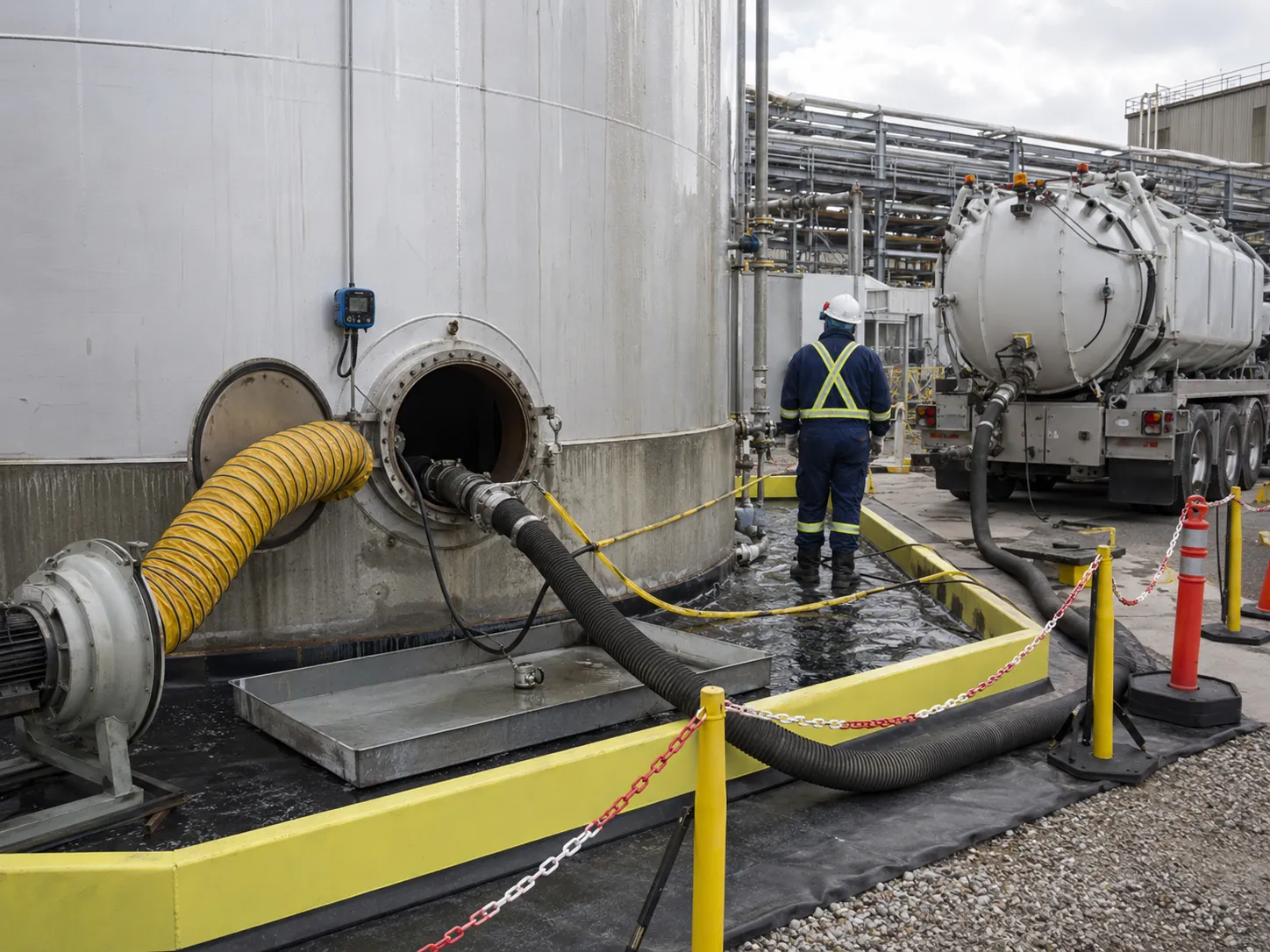
Tank and Vessel Cleaning must follow the issued project documents and the Ontario requirements applicable to the workplace, hazards, materials, and temporary or permanent works. We track dimensions, capacities, tolerances, test values, and acceptance criteria to their approved source, then collect field records that show what was installed, removed, tested, and shipped.
The principal compliance and specification framework includes O. Reg. 632/05 confined-space requirements, O. Reg. 851 industrial establishment requirements, O. Reg. 490/09 where designated substances are present, Regulation 347 waste controls, municipal sewer use bylaws, and applicable CSA confined-space and equipment provisions. We confirm which provisions apply to the project status and scope instead of mixing requirements from unrelated work types.
We check current issued-for-construction drawings, specifications, addenda, permits, utility information, and owner procedures before procurement or installation. Material certificates, concrete or grout tickets, equipment inspection records, calibration information, waste profiles, and test forms are collected as the work requires. A field change is not buried in a daily report. It is identified, reviewed, and recorded against the approved basis.
Ontario requirements depend on whether the location remains an industrial establishment or has become a construction project, and on the hazards actually present. We apply the project’s designated-substance information, confined-space assessment, demolition or shoring engineering, waste classification, excess-soil rules, and municipal discharge conditions as applicable. We never assume that an owner’s internal permit replaces the governing legal or engineering requirements.
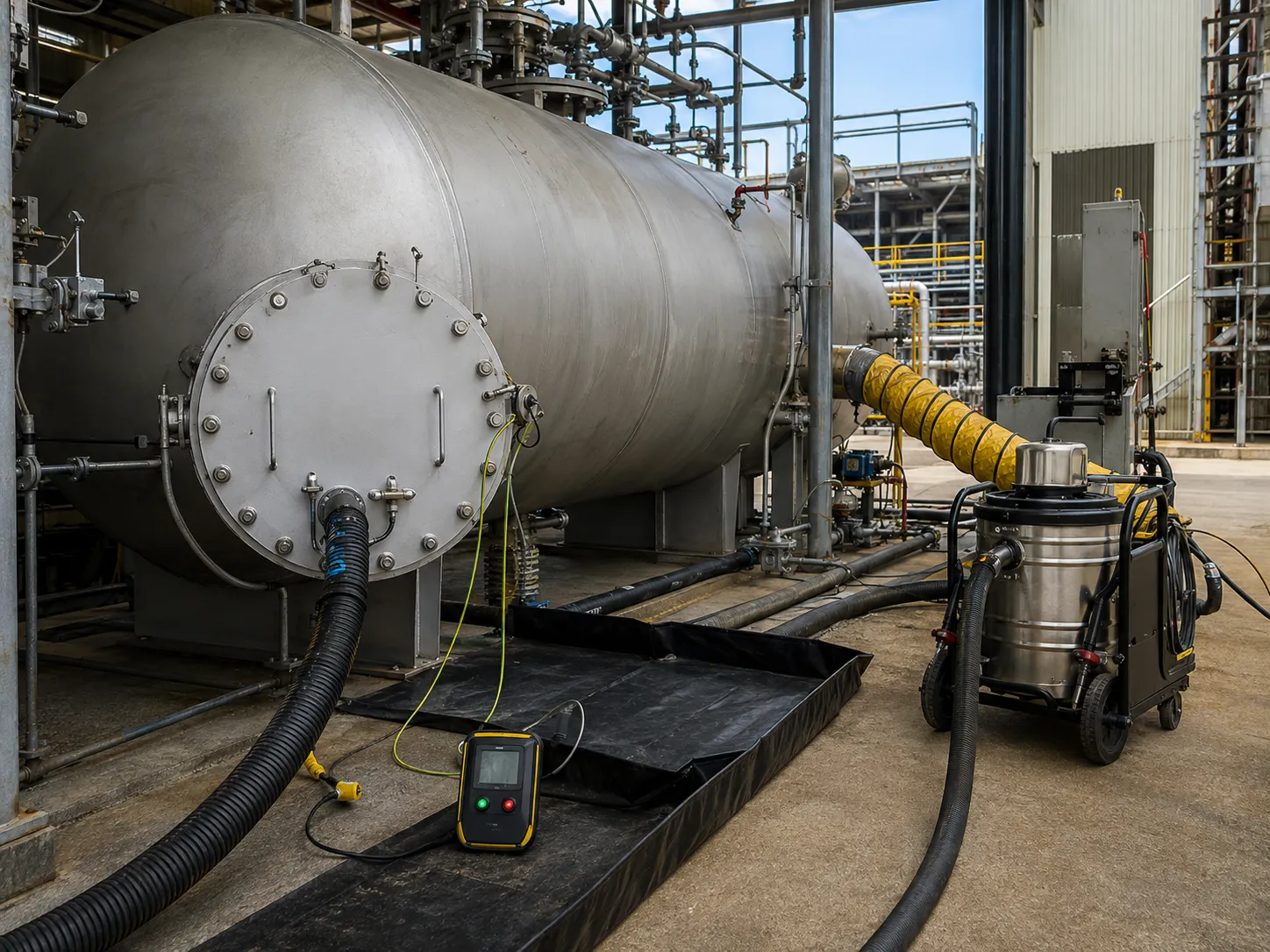
Failures in tank and vessel cleaning usually start with an unverified assumption, an out-of-sequence activity, or a missing interface control. We reduce that exposure by proving the condition that governs each step, holding the work when conditions differ, keeping temporary protection ahead of production, and recording direction before the affected method changes.
Service-specific failure modes include assuming an empty tank is safe, relying on a closed valve as isolation, disturbing pyrophoric or reactive scale, static discharge, sudden sludge movement, blocked ventilation, uncontrolled wash water, or sending incompatible waste to the receiving facility. We place verification or inspection points immediately before the activities that could create those outcomes.
The first control is verification. We expose, trace, test, survey, sample, measure, or inspect the condition that controls the next step. The second is sequence. Temporary stability, isolation, drainage, access, and receiving capacity must stay ahead of production. The third is records. Daily quantities, test results, photographs, tickets, and approvals create an evidence trail that lets the project team resolve a variance while the facts are still visible.
Schedule failure usually comes from interfaces, not raw production. A crane cannot work without a verified pad, a vessel cannot be entered without an approved plan, a wall cannot be excavated below its support, and waste cannot leave without an accepted destination. Our look-ahead planning assigns each constraint an owner and required date, then confirms readiness before crews and major equipment are committed.
Have drawings for tank and vessel cleaning? Send them over and we will scope it.
We need the site address, current drawings and reports, approximate quantities, required endpoint, access limits, operating restrictions, known hazards, utility status, target schedule, and required records. A site walk lets us verify equipment access, staging, retained assets, public interfaces, and the conditions that will drive the work plan.
We divide the work into clearly released areas or systems, confirm isolations before each shift, protect emergency routes and retained services, and schedule disruptive activities inside approved windows. Daily coordination covers access, noise, dust, water, traffic, permits, and handback conditions so operations know exactly what changes and when.
The owner’s retained engineer or consultant normally defines design and acceptance requirements where professional input is required. Harrowgate coordinates constructability, field measurements, installation records, testing, and requests for direction. We do not alter an engineered sequence or acceptance value informally. Changes are reviewed and documented before the affected work advances.
We stop the affected activity, leave the area stable, record the condition with measurements and photographs, and determine what information is missing. The project team can then assess the impact and issue direction. Work continues in unaffected areas where practical, while the changed method, quantity, or destination is resolved and documented.
We identify each material stream before removal, keep incompatible or differently classified materials separate, select suitable containers and vehicles, and confirm the receiving destination. Water is captured, tested, treated, or transported as the project requires. Tickets, manifests, weights, and load records are reconciled with the originating work area.
The schedule depends on quantity, access, shift windows, isolation readiness, engineering hold points, equipment reach, material cure or test times, groundwater or residue conditions, hauling capacity, and receiving hours. We build a production sequence only after those constraints are mapped, then use short look-ahead plans to keep prerequisites ahead of field crews.
Closeout is matched to the specification and may include daily reports, photographs, surveys, inspection forms, test results, concrete or grout tickets, equipment records, waste and recycling tickets, monitoring data, and marked-up drawings. We agree on file names and submission intervals early so records remain useful for progress review and final turnover.
Still have a question about tank and vessel cleaning? Ask our team directly.
Commercial and heavy-civil construction delivered for developers, contractors, property managers, and municipalities.
Send drawings, a site plan, or a description of the scope. Harrowgate Group is licensed, insured, and WSIB-covered.
Licensed, Insured & WSIB-Covered, work managed and documented on every job
Tell us what you need and we’ll get you a quote. Licensed, insured & WSIB-covered · Free, no-obligation quote & on-site assessment.
Companies We've Worked With
Harrowgate Group delivers commercial and heavy-civil construction for developers, contractors, institutions, municipalities, and property groups across Ontario.
 Popeyes
  Tim Hortons
  Subway
  University of Toronto
  Madison Group
  RioCan
  Women's College Hospital
  Starbucks
  Mazda
Mazda  TD Bank
  City of Toronto Popeyes Tim Hortons Subway University of Toronto Madison Group RioCan Women's College Hospital Starbucks Mazda TD Bank City of Toronto
 Three fields. We reply with the next step.
Thanks, we will call you shortly.
Press Esc to close
Marcus
Project Coordinator